By Daniel Marsh | Cosmetic Formulation Science
I’ve spent 14 years formulating skincare products for brands across every price point — from drugstore basics to luxury department store lines. I’ve worked with the same factories, the same raw ingredient suppliers, and often the same base formulas.
So let me tell you something the industry doesn’t advertise:
The gap between a $15 serum and a $150 one is real. But it’s not where most people think it is.
What You’re Actually Paying For
When most people assume a $150 serum is overpriced, they’re imagining that the markup is pure branding. And sometimes they’re right. But the gap in price reflects something more specific — and more technical — than most consumers realize.
It starts with ingredient concentration.
Every active ingredient in a serum has what’s called a “minimum effective concentration” — the lowest percentage at which it actually does what it’s supposed to do. Hyaluronic acid needs to be at the right molecular weight and concentration to penetrate the skin. Vitamin C oxidizes rapidly and needs specific stabilization to stay potent. Botanical actives like collagen-stimulating compounds require meaningful percentages to trigger cellular response.
Cheap serums often contain these ingredients — but at concentrations so low they’re essentially decorative. They appear on the label, which is legally all that’s required. But they won’t do what you’re hoping for.
Premium serums — the ones that justify their price — hit effective concentrations. That costs significantly more in raw material expenses, which is reflected in the retail price.
→ See the Full R1™ Formula Breakdown
Then there’s ingredient quality and sourcing.
Not all hyaluronic acid is the same. Not all vitamin C is the same. There’s a meaningful difference between synthetic versions of botanical extracts and actual plant-derived compounds. Hydrolyzed hyaluronic acid — which breaks the molecule into smaller fragments that can penetrate deeper into the skin — costs considerably more to produce than standard HA. But it performs at a completely different level.
When I formulate a budget product, I use what’s affordable and effective enough. When I formulate something premium, I source the best-performing version of every active. That difference alone can triple the raw material cost.
Stability and delivery matter enormously.
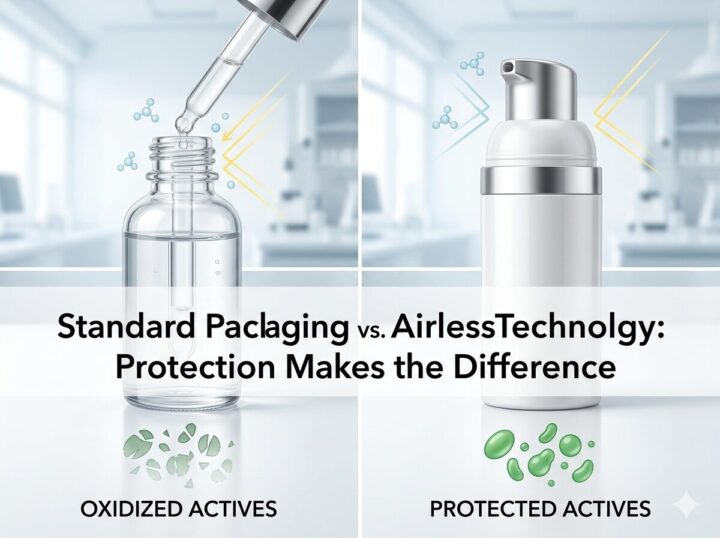
Here’s something most consumers don’t think about: a serum can contain excellent ingredients at effective concentrations and still not work — if those ingredients degrade before they reach your skin.
Vitamin C, for instance, is notoriously unstable. Certain botanical actives break down rapidly when exposed to oxygen and light. Many brands use standard packaging — a pump or dropper bottle — where every use exposes the formula to air. By week four, the active ingredients have lost a significant percentage of their potency. You’re paying for a serum that worked great in the lab and mediocre in your bathroom.
Premium formulations invest in stabilization technology. Some use airless vacuum pumps that prevent oxygen contact entirely. Others use encapsulation technology that protects actives until they reach the skin. These are real, meaningful engineering decisions that cost money — and deliver results that cheap packaging cannot.
The $15 Formula Breakdown
Here’s what typically goes into a budget serum at $15 retail:
A water base, a standard thickener, fragrance, preservatives, and a small percentage of whatever active ingredient is featured on the label — usually at the minimum required to legally list it. The packaging is standard. The manufacturing is high-volume and designed for efficiency, not efficacy.
It will moisturize. It will feel pleasant. It will do very little at the cellular level.
This isn’t a criticism. For someone who just wants basic hydration, it’s fine. But if you’re targeting fine lines, hyperpigmentation, or cellular renewal — you’re not getting the active support you need.
What Makes a Serum Worth $100+
The formulas I’ve worked on that justify premium pricing share a few consistent characteristics:
Active ingredients at effective concentrations — not decorative percentages. If a retinol alternative like Bidens Pilosa is in the formula, it’s there at a level that actually drives cellular turnover, not just enough to put it on the label.
High-quality sourcing — botanical extracts from controlled cultivation, not synthetic approximations. Hydrolyzed forms of HA rather than standard. Antioxidant complexes from whole-plant sources rather than isolated synthetics.
Packaging that protects the formula — airless systems, UV-protective containers, or encapsulation technology. If a serum is in a clear glass dropper bottle sitting on your sunny bathroom counter, the actives are degrading every day.
A pH optimized for absorption — this is something almost nobody talks about, but it matters enormously. Different actives work optimally at different pH levels. A well-formulated serum calibrates its pH to maximize both stability and penetration.
The Honest Verdict
Not every expensive serum earns its price. There are $120 products that are 90% water, fragrance, and marketing. I’ve formulated them. They exist.
But the serums that genuinely deliver results — the ones that measurably change skin texture, reduce fine lines, and support cellular renewal — share these technical characteristics. And those characteristics cost money to execute properly.
The question isn’t “is this serum expensive?” The question is “does this formula actually do what it says at a level that reaches my skin?”
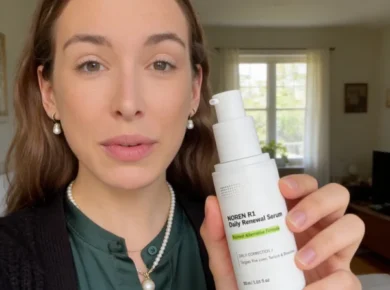
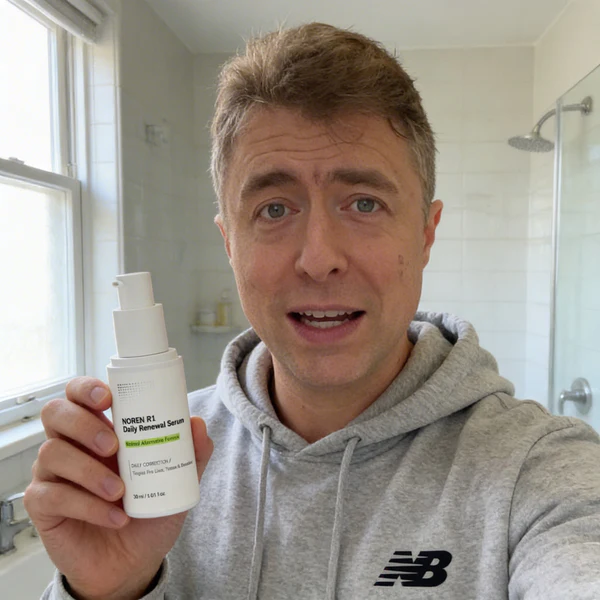
When you look at something like the Noren R1™ — 99% natural origin, Bidens Pilosa at a functional concentration, hydrolyzed hyaluronic acid, an airless vacuum pump, ECOCERT certified — you’re looking at a formula that checks the boxes that separate real performance from expensive water.
That’s the difference. And now you know how to spot it.