By Dr. Amelia Torres | Dermatology & Skin Health
You didn’t change. But your skin did.
And most people don’t realize it until they’re standing in the bathroom one morning, looking at a face that seems to have aged five years overnight.
The truth is, it didn’t happen overnight. It happened gradually — one night at a time — while you were using the same moisturizer you’ve had since college, the same cleanser that “always worked,” the same routine you built in your mid-twenties when your skin could forgive anything.
At 25, your skin was forgiving. At 35, it’s keeping score.
Here’s what nobody tells you when you cross that threshold.
What Actually Happens to Your Skin After 30
Your skin isn’t just aging. It’s changing at a biological level — and those changes are dramatic.
Collagen production drops by roughly 1% every year after 25. By the time you hit 35, you’ve lost nearly a decade of structural support. The scaffolding that kept your skin plump and bouncy is quietly breaking down — and no amount of sleep or water is going to reverse it without the right intervention.
Cell turnover slows down significantly. At 25, your skin renews itself every 25–28 days. By 35, that cycle stretches to 35–45 days. Dead skin cells sit on the surface longer. Your complexion looks duller. Products absorb less efficiently. The glow you used to take for granted disappears — not because you’re unhealthy, but because your skin simply isn’t renewing itself the way it once did.
Your skin barrier becomes less resilient. Hormonal shifts, environmental exposure, and years of accumulated stress start affecting your skin’s ability to retain moisture and defend itself. Dehydration sets in faster. Sensitivity increases. Things that never bothered your skin before — certain ingredients, weather changes, even stress — start showing up on your face.
The Routine That Worked at 25 Is Working Against You at 35
This is the part most people miss.
The skincare routine you built in your twenties was designed for skin that could take care of itself. Heavy moisturizers made sense when your barrier was strong. Light serums were enough when your cells were turning over every 25 days. You could get away with inconsistency because your skin had enough reserves to bounce back.
At 35, that math changes completely.
Your skin now needs active cellular support — not just hydration and protection. It needs ingredients that actually accelerate the renewal process, because the process has slowed down enough that passive moisturizing isn’t enough anymore.
It needs collagen-stimulating compounds — not just creams that sit on the surface, but actives that signal to your skin to start producing what it’s no longer making on its own.
And it needs barrier reinforcement — because the resilience you had at 25 isn’t automatic anymore.
The problem? Most of the products marketed to women in their thirties still follow a twenty-five-year-old formula. Big moisturizers. Gentle cleansers. The occasional vitamin C. Nothing that actually addresses what’s biologically happening inside the skin.
The Ingredient Your 35-Year-Old Skin Actually Needs
The gold standard for cellular renewal has always been retinol — Vitamin A. It accelerates cell turnover, stimulates collagen, and fades hyperpigmentation. Decades of clinical research back it up.
But here’s the problem.
Skin at 35 is more reactive than it was at 25. The very retinol that could transform your skin also carries a significant risk of irritation, redness, and a “purge phase” that can last weeks. For skin that’s already dealing with increased sensitivity, it can cause more inflammation than improvement.
This is exactly why a growing number of dermatologists are turning to Bidens Pilosa — a botanical compound that functions as a plant-based retinol analogue. It drives the same cellular turnover and collagen synthesis as Vitamin A, but without disrupting the skin barrier or triggering inflammatory responses.
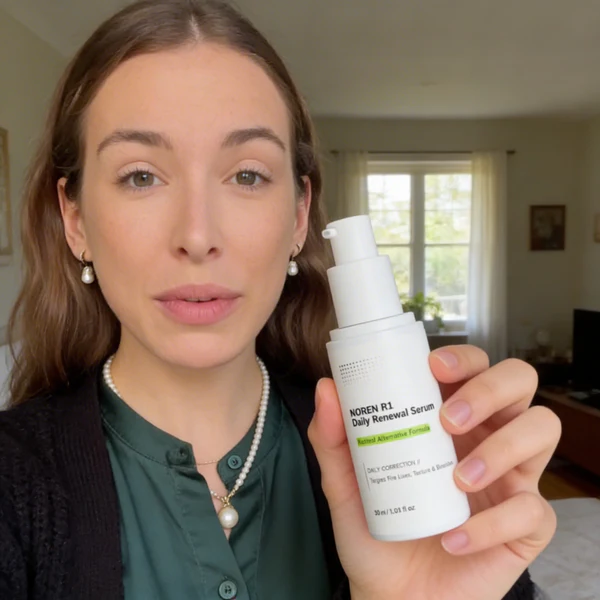
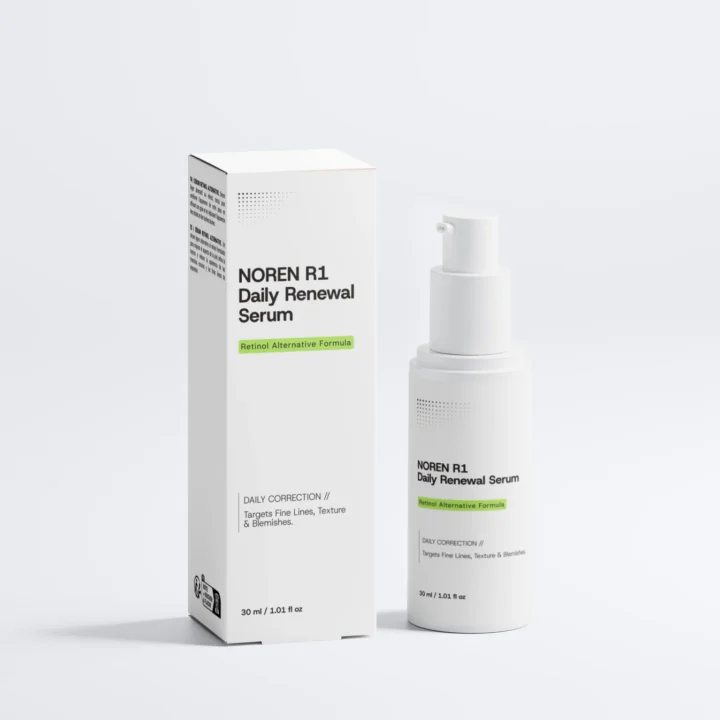
It’s what’s at the core of the Noren R1™ serum — a formula specifically engineered for skin that’s entering a new biological phase and needs active support, not just surface hydration.
What Changes When You Switch
The women who make this shift in their mid-thirties consistently report the same things:
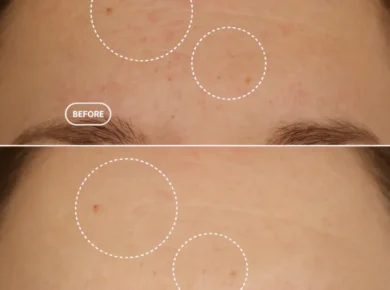
Their skin stops looking tired even when they’re not. The dullness that had become their baseline starts lifting. Fine lines soften not because they’re being filled in, but because the skin underneath is genuinely renewing itself again.
It’s not a dramatic transformation. It’s more like your skin remembering how to function the way it used to — just with the right support.
The window between 33 and 38 is actually the most important period in adult skincare. It’s when the biological shifts are significant enough to require a new approach, but early enough that active intervention can make a lasting difference. Wait until 45 to start, and you’re playing catch-up. Start now, and you’re working with your skin’s renewal cycle, not against it.
The Bottom Line
If you’re still using the routine you built in your twenties, your skin is telling you something every morning. That tightness, that dullness, that loss of the effortless glow you used to have — it’s not about aging. It’s about biology.
And biology responds to the right input.
Your skin at 35 doesn’t need more of what worked at 25. It needs something built for where it actually is right now.