In a world built for speed, slowing down can feel like rebellion. But science shows that living at a gentler pace doesn’t make you fall behind — it helps you live with more focus, depth, and joy.
We’re taught that productivity equals progress. Yet constant motion leaves the mind fragmented and the body tense. Slow living isn’t laziness; it’s the deliberate act of choosing presence over pressure.
What Slow Living Really Means
Slow living isn’t about doing everything slowly. It’s about doing everything intentionally. It means eating without scrolling, walking without rushing, and creating without comparing.
It’s a mindset — trading efficiency for awareness, outcomes for experience.
When you start valuing pace over presence, your days feel fuller but less meaningful. Returning to slowness restores balance: you stop reacting and start noticing.
You can read more about that balance in The Art of Slowing Down, which explores why doing less can actually help you live more.
The Physiology of Slowing Down
Your nervous system has two gears:
- Sympathetic (“fight or flight”) — for stress, deadlines, alerts.
- Parasympathetic (“rest and digest”) — for calm, focus, recovery.
Modern life keeps most people stuck in the first gear. Heart rates stay high, cortisol stays elevated, and digestion slows.
When you intentionally slow down — through deep breathing, mindful eating, or unhurried movement — your parasympathetic system takes over.
Heart rate drops. Cortisol falls. Blood flow returns to the stomach and brain.
In that moment, focus becomes natural, not forced.
How Speed Weakens Focus
Constant multitasking trains your brain to switch tasks rapidly, which reduces deep-focus ability. You might get more done, but your mind never finishes thinking.
Researchers call this “attention residue.” Even after switching tasks, part of your brain stays on the last one.
Slow living dissolves that residue — by encouraging single-tasking and mindful pauses.
That’s why people who live slowly often report feeling clearer, even when their to-do lists stay the same.
The Hormonal Link Between Pace and Happiness
When you rush, your body releases adrenaline — a short-term motivator. But long-term exposure raises cortisol and reduces serotonin, the hormone that stabilizes mood.
Slow, mindful habits like journaling, walking, and unhurried meals increase serotonin and oxytocin — your natural “contentment” chemicals.
They also boost dopamine in healthier, sustained ways compared to quick digital hits.
It’s the same biochemical calm you feel after a quiet meal or an afternoon in sunlight — your body remembering what balance feels like.
If you’d like to support that balance nutritionally, explore Foods That Support Stress Recovery After Long Days.
The Cognitive Benefits of a Slower Pace
When the mind is rushed, creativity drops. Your prefrontal cortex — the area responsible for ideas and planning — can’t operate effectively under constant urgency.
But in a slow state, the brain shifts from linear thinking to associative thinking, allowing new ideas to connect naturally.
That’s why breakthroughs often appear during walks, showers, or quiet evenings — spaces where time feels wide, not tight.
Slow living is not anti-ambition. It’s the foundation that makes ambition sustainable.
How to Practice Slow Living Every Day
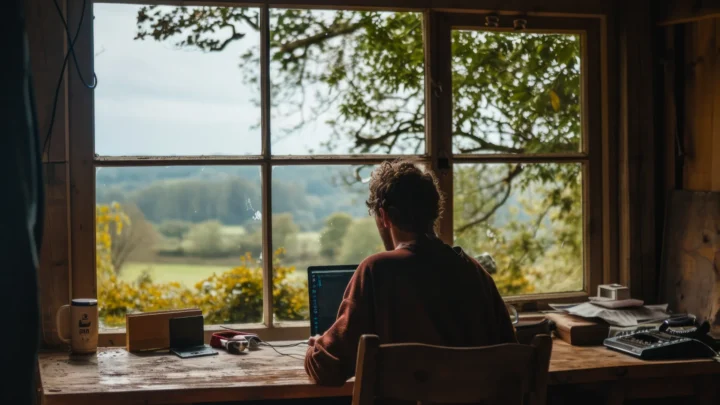
Slowing down doesn’t require radical change — it begins with simple rituals that invite calm back into ordinary moments.
1. One mindful meal a day
Eat one meal without your phone. Notice flavours, textures, and your breathing. Digestion improves, and so does gratitude.
2. Schedule “white space”
Block 15 minutes between meetings or tasks to do nothing. Let your mind wander. You’ll notice decisions come easier afterward.
3. Reclaim your morning pace
Instead of jumping into notifications, begin your day with sunlight, stretching, or journaling. These habits — explored in Morning Habits for a Peaceful Day — train your brain to lead, not chase.
4. Walk instead of scroll
Each time you reach for your phone out of habit, stand up and walk for two minutes. Movement releases tension faster than distraction.
5. End the day intentionally
Create a wind-down ritual — soft light, tea, quiet music. It tells your body it’s safe to rest. Combine it with insights from Little Things That Quiet Your Mind Before Bed.
The Emotional Shifts That Follow
After a few weeks of slow living, most people notice:
- Deeper conversations (because you actually listen).
- Clearer priorities (because urgency stops deciding for you).
- Less anxiety (because the nervous system finally relaxes).
- Better energy (because recovery becomes daily, not occasional).
You’ll still get things done — but without feeling like you’re chasing your own life.
Slow Living in a Fast World
The world won’t slow down for you — but you can change your rhythm inside it.
Start with small rebellions: walk slower, speak slower, breathe slower.
Eventually, your mind will match your body’s pace.
In a culture of speed, slowness becomes your superpower. It’s what keeps you calm when everyone else is exhausted.
Final Thought: Slow Is the New Strong
There’s power in unhurried moments — the pause before an answer, the sip before the next task, the breath before a decision.
Because slowing down doesn’t mean doing less. It means feeling more.
And the more you feel, the more alive you become.