Short answer: The best foods that fight fatigue combine fiber-rich carbs with protein, so energy is released steadily instead of spiking and crashing. Oats, eggs, Greek yogurt, lentils and beans, nuts and seeds, leafy greens and bananas with nut butter are easy everyday picks, along with enough water. Fatigue that lasts for weeks needs a doctor, not a diet.
If you reach for another coffee by 3 p.m., you are not alone. Poor sleep, stress and quick-fix snacks all add up. Caffeine can mask tiredness for a while, but the food on your plate decides whether your energy holds steady through the afternoon. Here are the foods that fight fatigue best, and how to put them together.
1. Oats: slow, steady fuel
Oats are rich in fiber, which slows digestion and helps avoid the sugar crash you get from pastries or sweet cereal. Half a cup of dry rolled oats (about 40 g) also has around 5.4 g of protein, based on USDA data. Top them with fruit and seeds, or make them ahead as overnight oats from our breakfast meal prep ideas.
2. Eggs: protein that keeps you full
One large egg has about 6.3 g of high-quality protein (USDA), plus B vitamins and choline. Protein at breakfast keeps you fuller for longer, which means fewer mid-morning energy dips and fewer vending-machine runs.
3. Greek yogurt and cottage cheese
Not an egg person? Greek yogurt and cottage cheese are two of the easiest high-protein swaps. We compared ten options with real numbers in high-protein breakfasts without eggs.
4. Lentils and beans: iron and fiber
Iron helps carry oxygen around your body, and low iron is a common cause of tiredness, especially in women. Lentils, chickpeas and kidney beans are good plant sources and are packed with fiber. Pair them with vitamin C foods like tomatoes, peppers or lemon to help your body absorb the iron.
5. Bananas with nut butter
 Save
A banana gives quick energy from natural sugars plus potassium and fiber. Adding a spoon of nut butter brings protein and fat, which makes that energy last longer. It is an ideal pre-workout or afternoon snack.
6. Nuts and seeds
Almonds, walnuts and pumpkin seeds bring magnesium, healthy fats and a little protein. Keep a small handful at your desk instead of energy drinks. For more ideas, see these healthy seeds.
7. Leafy greens
 Save
Spinach, kale and broccoli provide folate, iron and magnesium. They are easy to add to an omelet, a lunch bowl or a smoothie; try the green one in our morning smoothies.
8. Water and water-rich foods
Even mild dehydration can bring fatigue, headaches and poor concentration. Sip water through the day and eat water-rich foods like cucumbers, oranges and watermelon. Sometimes what feels like tiredness is simply thirst.
Build an anti-fatigue plate
| Meal | Protein | Fiber-rich carb | Extra |
|---|---|---|---|
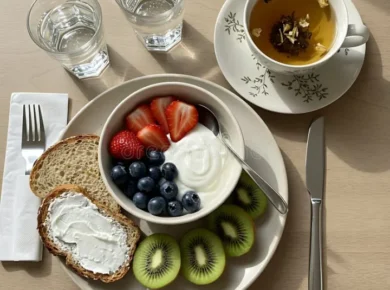
| Breakfast | Eggs or Greek yogurt | Oats or whole-grain toast | Berries or a banana |
| Lunch | Lentils, chicken or tofu | Brown rice or quinoa | Leafy greens with lemon |
| Snack | Nut butter or a handful of nuts | Apple or banana | A glass of water |
Foods that make the slump worse
- Sugary drinks and pastries on an empty stomach
- Very large, heavy lunches
- Caffeine late in the day, which can hurt tonight’s sleep and tomorrow’s energy
FAQ
What should I eat for energy instead of coffee?
A snack with protein and fiber, like Greek yogurt with oats, an apple with nut butter or a boiled egg with whole-grain toast, plus a glass of water. If you still want a warm drink, green tea has less caffeine than coffee; see green tea vs coffee.
Why am I tired after lunch?
A big meal heavy in refined carbs, a short night’s sleep and a natural early-afternoon dip in alertness often combine. A lighter, balanced lunch and a short walk usually help.
When is fatigue a sign to see a doctor?
If you feel exhausted most days for several weeks, even with good sleep and meals, see a doctor. Low iron, thyroid problems, low vitamin B12 and other conditions can cause fatigue and need proper testing.
The bottom line
Caffeine wakes you up; food keeps you going. Build each meal around protein, a fiber-rich carb and some vegetables or fruit, drink water steadily, and protect your sleep. That simple routine beats any energy drink.
Sources
- USDA FoodData Central: Egg, whole, raw, and Oats (protein values per 100 g)