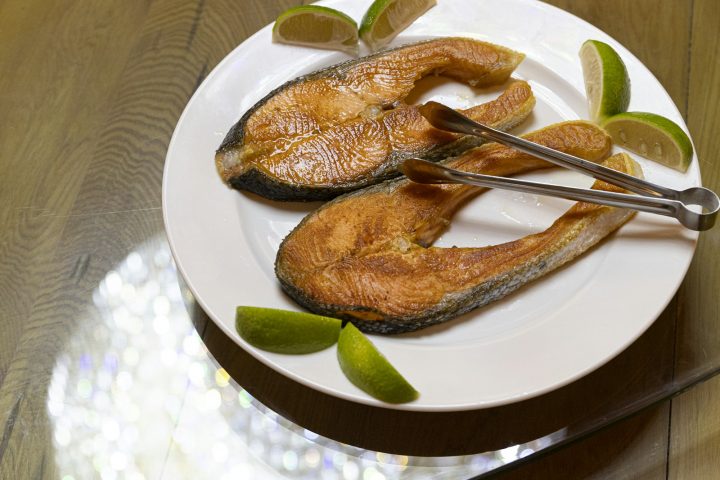
Salmon is the dinner I reach for when I have 30 minutes, a hungry household and zero patience for a complicated recipe. These six healthy salmon recipes for dinner all hit the table in 30 minutes or less, use one pan or the air fryer, and give you 32 to 40 g of protein per serving. Each one lists calories and protein, so you can pick by mood, by macros or by whatever is already in the fridge.
One rule runs through all of them: keep the sauce bright and simple (honey and soy, lemon and dill, a spice rub) and let a big pile of vegetables or a whole grain do the filling-up.
Healthy salmon dinners at a glance
| Recipe | Method | Total time | Calories | Protein |
|---|---|---|---|---|
| Honey garlic salmon with green beans | Skillet | 20 min + rice | 523 | 34 g |
| Air fryer lemon dill salmon with asparagus | Air fryer | 20 min | 369 | 35 g |
| Sesame salmon rice bowls with edamame | Oven or skillet | 25 min + rice | 552 | 40 g |
| Mediterranean salmon with chickpeas and spinach | Oven | 25 min | 445 | 35 g |
| Lemon garlic salmon pasta with spinach | Stovetop | 25 min | 505 | 32 g |
| Blackened salmon with quinoa and broccoli | Skillet + oven | 30 min | 539 | 38 g |
1. Honey Garlic Salmon With Green Beans
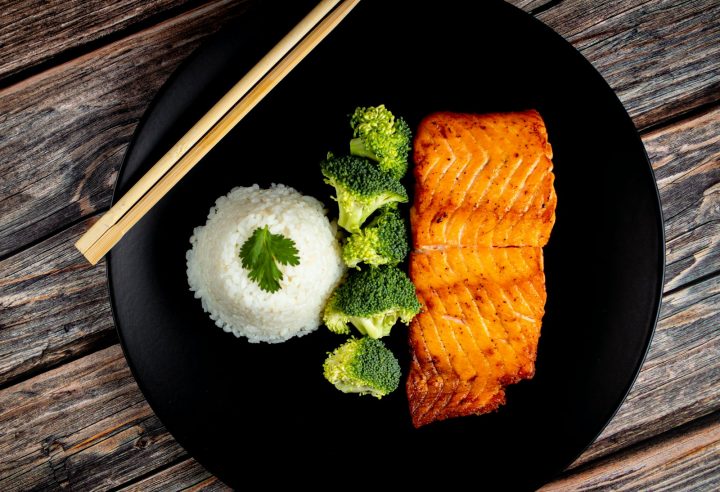
This is the one that converts people who say they don’t like fish. The glaze reduces in the pan for two minutes and turns sticky, a bit like takeout teriyaki but with far less sugar. Serves 4. 523 calories and 34 g protein per serving, including a half cup of brown rice.
- 4 salmon fillets, 5 oz (140 g) each
- 1 lb (454 g) green beans, trimmed
- 2 tbsp honey
- 2 tbsp soy sauce (low sodium if you have it)
- 1 tbsp olive oil
- 3 garlic cloves, minced, plus a squeeze of lemon
- 2 cups cooked brown rice, for serving
- Whisk the honey, soy sauce, garlic and lemon in a small bowl.
- Steam or microwave the green beans with a splash of water for 4 minutes, until bright green and just tender.
- Heat the oil in a large nonstick skillet over medium-high. Pat the salmon dry and cook it skin side up for 4 minutes, until browned. Flip and cook 3 minutes more.
- Lower the heat, pour in the glaze and let it bubble for 1 to 2 minutes, spooning it over the fish until it thickens. Serve with the beans and rice.
Watch the pan once the glaze goes in. Honey burns fast, so medium-low heat is your friend here.
2. Air Fryer Lemon Dill Salmon With Asparagus
The lightest dinner here and the fastest to clean up. The air fryer crisps the edges of the salmon while the asparagus roasts in the same basket, and a cold lemon-dill yogurt sauce stands in for tartar sauce. Serves 4. 369 calories and 35 g protein per serving.
- 4 salmon fillets, 5 oz (140 g) each
- 1 lb (454 g) asparagus, woody ends snapped off
- 1 tbsp olive oil
- 3/4 cup (170 g) plain nonfat Greek yogurt
- 1 lemon (zest and juice), 2 tbsp chopped fresh dill, 1 small garlic clove, salt and pepper
- Heat the air fryer to 400°F. Rub the salmon and asparagus with the oil, salt, pepper and half the lemon zest.
- Cook the salmon skin side down for 7 to 9 minutes, depending on thickness. Add the asparagus around it for the last 6 minutes, working in two batches if your basket is small.
- Stir the yogurt with the dill, grated garlic, remaining zest and a good squeeze of lemon.
- Serve the salmon and asparagus with a big spoonful of the sauce.
Want more ideas for that basket? We have seven more healthy air fryer recipes, from meals to snacks.
3. Sesame Salmon Rice Bowls With Edamame and Cucumber
The highest-protein dinner on this list, thanks to edamame. Everything except the salmon can sit in the fridge, so this doubles as tomorrow’s lunch. Serves 4. 552 calories and 40 g protein per bowl.
- 4 salmon fillets, 5 oz (140 g) each
- 2 cups cooked brown rice
- 1 1/2 cups (230 g) shelled edamame, thawed
- 1 large cucumber (about 300 g), sliced
- 2 cups (140 g) shredded cabbage
- 2 tbsp soy sauce, 1 tbsp honey, 1 tbsp toasted sesame oil, 1 tsp rice vinegar
- Sliced green onions and sesame seeds, to finish
- Heat the oven to 425°F. Whisk the soy sauce, honey, sesame oil and vinegar. Brush a third of it over the salmon.
- Roast the salmon on a lined sheet pan for 12 to 14 minutes, until it flakes easily.
- Meanwhile, toss the cabbage and cucumber with a spoonful of the dressing.
- Divide the rice between 4 bowls, add the slaw, edamame and salmon, then drizzle with the rest of the dressing.
Making these for the week? The same build-a-box method works with chicken in our chicken and rice meal prep.
4. Mediterranean Baked Salmon With Chickpeas and Spinach
Chickpeas go into the hot pan first so they crisp a little, then the salmon roasts on top and the spinach wilts in the juices at the end. Feta and lemon make it taste like a Greek taverna plate. Serves 4. 445 calories and 35 g protein per serving.
 You’ll also love3 Evening Bowls That Help You Sleep Better and Wake Up Light
- 4 salmon fillets, 5 oz (140 g) each
- 1 can (15 oz) chickpeas, drained, rinsed and patted dry
- 4 packed cups (120 g) baby spinach
- 1/3 cup (50 g) crumbled feta
- 1 tbsp olive oil
- 1 lemon, 2 garlic cloves, 1 tsp dried oregano, salt and pepper
- Heat the oven to 425°F. Toss the chickpeas with the oil, garlic, oregano, salt and pepper in a 9×13 baking dish. Roast 10 minutes.
- Nestle the salmon into the chickpeas, season it and lay a few lemon slices on top. Roast 12 to 14 minutes more.
- Pull the dish out, scatter the spinach around the fish and toss it with the hot chickpeas until it wilts.
- Finish with the feta and a squeeze of lemon.
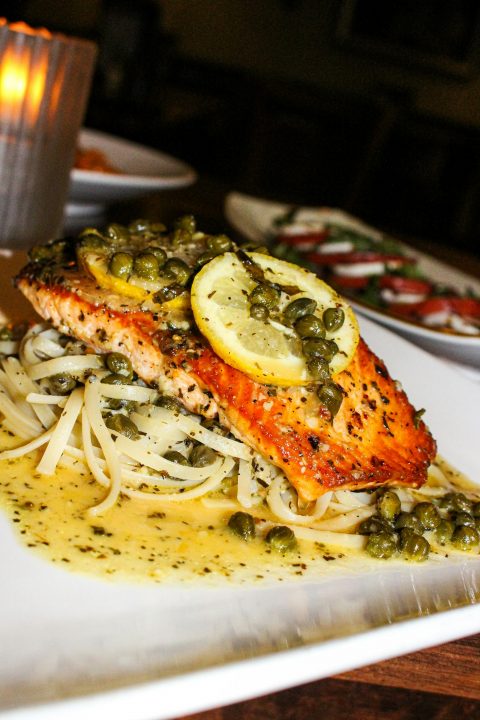
5. Lemon Garlic Salmon Pasta With Spinach
For nights when only pasta will do. A pound of salmon gets flaked through whole wheat spaghetti with lemon, garlic and a splash of pasta water, which makes a light sauce with no cream at all. Serves 4. 505 calories and 32 g protein per serving.
- 1 lb (454 g) salmon fillet, skin removed
- 8 oz (227 g) dry whole wheat spaghetti
- 5 oz (140 g) baby spinach
- 2 tbsp olive oil, divided
- 4 garlic cloves, sliced
- 1 lemon (zest and juice), red pepper flakes, salt and pepper
- 1 tbsp capers, optional
- Cook the spaghetti in salted water until al dente. Save 1 cup of the pasta water before draining.
- While it cooks, sear the salmon in 1 tbsp oil over medium-high heat, about 4 minutes per side. Move it to a plate.
- In the same pan, cook the garlic and pepper flakes in the remaining oil for 1 minute. Add the spinach and stir until wilted.
- Add the pasta, lemon zest and juice, capers and a splash of pasta water. Toss, then break the salmon into large flakes and fold it in gently.
6. Blackened Salmon With Quinoa and Broccoli
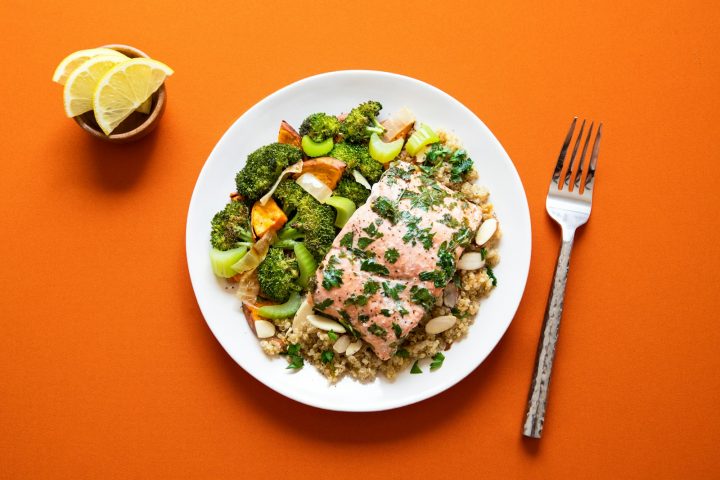
A smoky spice rub does all the work here: paprika, garlic powder, cumin and a pinch of cayenne. The broccoli roasts while the quinoa simmers, and the fish needs only 6 or 7 minutes in a hot skillet. Serves 4. 539 calories and 38 g protein per plate.
- 4 salmon fillets, 5 oz (140 g) each
- 3 cups cooked quinoa (about 1 cup dry)
- 1 lb (454 g) broccoli florets
- 1 1/2 tbsp olive oil, divided
- 2 tsp smoked paprika, 1 tsp garlic powder, 1 tsp cumin, 1/2 tsp dried thyme, a pinch of cayenne, salt
- Lemon wedges, for serving
- Heat the oven to 425°F. Toss the broccoli with 1 tbsp oil and salt and roast 18 to 20 minutes, until the edges char.
- Cook the quinoa if you don’t have it ready, about 15 minutes.
- Mix the spices with a big pinch of salt and press the mixture onto the top of each fillet.
- Heat the remaining oil in a cast iron skillet over medium-high. Cook the salmon spice side down for 3 minutes, flip and cook 3 to 4 minutes more. Serve over quinoa with the broccoli and lemon.
How to cook salmon so it stays moist
Dry salmon is almost always overcooked salmon. A few habits fix it:
 You’ll also loveGreen Tea vs. Coffee: Which One Wins for Your Health?
- Use a thermometer once or twice. FoodSafety.gov lists 145°F (63°C) for fish fillets, or cooking until the flesh is no longer translucent and separates easily with a fork. Check the thickest part.
- Pat it dry. A dry surface browns instead of steaming, which matters most for the skillet recipes.
- Buy even fillets. Center-cut pieces of similar thickness cook at the same speed. Thin tail pieces need a few minutes less.
- Let it rest 2 minutes. It keeps cooking a little off the heat.
Is salmon a healthy dinner choice?
It is one of the easiest ways to put a filling, protein-rich dinner on the plate. Per USDA FoodData Central, 100 g of raw farmed Atlantic salmon has about 208 calories, 20.4 g of protein and 13.4 g of fat, so a 5 oz fillet lands near 29 g of protein before you add anything else. Curious about the different kinds of fat in food? Our guide to saturated vs unsaturated fats breaks it down.
What turns salmon from healthy to heavy is usually the side: cream sauces, a mountain of white pasta, a lot of butter. Every recipe above pairs the fish with at least a pound of vegetables or a fiber-rich whole grain instead. If you like fish on a sheet pan, there is also a salmon dinner in our healthy sheet pan dinners and a maple Dijon version in these healthy fall dinners.
Buying and storing salmon
Fresh salmon doesn’t wait around. The FoodSafety.gov cold food storage chart gives fatty fish like salmon 1 to 3 days in the fridge and 2 to 3 months in the freezer, so plan to cook it within a couple of days of buying it, or freeze it right away. Frozen fillets are a great backup: thaw them overnight in the fridge and they work in every recipe here.
For leftovers, the rice bowls and the Mediterranean salmon reheat best. Warm salmon gently, covered, at low power, or eat it cold over greens. The blackened salmon flaked into a salad makes one of my favorite healthy lunches in 10 minutes.
How we calculated the numbers
Calories and protein are estimates per serving, calculated from USDA FoodData Central values per 100 g for the main ingredients at the weights listed (salmon at its raw weight, rice and quinoa cooked, pasta dry). Garlic, spices, herbs, lemon, vinegar, capers and garnishes are not counted. Brands and fillet sizes will shift your totals a little.
Sources
- FoodSafety.gov: Safe Minimum Internal Temperatures
- FoodSafety.gov: Cold Food Storage Charts
- USDA FoodData Central values via GetFoodFacts: Atlantic salmon, farmed, raw (FDC 175167), brown rice, cooked (FDC 169704), quinoa, cooked (FDC 168917), whole wheat pasta (FDC 169738), edamame (FDC 168411), chickpeas, canned, drained (FDC 173800), feta (FDC 173420), green beans, asparagus (FDC 168389), broccoli, spinach (FDC 168462), honey (FDC 169640) and soy sauce, plus the matching pages for cucumber, cabbage and oils, and nonfat plain Greek yogurt (FDC 170894) from FoodData Central.