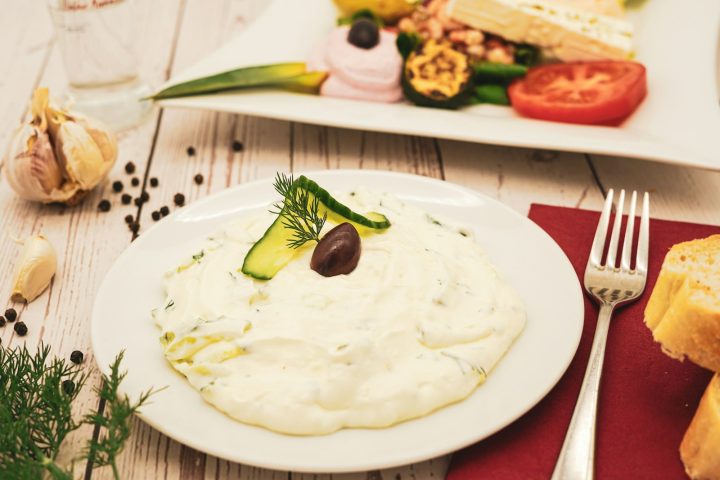
This tzatziki recipe makes the thick, garlicky Greek yogurt sauce you get at a good gyro shop, and it takes about 15 minutes of hands-on work. The one step most home versions skip is the one that matters: squeezing the water out of the cucumber. Do that and your tzatziki stays scoopable for days instead of turning into a soupy puddle by dinner.
How to make tzatziki: grate a cucumber, salt it, squeeze out as much liquid as you can, then stir it into thick Greek yogurt with grated garlic, olive oil, lemon juice, dill and salt. Chill it for 30 minutes so the garlic mellows and the flavors come together.



21 meals, 100 g+ protein a day, plus a grocery list and prep schedule.
Tzatziki Recipe Ingredients
Makes: about 2 cups (16 servings of 2 tablespoons) · Prep: 15 minutes · Chill: 30 minutes
- 1 1/2 cups (340 g) plain whole-milk Greek yogurt
- 1 small English cucumber (about 8 oz / 225 g)
- 2 garlic cloves, finely grated
- 1 tablespoon (15 ml) extra-virgin olive oil, plus more for serving
- 1 tablespoon (15 ml) fresh lemon juice or red wine vinegar
- 2 tablespoons chopped fresh dill
- 1/2 teaspoon kosher salt, plus a pinch for the cucumber
- 1 tablespoon chopped fresh mint (optional)
Grate the garlic on a Microplane or the smallest holes of your box grater. Minced garlic leaves sharp little bits that bite; grated garlic melts into the yogurt.
How to Make Tzatziki Sauce
- Grate the cucumber, skin and all, on the large holes of a box grater. Toss it with a pinch of salt in a fine-mesh strainer and let it sit for 10 minutes.
- Squeeze the cucumber hard, a handful at a time, or twist it in a clean kitchen towel until almost no more liquid drips out.
- In a medium bowl, stir the grated garlic into the lemon juice and let it sit for 5 minutes while you chop the herbs.
- Add the yogurt, squeezed cucumber, olive oil, dill, mint (if using) and 1/2 teaspoon salt. Stir until evenly mixed.
- Taste and adjust with more salt, lemon or garlic. Cover and refrigerate for at least 30 minutes before serving.
- Spread the tzatziki into a shallow bowl, drizzle with a little olive oil and serve cold.
Nutrition per 2-tablespoon serving (whole-milk version): about 31 calories, 2 g protein, 1.6 g carbs, 1.9 g fat and 0.1 g fiber. A more generous 1/4-cup scoop on a bowl or wrap comes to about 62 calories and 4.1 g protein. I calculated this from USDA FoodData Central values for each ingredient, counting about 3 g per garlic clove and the whole cucumber, including the liquid you squeeze out, so the real numbers are a touch lower.
Why You Have to Squeeze the Cucumber
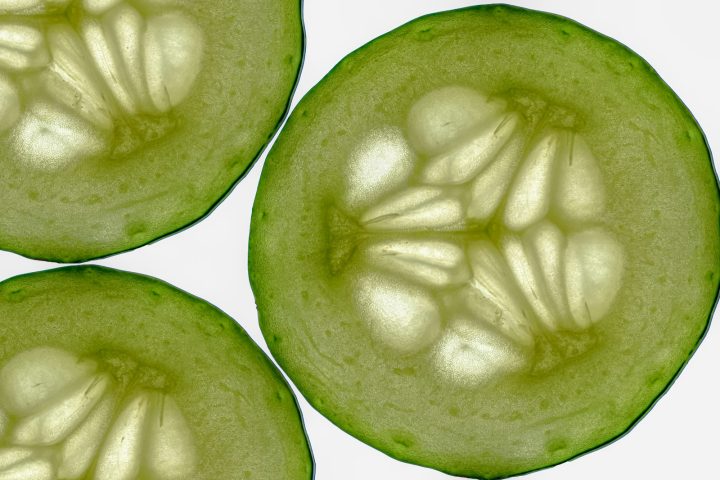
Cucumber is mostly water, and salt pulls that water out. If you stir grated cucumber straight into yogurt, the same thing happens in the bowl over the next few hours, and you end up pouring off a layer of green-tinged liquid before you can serve it.
Salting first and squeezing hard gets that liquid out before it ever touches the yogurt. Be rougher than feels necessary. When you think you’re done, squeeze once more; there is usually another tablespoon or two hiding in there. The pulp left behind should look fluffy and only slightly damp.
English (seedless) cucumbers are my pick because the skin is thin and the seeds are tiny, so there’s nothing to peel or scoop. With a regular slicing cucumber, peel off the waxy skin and scrape out the seedy middle with a spoon before grating. Persian cucumbers work too; use three or four of them.
Which Greek Yogurt Makes the Best Tzatziki?
Thick, strained yogurt is the backbone of tzatziki, so the yogurt you buy matters more than anything else on the list. Regular (unstrained) yogurt is too loose; if that’s all you have, strain it in a coffee filter-lined sieve in the fridge for a few hours first, the same way you’d start homemade labneh.
 You’ll also loveSlow Cooker Chicken Noodle Soup Without Mushy Noodles
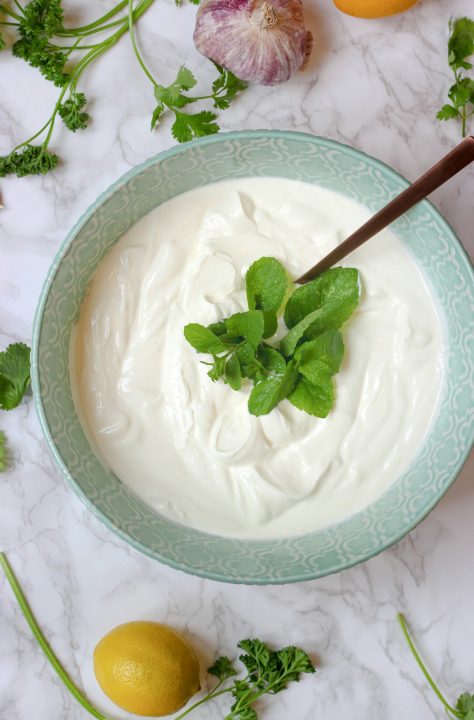
Whole-milk Greek yogurt gives the richest, least sour sauce, and it’s what I reach for. Low-fat and nonfat both work, and they nudge the protein up slightly while trimming fat. Here is how the finished tzatziki compares, per 2-tablespoon serving, depending on the yogurt you use:
| Greek yogurt used | Calories | Protein | Fat |
|---|---|---|---|
| Whole milk | 31 | 2.0 g | 1.9 g |
| Low-fat | 26 | 2.2 g | 1.3 g |
| Nonfat | 23 | 2.3 g | 0.9 g |
The difference is small per spoonful, so pick the yogurt you like the taste of. Nonfat versions can be noticeably tangier; an extra teaspoon of olive oil rounds them out.
Where Tzatziki Comes From
Tzatziki is the Greek member of a big family of cold yogurt, cucumber and garlic dishes eaten across Turkey, the Balkans and the Middle East. The Greek name comes from the Turkish word cacık, and the first Ottoman cookbook, printed in 1844, describes cacık simply as yogurt with cucumber and garlic. Greek tzatziki is typically made with strained yogurt, cucumber, garlic, salt, olive oil and vinegar or lemon, often with dill or mint.
In Greece it’s served as a meze with pita, olives and fried vegetables like eggplant and zucchini, and spooned generously over gyros and souvlaki.
What to Serve With Tzatziki

Once you have a tub of this in the fridge, it ends up on almost everything. A few ways it earns its keep during the week:
- Grain bowls: swap it in for the garlic sauce on a chicken shawarma bowl, or add a scoop next to it.
- Falafel and pita: it’s cooling against the spices in baked falafel, tucked into a warm pita with tomato and onion.
- A meze spread: set it out with high protein hummus, olives, cucumber spears and a bowl of fattoush salad.
- Grilled meat and fish: chicken skewers, lamb kofta, salmon or turkey burgers all take a dollop well.
- Raw vegetables: carrots, bell pepper strips, radishes and snap peas for an easy afternoon snack.
Easy Swaps and Variations
- Herbs: dill is classic, but all mint, or half dill and half parsley, is just as good.
- Acid: red wine vinegar gives a sharper, more traditional bite than lemon juice. Start with 2 teaspoons and add more to taste.
- Garlic: two cloves is assertive but balanced. Use one if you’re serving it to garlic-shy eaters, three if you’re not.
- Dairy-free: a thick unsweetened plain coconut or almond yogurt works; skip the straining step if it’s already thick.
- Thicker for dipping: strain the yogurt for an hour before mixing, or cut the cucumber back to half.
How Long Does Tzatziki Last?
Store tzatziki in an airtight container in a refrigerator set to 40°F (4°C) or below, which is the setting foodsafety.gov recommends. Because it’s made with dairy, don’t leave it out for more than 2 hours, or 1 hour if it’s above 90°F (32°C), such as at a summer picnic.
In my kitchen it tastes best within 3 to 4 days. After that the garlic gets harsher and a little liquid starts to collect on top. Pour that off or stir it back in. I don’t freeze tzatziki: the cucumber turns limp and the yogurt goes grainy once thawed.
 You’ll also loveLentil Salad You Can Make Sunday and Eat Through Wednesday
For meal prep, I portion it into small 2-ounce containers so each lunch gets its own sauce and the main tub isn’t opened every day.
Sources
- USDA FoodData Central, via Yogurt, Greek, plain, whole milk (FDC 171304), Yogurt, Greek, plain, lowfat (FDC 170903), Yogurt, Greek, plain, nonfat (FDC 330137), Garlic, raw (FDC 169230), Oil, olive (FDC 171413) and Dill weed, fresh (FDC 172233)
- USDA FoodData Central: Cucumber, with peel, raw (FDC 168409) and Lemon juice, raw (FDC 167747)
- FoodSafety.gov: 4 Steps to Food Safety
- Wikipedia: Tzatziki

Tzatziki
Ingredients
- 1 1/2 cups (340 g) plain whole-milk Greek yogurt
- 1 small English cucumber (about 8 oz / 225 g)
- 2 garlic cloves, finely grated
- 1 tablespoon (15 ml) extra-virgin olive oil, plus more for serving
- 1 tablespoon (15 ml) fresh lemon juice or red wine vinegar
- 2 tablespoons chopped fresh dill
- 1/2 teaspoon kosher salt, plus a pinch for the cucumber
- 1 tablespoon chopped fresh mint (optional)
Instructions
- Grate the cucumber, skin and all, on the large holes of a box grater. Toss it with a pinch of salt in a fine-mesh strainer and let it sit for 10 minutes.
- Squeeze the cucumber hard, a handful at a time, or twist it in a clean kitchen towel until almost no more liquid drips out.
- In a medium bowl, stir the grated garlic into the lemon juice and let it sit for 5 minutes while you chop the herbs.
- Add the yogurt, squeezed cucumber, olive oil, dill, mint (if using) and 1/2 teaspoon salt. Stir until evenly mixed.
- Taste and adjust with more salt, lemon or garlic. Cover and refrigerate for at least 30 minutes before serving.
- Spread the tzatziki into a shallow bowl, drizzle with a little olive oil and serve cold.
Nutrition per 2 tablespoons
21 meals, 100 g+ protein a day, plus a grocery list and prep schedule.