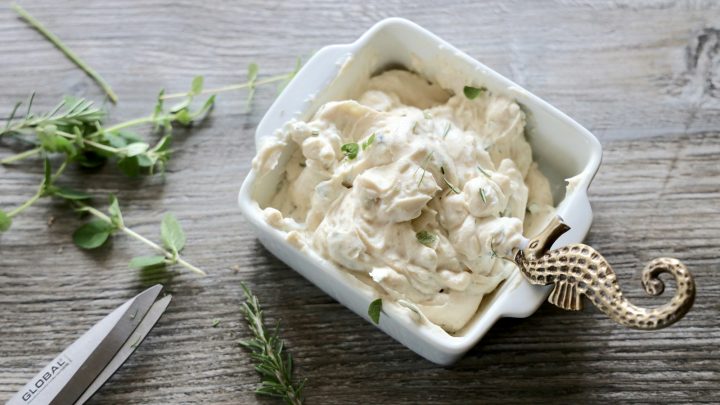
This labneh recipe needs two ingredients and almost no work: stir a little salt into plain Greek yogurt, wrap it in cheesecloth and let it drain in the fridge for 12 to 24 hours. What’s left is labneh, a thick, tangy yogurt cheese you can spread on toast, swirl with olive oil for a dip, or roll into balls. One 32-ounce tub makes about 2 cups.
Below you’ll find the recipe in US and metric amounts, a strain-time chart so you can stop at exactly the texture you want, nutrition worked out from USDA data, and the small mistakes that make labneh grainy or watery.
What is labneh?
Labneh is yogurt that has been strained until most of its whey drains away, leaving something between very thick yogurt and soft cheese. The name comes from laban, the Arabic word used for yogurt or milk in much of the Levant, and labneh is an everyday food in Lebanon, Syria, Jordan and Palestine. It’s usually eaten at breakfast or as part of a mezze spread: spread on a plate, pooled with olive oil, sprinkled with za’atar or dried mint and scooped up with warm flatbread.
It tastes like yogurt turned up a notch: tangier, saltier and much richer in texture. If you like cream cheese but want something lighter and sharper, labneh is worth the one minute of hands-on time.
Homemade labneh recipe
Makes: about 2 cups (16 servings) · Prep: 10 minutes · Strain: 12 to 24 hours in the fridge · Total: about 24 hours 10 minutes, almost all hands-off · Equipment: fine-mesh strainer, deep bowl, cheesecloth or a thin cotton towel
Ingredients
- 32 oz (907 g) plain whole-milk Greek yogurt
- 1/2 tsp (3 g) fine sea salt
- 1 tbsp (13.5 g) extra-virgin olive oil, for serving
- 1 tsp za’atar or dried mint, for serving (optional)
Instructions
- Stir the salt into the yogurt until it is evenly mixed.
- Set a fine-mesh strainer over a deep bowl and line it with a double layer of cheesecloth or a thin, clean cotton kitchen towel, leaving plenty of cloth hanging over the sides.
- Spoon the yogurt into the lined strainer and fold the cloth over the top. Check that the bottom of the strainer sits at least 1 inch (2.5 cm) above the bottom of the bowl so the yogurt never sits in the whey.
- Refrigerate for 12 to 24 hours: about 12 hours for a soft, scoopable dip, about 24 hours for a thick spread. Pour off the whey once or twice if it rises close to the strainer.
- Unwrap the labneh, scrape it into a clean container and stir until smooth. Cover and keep it in the refrigerator.
- To serve, spread the labneh in a shallow bowl, make a swirl with the back of a spoon, fill it with the olive oil and sprinkle with za’atar or dried mint.
How long to strain labneh
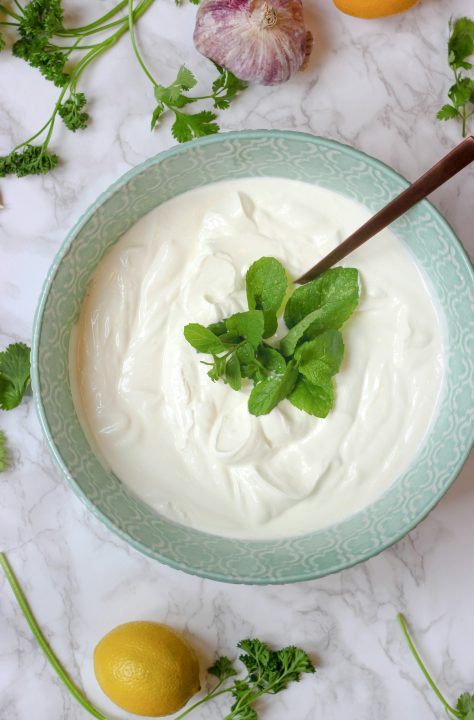
Strain time is the only real decision in this recipe. The longer the yogurt hangs, the more whey drips out and the thicker and tangier the labneh gets. Always strain in the refrigerator, not on the counter. Use this as a guide and check it with a spoon as you go:
| Strain time (fridge) | Texture | Best for |
|---|---|---|
| 6 to 8 hours | Like extra-thick Greek yogurt | Sauces, drizzling over grilled meat or roasted vegetables |
| About 12 hours | Soft and scoopable | Mezze dip with olive oil and za’atar |
| About 24 hours | Thick, like soft cream cheese | Spreading on toast, bagels, wraps and sandwiches |
| 36 to 48 hours | Firm enough to roll | Labneh balls stored in olive oil |
Greek yogurt or regular yogurt?
Traditional labneh starts with regular plain yogurt, and that works perfectly well. Greek yogurt has simply had part of its whey removed already, so it gets you to thick labneh faster and gives you more labneh per tub. With regular yogurt, expect roughly half the volume you started with, and plan on the longer strain times.
- Pick plain and unflavored. Vanilla or sweetened yogurt won’t taste right, and some flavored yogurts include thickeners that don’t drain well.
- Check the label for gums and starches. Yogurt that lists only milk and live cultures strains the cleanest and gives the smoothest result.
- Whole milk tastes best. Labneh made from nonfat yogurt is higher in protein for the calories, but it comes out chalkier and much sharper. 2% is a good middle ground.
Tips for smooth, thick labneh
- Keep the strainer above the whey. If the bottom of the yogurt touches the liquid, it stops draining. A deep bowl or a strainer resting on a pot works well.
- No cheesecloth? A thin cotton tea towel, a nut-milk bag or a double layer of sturdy paper towels in the strainer all work. Paper coffee filters are fine for a small batch.
- Grainy labneh usually means it was strained too long or stirred too little at the end. Beat it with a spoon for 30 seconds, or loosen it with a spoonful of plain yogurt.
- Too sour? Use fresher yogurt and strain for less time. Labneh keeps getting tangier the longer it hangs.
- Too firm? Stir in a tablespoon of the drained whey or plain yogurt until it softens.
- Don’t toss the whey right away. The cloudy liquid can stand in for some of the water in bread dough, smoothies or the cooking water for rice.
Labneh nutrition
One serving of this labneh (1/16 of the batch, about 2 tablespoons) with its share of the olive oil drizzle has about 62 calories, 5.1 g protein, 3.7 g fat and 2.3 g carbs. Without the olive oil, it’s about 55 calories and 2.8 g fat per serving. These numbers count everything that went into the strainer, so they’re slightly high: some of the milk sugar and a little protein leave with the whey.
 You’ll also loveHow to Make a Salmon Rice Bowl in 25 Minutes
| Yogurt (per 100 g, USDA) | Calories | Protein | Fat | Carbs | Calcium |
|---|---|---|---|---|---|
| Greek, plain, whole milk | 97 | 9 g | 5 g | 4 g | 100 mg |
| Greek, plain, nonfat | 61 | 10.3 g | 0.4 g | 3.6 g | 111 mg |
| Regular plain, whole milk | 61 | 3.5 g | 3.3 g | 4.7 g | 121 mg |
Make the same recipe with nonfat Greek yogurt and each serving comes to about 35 calories, 5.8 g protein and almost no fat before the olive oil. Salt adds about 93 mg sodium per serving either way, so you can cut it to 1/4 teaspoon if you’re watching sodium.
How to serve labneh
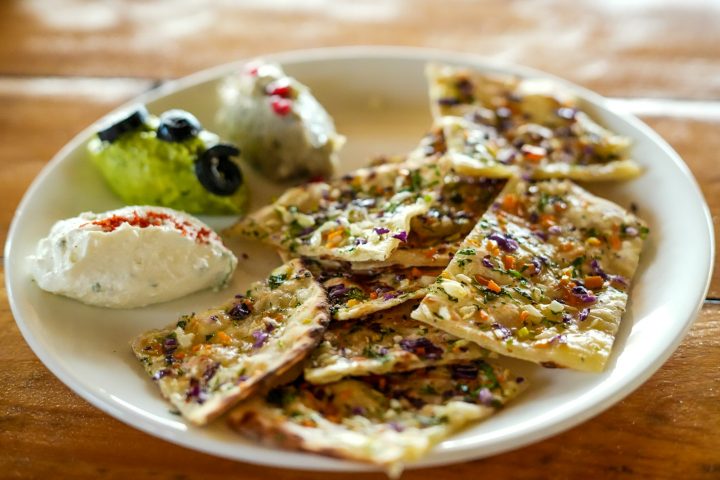
- Classic breakfast plate: labneh pooled with olive oil and za’atar, with warm pita, cucumbers, tomatoes and olives.
- Mezze spread: set it next to high protein hummus, a bowl of parsley-heavy tabbouleh and a plate of baked falafel.
- On salads: a spoonful on top of fattoush salad adds creaminess against the crisp pita and sumac.
- With eggs: spoon it onto a skillet of high protein shakshuka right before serving.
- As a spread: swap it for cream cheese on a bagel or mayo in a chicken wrap.
- Under roasted vegetables: spread a thick layer on a platter and pile hot roasted carrots or cauliflower on top.
Variations
- Labneh balls: strain for 36 to 48 hours until firm. Roll tablespoon-size portions between oiled palms, chill them on a plate for an hour, then roll in za’atar, chopped herbs or Aleppo pepper. Store them covered in olive oil in a jar in the refrigerator.
- Garlic and herb: stir in 1 small grated garlic clove, 2 tablespoons chopped dill or mint and a little lemon zest after straining.
- Spicy: top with olive oil warmed with a pinch of Aleppo pepper or red pepper flakes.
- Sweet: skip the za’atar and serve with honey, chopped pistachios and fresh figs or berries.
How long does labneh last?
Keep labneh in a covered container in the refrigerator at 40°F (4°C) or below. FoodSafety.gov’s cold food storage chart doesn’t list yogurt or labneh, so there’s no official window to quote. The use-by date on your yogurt is a sensible outer limit, and since homemade labneh has been handled and drained in your kitchen, I aim to finish it within about a week. Always use a clean spoon, and throw it out if you see mold or it smells off.
 You’ll also loveProtein Pancakes With Protein Powder That Aren’t Rubbery
You can freeze labneh in small portions. FoodSafety.gov notes that freezer guidelines are for quality only, since food kept continuously at 0°F (-18°C) or below stays safe indefinitely. The texture can turn a little grainy after thawing, so thaw it overnight in the fridge and beat it smooth before serving. Labneh balls in oil should always stay in the refrigerator, too.
Labneh FAQ
Is labneh the same as Greek yogurt?
They’re close relatives. Both are strained yogurt, but labneh is strained much longer and is usually salted, so it ends up thicker, tangier and closer to a soft cheese. Greek yogurt is the starting point in this recipe.
How is labneh different from cream cheese?
Cream cheese is made from milk and cream, so it’s richer and milder. Labneh is made only from yogurt, so it’s tangier and lighter, and you can use it in most places you’d spread cream cheese.
Can I strain labneh on the counter?
Strain it in the refrigerator. Labneh hangs for many hours, and keeping dairy cold the whole time is the safe way to do it. It also keeps the flavor fresher and less sour.
Why is my labneh watery?
It either needs more time or it was sitting in its own whey. Make sure the strainer is lifted well above the liquid, pour off the whey and give it another 6 to 12 hours.
How much labneh does 32 ounces of yogurt make?
About 2 cups from Greek yogurt strained for 24 hours. Regular yogurt gives you roughly half as much, and longer straining for labneh balls gives you a little less.
Sources
- USDA FoodData Central per-100 g values via getfoodfacts.com: yogurt, Greek, plain, whole milk (FDC 171304), yogurt, Greek, plain, nonfat (FDC 330137), yogurt, plain, whole milk (FDC 171284), olive oil (FDC 171413), table salt (FDC 173468).
- FoodSafety.gov, Cold Food Storage Chart.


21 meals, 100 g+ protein a day, plus a grocery list and prep schedule.

Homemade Labneh
Ingredients
- 32 oz (907 g) plain whole-milk Greek yogurt
- 1/2 tsp (3 g) fine sea salt
- 1 tbsp (13.5 g) extra-virgin olive oil, for serving
- 1 tsp za'atar or dried mint, for serving (optional)
Instructions
- Stir the salt into the yogurt until it is evenly mixed.
- Set a fine-mesh strainer over a deep bowl and line it with a double layer of cheesecloth or a thin, clean cotton kitchen towel, leaving plenty of cloth hanging over the sides.
- Spoon the yogurt into the lined strainer and fold the cloth over the top. Check that the bottom of the strainer sits at least 1 inch (2.5 cm) above the bottom of the bowl so the yogurt never sits in the whey.
- Refrigerate for 12 to 24 hours: about 12 hours for a soft, scoopable dip, about 24 hours for a thick spread. Pour off the whey once or twice if it rises close to the strainer.
- Unwrap the labneh, scrape it into a clean container and stir until smooth. Cover and keep it in the refrigerator.
- To serve, spread the labneh in a shallow bowl, make a swirl with the back of a spoon, fill it with the olive oil and sprinkle with za'atar or dried mint.
Nutrition per 1/16 of the batch (about 2 tablespoons)
21 meals, 100 g+ protein a day, plus a grocery list and prep schedule.