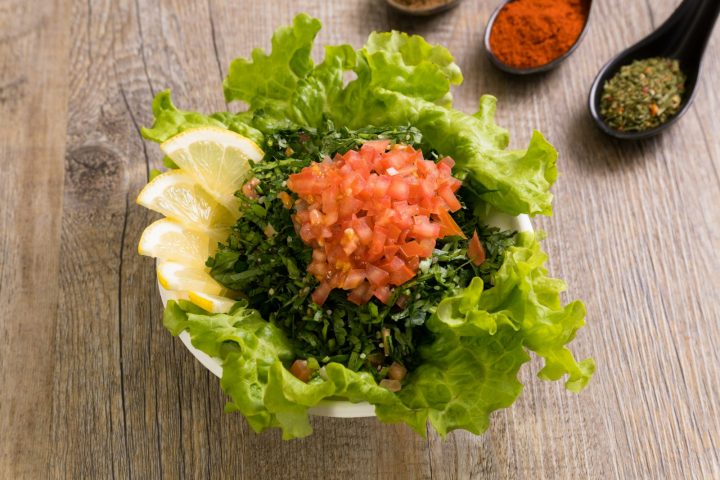
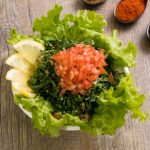
A good tabbouleh recipe is mostly parsley, not grain. Lebanese-style tabbouleh uses about three cups of finely chopped parsley to just 1/3 cup of fine bulgur, plus mint, tomato, green onion, lemon juice and olive oil. It takes about 30 minutes, needs no cooking, and comes in at roughly 165 calories a serving.
If the tabbouleh you’ve had before tasted like a bowl of damp wheat with a few green flecks, this is the fix. Below you’ll find the full recipe with US and metric amounts, how to chop parsley so it stays fluffy instead of bruised, a calorie breakdown built from USDA data, and easy swaps for quinoa, coarse bulgur or a cucumber-heavy version.
What makes tabbouleh taste right
Tabbouleh comes from the mountains of Lebanon and Syria and is now one of the best-known salads in the Middle East. In its home kitchens it’s an herb salad first. Western versions often flip the ratio and use more bulgur than parsley, which is why so many taste heavy and bland. Lebanon even has a National Tabbouleh Day, held on the first Saturday of July.
- Parsley is the star. Use a lot of it, and chop it by hand. A food processor bruises the leaves and turns them watery.
- Fine bulgur, soaked, not cooked. Fine (#1) bulgur softens in cold water in about 15 minutes and keeps a light, slightly chewy bite.
- Dry herbs. Wet parsley makes a soggy salad. Spin it dry, then pat it with a towel before chopping.
- Drained tomatoes. A short drain with a pinch of salt pulls out extra juice so the salad doesn’t pool at the bottom of the bowl.
- Plenty of lemon. Tabbouleh should taste bright and a little sharp. A quarter cup of lemon juice is not too much.
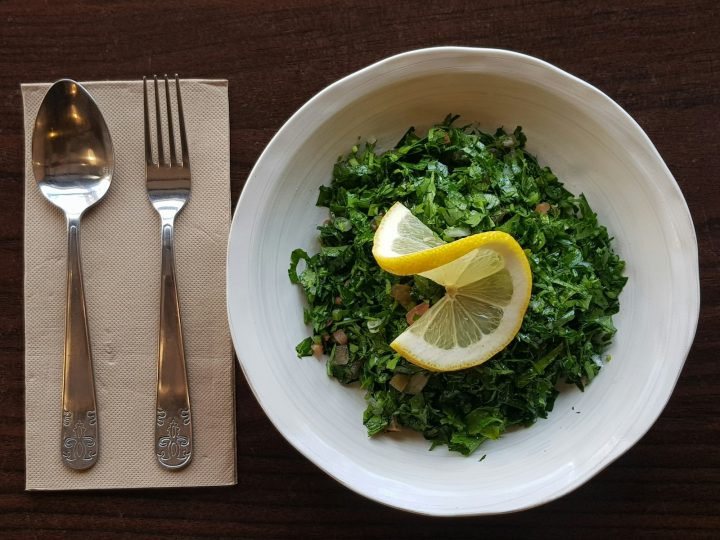
Lebanese tabbouleh recipe
Serves: 4 · Prep: 30 minutes (includes a 15-minute bulgur soak) · Cook: none · Total: 30 minutes
Ingredients
- 1/3 cup (45 g) fine bulgur wheat (#1 grind)
- 2 medium tomatoes (250 g), finely diced
- 3/4 tsp kosher salt, divided
- 3 cups (180 g) finely chopped flat-leaf or curly parsley (about 2 large bunches)
- 1/2 cup (20 g) finely chopped fresh mint leaves
- 4 green onions (60 g), thinly sliced
- 1/4 cup (60 ml) fresh lemon juice, from about 2 lemons
- 3 tbsp (40 g) extra-virgin olive oil
- 1/4 tsp ground allspice or black pepper
- Romaine or butter lettuce leaves, for serving (optional)
Instructions
- Rinse the bulgur in a fine-mesh strainer, then put it in a small bowl and cover with about 1/2 inch (1 cm) of cold water. Soak for 15 minutes, until tender with a little chew. Drain and squeeze out the extra water with your hands.
- While the bulgur soaks, put the diced tomatoes in a strainer set over a bowl and sprinkle with 1/4 tsp of the salt. Let them drain for 10 minutes.
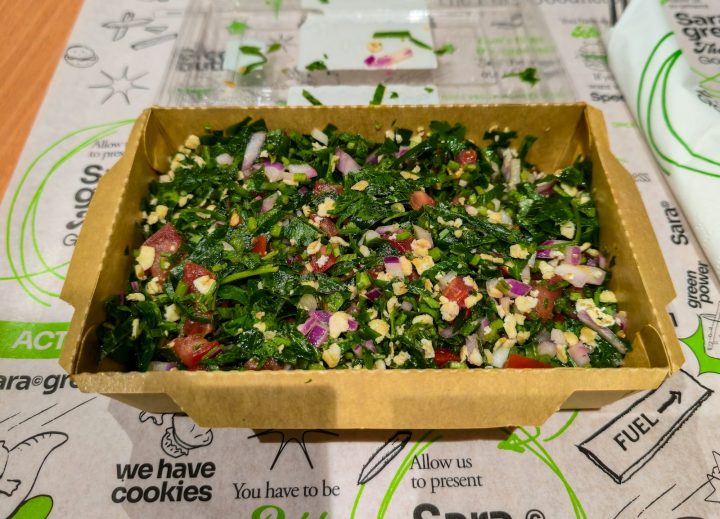
- Wash the parsley and mint and dry them completely in a salad spinner or with towels. Pick the parsley leaves off the thick stems, gather them into a tight pile and chop finely with a sharp knife. Chop the mint the same way.
- In a large bowl, combine the bulgur, drained tomatoes, parsley, mint and green onions.
- Whisk the lemon juice, olive oil, allspice and the remaining 1/2 tsp salt. Pour over the salad and toss well.
- Taste and add more lemon or salt if needed. Let the tabbouleh sit for 5 to 10 minutes so the bulgur absorbs the dressing, then serve with lettuce leaves for scooping.
How to chop parsley for tabbouleh
This is the step that decides the texture. Work with completely dry parsley and a sharp chef’s knife. Hold a bunch by the stems, slice the leafy top off in one go, and save the stems for soup or stock. Bunch the leaves tightly, slice thinly across, then rock the knife over the pile a few times. Stop when the pieces are small and even. If you keep going until it looks like paste, you’ve gone too far.
 You’ll also loveHealthy Breakfast Recipes: Make-Ahead Ideas With Calories and Protein
Curly and flat-leaf parsley both work. Curly gives a fluffier, more textured salad; flat-leaf has a softer bite. Use whichever looks freshest at the store. If you grow your own herbs, parsley and mint are two of the easiest. Here’s how to start: easy herbs to grow for cooking.
Tabbouleh nutrition and calories
One serving (a quarter of the batch) has about 165 calories, 4 g protein, 16 g carbs, 11 g fat and 4 g fiber. I calculated these from USDA FoodData Central per-100 g values for each ingredient. Salt, allspice and the lettuce leaves aren’t counted.
More than half of the calories come from the olive oil. The fiber is spread across the whole bowl, with the herbs supplying about 40% of it and the bulgur about a third. Here’s the full batch:
| Ingredient (whole batch) | Amount | Calories | Fiber |
|---|---|---|---|
| Fine bulgur, dry | 1/3 cup (45 g) | 154 | 5.6 g |
| Parsley | 3 cups (180 g) | 65 | 5.9 g |
| Mint | 1/2 cup (20 g) | 9 | 1.4 g |
| Tomatoes | 2 medium (250 g) | 45 | 3.0 g |
| Green onions | 4 (60 g) | 19 | 1.6 g |
| Lemon juice | 1/4 cup (60 g) | 13 | 0.2 g |
| Olive oil | 3 tbsp (40 g) | 354 | 0 g |
| Total (4 servings) | 659 | 17.7 g | |
| Per serving | 165 | 4.4 g |
Want a lighter bowl? Cut the oil to 2 tablespoons and you save about 30 calories per serving. The salad will taste a little sharper, so you may want to ease off the lemon too. For more meals built around whole grains, vegetables and beans, see our high fiber meals.
Easy tabbouleh variations
- Quinoa tabbouleh (gluten-free): swap the bulgur for 1/2 cup (about 90 g) cooked and cooled quinoa. Spread it on a plate to cool fully so it doesn’t wilt the herbs.
- Coarse bulgur: if coarse is all you can find, cover it with boiling water instead of cold and let it sit 30 to 45 minutes, until tender. Drain and squeeze well.
- With cucumber: add 1 cup (130 g) finely diced cucumber for extra crunch. Seed it first so it doesn’t add water.
- More filling: fold in a cup of rinsed chickpeas, or serve the tabbouleh next to a protein. It’s great with grilled chicken, fish or baked falafel.
- A little warm spice: some cooks add a pinch of cinnamon or a few pinches of Aleppo pepper with the allspice. Start small.
What to serve with tabbouleh
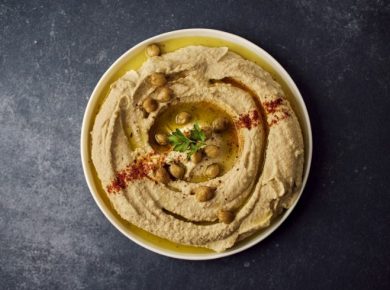
Tabbouleh is a classic part of a mezze spread, next to hummus, falafel, olives and warm pita. It also works as a bright side for heavier dishes. A few easy pairings:
- Pita, hummus and crispy oven-baked falafel for a full mezze plate.
- A bowl of red lentil soup for a simple, filling dinner.
- Grilled chicken thighs, lamb kofta or salmon.
- Packed lunches: tabbouleh holds better than most green salads, so it fits right into our 10-minute healthy lunches lineup.
Make ahead and storage
Tabbouleh tastes best the day it’s made, but you can get most of the work done early. Chop the parsley, mint and green onions, then store them in a container lined with a paper towel in the fridge. Keep the soaked bulgur, the drained tomatoes and the dressing in separate containers. Toss everything together up to an hour before serving.
Once dressed, keep leftovers covered in the fridge and eat them within a day or two. The lemon slowly softens the herbs, so the salad gets wetter and darker over time. A fresh squeeze of lemon and a handful of new parsley will revive it. Don’t freeze tabbouleh; the herbs turn limp and watery when they thaw.
Tabbouleh FAQ
Is tabbouleh the same as tabouli?
Yes. Tabbouleh, tabouli and tabouleh are different English spellings of the same Arabic name. The salad is the same: parsley, bulgur, mint, tomato, onion, lemon and olive oil.
Is tabbouleh healthy?
It’s a vegetable-heavy salad with whole-grain bulgur and olive oil, and this version has about 165 calories and 4 g of fiber per serving. Most of the calories come from the oil, so the amount you pour in makes the biggest difference.
Do you cook bulgur for tabbouleh?
Not if you use fine bulgur. A 15-minute soak in cold water is enough. Coarse bulgur needs boiling water and a longer rest of 30 to 45 minutes.
Is tabbouleh gluten-free?
No. Bulgur is cracked wheat. For a gluten-free tabbouleh, use cooked quinoa instead, as described in the variations above.
Why is my tabbouleh soggy?
Usually one of three things: the herbs were wet when you chopped them, the tomatoes weren’t drained, or the bulgur wasn’t squeezed dry after soaking. Dressing it too far ahead also makes it watery.
Sources
- USDA FoodData Central per-100 g values via getfoodfacts.com: Bulgur, dry (FDC 170688), Parsley, fresh (FDC 170416), Spearmint, fresh (FDC 173475), Tomatoes, red, ripe, raw (FDC 170457), Scallions, raw (FDC 170005), Lemon juice, raw (FDC 167747), Olive oil (FDC 171413).
- Wikipedia: Tabbouleh (origin and National Tabbouleh Day).
21 meals, 100 g+ protein a day, plus a grocery list and prep schedule.
Lebanese Tabbouleh
Ingredients
- 1/3 cup (45 g) fine bulgur wheat (#1 grind)
- 2 medium tomatoes (250 g), finely diced
- 3/4 tsp kosher salt, divided
- 3 cups (180 g) finely chopped flat-leaf or curly parsley (about 2 large bunches)
- 1/2 cup (20 g) finely chopped fresh mint leaves
- 4 green onions (60 g), thinly sliced
- 1/4 cup (60 ml) fresh lemon juice, from about 2 lemons
- 3 tbsp (40 g) extra-virgin olive oil
- 1/4 tsp ground allspice or black pepper
- Romaine or butter lettuce leaves, for serving (optional)
Instructions
- Rinse the bulgur in a fine-mesh strainer, then put it in a small bowl and cover with about 1/2 inch (1 cm) of cold water. Soak for 15 minutes, until tender with a little chew. Drain and squeeze out the extra water with your hands.
- While the bulgur soaks, put the diced tomatoes in a strainer set over a bowl and sprinkle with 1/4 tsp of the salt. Let them drain for 10 minutes.
- Wash the parsley and mint and dry them completely in a salad spinner or with towels. Pick the parsley leaves off the thick stems, gather them into a tight pile and chop finely with a sharp knife. Chop the mint the same way.
- In a large bowl, combine the bulgur, drained tomatoes, parsley, mint and green onions.
- Whisk the lemon juice, olive oil, allspice and the remaining 1/2 tsp salt. Pour over the salad and toss well.
- Taste and add more lemon or salt if needed. Let the tabbouleh sit for 5 to 10 minutes so the bulgur absorbs the dressing, then serve with lettuce leaves for scooping.
Nutrition per 1/4 of the recipe
21 meals, 100 g+ protein a day, plus a grocery list and prep schedule.