Short answer: The easiest high fiber meals pair beans, lentils or chickpeas with whole grains, vegetables, berries or seeds. The seven meals below deliver 9 to 17 g of fiber and 6 to 44 g of protein per serving. Fibermaxxing is worth trying in a calm version: add fiber gradually and drink more water.
If your feed has been full of people piling chia seeds, lentils and raspberries onto everything, you have met fibermaxxing. It is the trend of the moment, and it is a nice change from the usual “eat less” message: the whole idea is to add food. Below are seven high fiber meals that make the trend practical, with real fiber and protein counts for every serving, plus my honest take on where the trend goes too far.
What is fibermaxxing, and why is it everywhere?
Fibermaxxing is a social media trend, spread by TikTok and Instagram creators, that pushes people to eat much more fiber. Straight Arrow News covered it on October 9, 2026 with a line that sums up the mood: “Fiber is the new protein.” It follows the earlier “proteinmaxxing” wave, and you can see the same energy: big bowls, big numbers, and lots of before-and-after grocery hauls.
The trend has a real gap behind it. The National Academy of Medicine guidance quoted in that report is 25 g of fiber a day for women and 38 g for men ages 19 to 50. A late-September piece by Boston University’s Jean Liew, first published by The Conversation and republished by Fortune, notes that only about 4% of U.S. adults reached the adequate intake between 2013 and 2018, and that average intake was around 16 g a day. So most of us really do have room to eat more beans, whole grains, fruit and vegetables.
Is fibermaxxing worth trying? My honest take
Yes, with one big edit: drop the “maxxing” part. Eating more fiber from whole foods is one of the most sensible food trends social media has produced in years. Jumping from 15 g to 50 g overnight is not.
The dietitian interviewed by Straight Arrow News, Yasi Ansari, put it simply: “Don’t go zero to 100, aka don’t max.” A fast jump can bring gas, bloating and cramps, and very high-fiber meals can fill you up so much that you miss protein and other nutrients. Her suggestion is to add about 5 g a week and drink more fluids as you go. If you have a digestive condition, check with your doctor or a dietitian before making big changes.
That is why every meal below pairs fiber with a solid amount of protein. You get the fullness of fiber without crowding out the rest of the plate.
7 high fiber meals with fiber and protein counts
All numbers are calculated from USDA FoodData Central values (links in Sources) for the main ingredients listed. Spices, salsa, lemon and small amounts of oil are not counted, so treat the totals as close estimates.
1. Raspberry chia yogurt bowl (14 g fiber, 23 g protein)
Stir 1 tablespoon (12 g) of chia seeds and 1/4 cup (20 g) of rolled oats into 170 g (about 3/4 cup) of plain nonfat Greek yogurt. Top with 1 cup of raspberries and let it sit five minutes so the chia softens. Raspberries do most of the work here, with about 8 g of fiber per cup, and the yogurt brings the protein. About 300 calories.
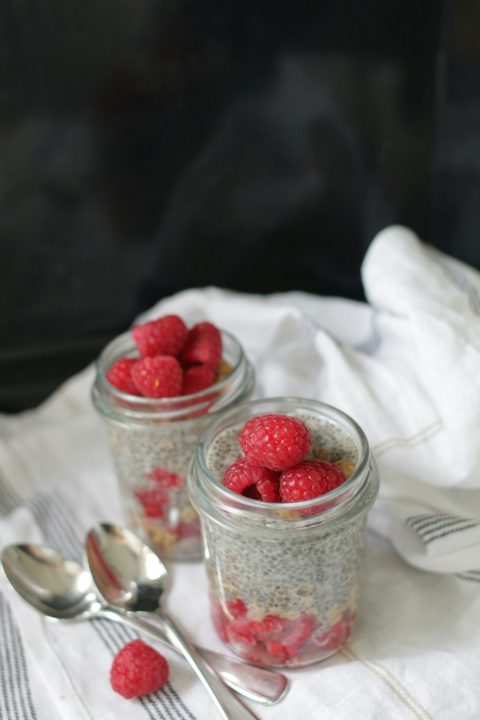
Want it ready the night before? Our overnight oats with chia seeds use the same idea in a jar, and our guide to healthy seeds shows other easy add-ins like flax and hemp.
2. Black bean and quinoa bowl (17 g fiber, 17 g protein)
Layer 3/4 cup (130 g) of cooked black beans, 1/2 cup of cooked quinoa and a third of an avocado (50 g). Finish with salsa, lime and cilantro. This is the highest-fiber meal on the list, and it holds up well as a packed lunch if you add the avocado just before eating. About 360 calories.
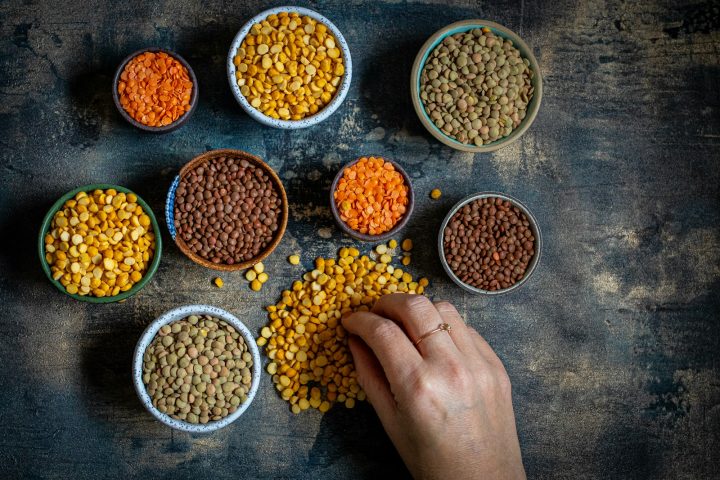
3. Simple lentil soup (16 g fiber, 18 g protein)
Soften onion, carrot and celery in a little olive oil, add garlic, cumin, a can of diced tomatoes, 1 cup of dry brown or green lentils and 6 cups of broth, then simmer about 25 minutes until tender. Each serving holds about 1 cup of cooked lentils, and the counts here are from the lentils alone, so the vegetables push the real fiber number a little higher. About 230 calories before the vegetables and oil.
If you love a big pot on Sunday, browse our hearty and healthy soups for more ideas that you can bulk up with beans.
4. Whole-wheat pasta with broccoli and chickpeas (17 g fiber, 19 g protein)
Toss 1 cup of cooked whole-wheat pasta with 1 cup of cooked broccoli and 1/2 cup of chickpeas. Add garlic, lemon zest, chili flakes and a spoon of the pasta water to make it glossy, then finish with a little Parmesan. Swapping white pasta for whole wheat and adding chickpeas is the easiest fibermaxxing move there is. About 400 calories.
5. Sheet pan chicken, sweet potato and Brussels sprouts (9 g fiber, 44 g protein)
Roast 120 g of chicken breast with 150 g of cubed sweet potato and 1 cup of halved Brussels sprouts at 425°F for about 25 minutes, until the chicken reaches 165°F. Lower in fiber than the bean meals, but this is the one to pick when you want a big protein dinner, and it uses one pan. More ideas in our easy one-pan recipes. About 390 calories.
6. Edamame and brown rice stir-fry (12 g fiber, 23 g protein)
Stir-fry 1 cup of shelled edamame and 1/2 cup of broccoli with ginger, garlic and a splash of low-sodium soy sauce, then serve over 1/2 cup of cooked brown rice. Frozen edamame cooks in minutes, so this is a real weeknight option. About 335 calories.
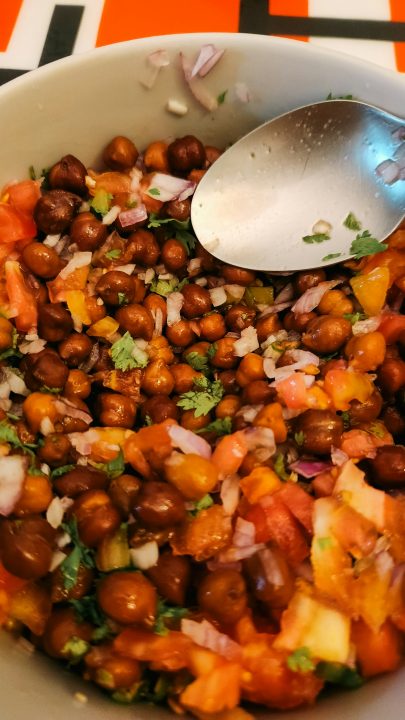
7. Pear and almond snack plate (9 g fiber, 6.5 g protein)
One medium pear (178 g) with the skin on and a small handful (1 oz) of almonds. It is not a meal, but it shows how much a simple snack can add: 9 g of fiber with zero cooking. About 265 calories.
High fiber meals compared
| Meal | Fiber | Protein | Calories | Best for |
|---|---|---|---|---|
| Raspberry chia yogurt bowl | 14 g | 23 g | ~300 | Breakfast |
| Black bean and quinoa bowl | 17 g | 17 g | ~360 | Packed lunch |
| Simple lentil soup* | 16 g | 18 g | ~230 | Batch cooking |
| Whole-wheat pasta, broccoli, chickpeas | 17 g | 19 g | ~400 | Weeknight dinner |
| Sheet pan chicken and sweet potato | 9 g | 44 g | ~390 | High-protein dinner |
| Edamame and brown rice stir-fry | 12 g | 23 g | ~335 | 15-minute dinner |
| Pear and almonds | 9 g | 6.5 g | ~265 | Snack |
How to fibermax without the bloat
- Add one meal at a time. Start with the yogurt bowl at breakfast for a week, then add a bean lunch. That lines up with the “about 5 g a week” pace suggested in the SAN report.
- Drink more water. Fiber works best with fluids, and both trend sources stress hydration.
- Mix your sources. Beans, lentils, whole grains, berries, vegetables, nuts and seeds all bring different kinds of fiber. Liew’s piece makes the point that variety matters more than one magic ingredient.
- Keep the protein. Pair every fiber-heavy dish with yogurt, chicken, tofu, edamame or eggs. Our high-protein breakfasts without eggs are a good starting list.
Can you meal prep high fiber meals?
Yes, and they are some of the best foods to batch. Beans, lentils and whole grains reheat well. According to FoodSafety.gov, soups and stews with vegetables or meat keep 3 to 4 days in the fridge and 2 to 3 months in the freezer, and cooked meat or poultry leftovers keep 3 to 4 days in the fridge. Cook the lentil soup and a pot of beans on Sunday, roast the sheet pan on Monday, and you are covered. Our breakfast meal prep ideas pair well with this plan.
FAQ
How much fiber should I eat a day?
The guidance quoted in recent coverage is 25 g a day for women and 38 g for men ages 19 to 50, and 21 g and 30 g for those 51 and older. Nutrition labels use 28 g as the daily value on a 2,000-calorie diet.
What is the easiest high fiber meal to start with?
The raspberry chia yogurt bowl. It takes five minutes, has about 14 g of fiber and 23 g of protein, and needs no cooking.
Can I get enough fiber without beans?
Yes, though beans and lentils make it much easier. Lean on raspberries, pears with the skin, chia seeds, oats, whole-wheat pasta, edamame, broccoli and Brussels sprouts.
Is it bad to eat too much fiber?
Raising fiber too quickly can cause gas, bloating and cramps, and very large amounts can leave you too full to eat enough of everything else. Increase slowly and drink more fluids. If you have a digestive condition, ask your doctor or a dietitian first.
Do I need fiber supplements to fibermax?
No. Every meal in this list gets its fiber from everyday whole foods, and food also brings protein, vitamins and flavor that a powder does not.
Sources
- Straight Arrow News, “Fibermaxxing is trending. Here’s what the science says” (October 9, 2026)
- Jean Liew, “The fibermaxxing boom is missing a hard truth: more fiber isn’t always better fiber” (The Conversation, via Fortune, September 2026)
- FoodSafety.gov, Cold Food Storage Chart
- USDA FoodData Central (per 100 g, via getfoodfacts.com): Greek yogurt, nonfat (170894), raspberries (167755), chia seeds (170554), oats (173904), black beans (173735), quinoa (168917), avocado (171705), lentils (172421), whole-wheat pasta (168910), broccoli (169967), chickpeas (173757), chicken breast (171477), sweet potato (168483), Brussels sprouts (169971), edamame (168411), brown rice (169704), pears (169118), almonds (170567)