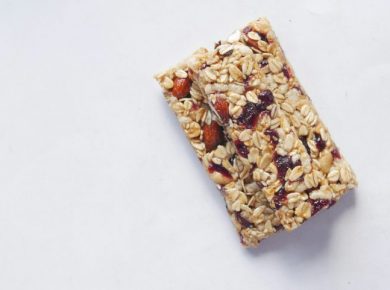
It is 10:30, breakfast was a granola bar, and you are already hungry again. That is the gap a high fiber breakfast fills. Fiber slows a meal down, and when you pair it with protein, the first meal of the day can actually carry you to lunch. Below are six high fiber breakfast ideas with 8 to 19 g of fiber each, all calculated from USDA data, plus a quick comparison table and a simple way to prep them ahead.
Fiber has had a big year thanks to the “fibermaxxing” trend on social media, and the push behind it is fair. UCLA Health cites federal figures showing more than 90 percent of women and 97 percent of men fall short of the recommended 25 g (women) and 38 g (men) a day, and a dietitian there says most people get around 15 g. Breakfast is the easiest meal to fix.
How much fiber should a high fiber breakfast have?
A useful target is 8 to 12 g. That is roughly a third of a 25 to 38 g day, which leaves room for lunch, dinner and snacks to do the rest. A typical bowl of plain oatmeal made with half a cup of rolled oats gives you about 4 g (rolled oats have 10.1 g per 100 g), so most “healthy” breakfasts need a second fiber source on top. Berries, chia, flax, beans and whole-grain bread are the easiest add-ons.
6 high fiber, high protein breakfast ideas
Every number below is calculated from USDA FoodData Central values for the listed ingredients (see Sources). Salt, spices, salsa, lemon and the small amount of oil for the pan are not counted, so treat the totals as close estimates, not lab results.
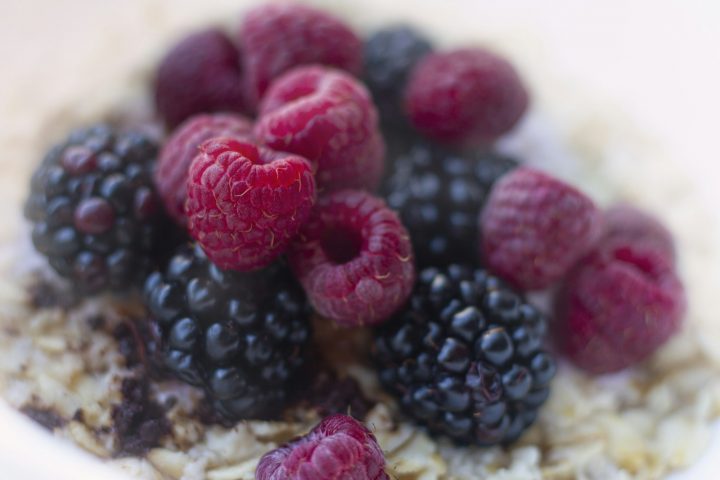
1. Raspberry oat bran porridge
You need: 1/2 cup (47 g) oat bran, 1 cup water, 1 tablespoon (12 g) chia seeds, 1 cup (123 g) raspberries, 1/2 cup (113 g) plain nonfat Greek yogurt.
How: Simmer the oat bran in the water for 2 to 3 minutes, stirring, until thick. Take it off the heat, stir in the chia, then top with the yogurt and raspberries. Oat bran cooks faster than rolled oats and has about 50 percent more fiber per gram (15.4 g vs 10.1 g per 100 g), which is why this bowl leads the list.
Per bowl: about 307 calories, 19 g fiber, 23 g protein. If your usual breakfast has 3 g of fiber, start with half the chia and work up.
2. Black bean breakfast tacos
You need: 2 corn tortillas (52 g), 2 large eggs, 1/2 cup (86 g) cooked black beans, 1/4 avocado (50 g), salsa and lime.
How: Warm the beans in a small pan with a pinch of cumin and mash them lightly. Scramble the eggs softly in the same pan. Char the tortillas over a burner or in a dry skillet, then fill with beans, eggs, sliced avocado and salsa. Corn tortillas quietly add 6.3 g of fiber per 100 g, more than many people expect.

Per serving (2 tacos): about 450 calories, 14 g fiber, 24 g protein. This is the most filling savory option and a great weekend breakfast.
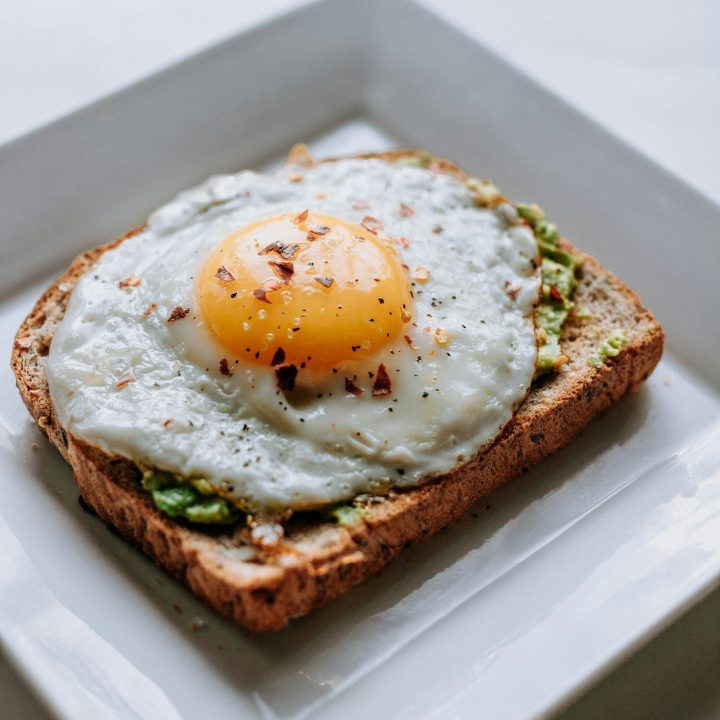
3. Edamame smash toast with a fried egg
You need: 2 slices (64 g) whole-wheat bread, 1/2 cup (78 g) shelled edamame (thawed from frozen), 1/4 avocado (50 g), 1 large egg, lemon juice and chili flakes.
How: Mash the edamame and avocado with a squeeze of lemon and a pinch of salt. You want it chunky, not smooth. Spread it on the toast, top with a fried or jammy egg and finish with chili flakes. It looks like regular avocado toast, but the edamame roughly doubles the protein and adds 4 g of fiber.
Per serving: about 407 calories, 11 g fiber, 25 g protein.
 You’ll also loveEasy Turkey Chili Recipe for the Stovetop or Slow Cooker
4. Pear and cinnamon cottage cheese bowl
You need: 3/4 cup (170 g) 2% cottage cheese, 1 medium pear (178 g) diced with the skin on, 1 tablespoon (7 g) ground flaxseed, 2 tablespoons (16 g) pumpkin seeds, cinnamon.
How: Spoon the cottage cheese into a bowl, pile the pear on top, then sprinkle with flax, pumpkin seeds and a good shake of cinnamon. No cooking, two minutes. Keep the pear skin on, since that is where a lot of its fiber sits. Use ground flax rather than whole seeds, which tend to pass straight through.
Per bowl: about 366 calories, 8 g fiber, 24 g protein. It is the lowest-fiber pick here, which makes it a gentle starting point.
5. Chickpea and spinach tofu scramble
You need: 150 g firm tofu, 1/2 cup (82 g) cooked chickpeas, 2 cups (60 g) baby spinach, 1 slice (32 g) whole-wheat toast, turmeric, cumin, garlic powder.
How: Crumble the tofu into a hot, lightly oiled skillet with the chickpeas. Season with turmeric, cumin, garlic powder and salt, and cook for about 5 minutes until the edges turn golden. Fold in the spinach until it wilts, then serve with the toast. It is egg-free and the highest-protein option on the list.
Per serving: about 445 calories, 13 g fiber, 39 g protein. For more egg-free mornings, see our high protein breakfasts without eggs.
6. Blackberry oat smoothie
You need: 1 cup (144 g) blackberries (frozen is fine), 3/4 cup (170 g) plain nonfat Greek yogurt, 1/4 cup (20 g) rolled oats, 1 tablespoon (7 g) ground flaxseed, 1/2 cup water and a few ice cubes.
How: Blend the oats and flax first for a few seconds so they turn into powder, then add everything else and blend until smooth. Blackberries have 5.3 g of fiber per 100 g, so a full cup does most of the work here. Add a little more water if it is too thick to drink.
Per glass: about 279 calories, 12 g fiber, 23 g protein. Best pick for mornings when you eat on the way out the door.

High fiber breakfast ideas compared
| Breakfast | Fiber | Protein | Calories | Best for |
|---|---|---|---|---|
| Raspberry oat bran porridge | 19 g | 23 g | 307 | Most fiber per bowl |
| Black bean breakfast tacos | 14 g | 24 g | 450 | Savory weekend breakfast |
| Chickpea and spinach tofu scramble | 13 g | 39 g | 445 | Most protein, egg-free |
| Blackberry oat smoothie | 12 g | 23 g | 279 | Breakfast on the go |
| Edamame smash toast with egg | 11 g | 25 g | 407 | Upgraded avocado toast |
| Pear and cinnamon cottage cheese bowl | 8 g | 24 g | 366 | No cooking, gentle start |
Want ideas you can make the night before? Our chia pudding with Greek yogurt has 14 g of fiber a jar, and the overnight oats recipes hub lists every jar we have tested with its protein and calories.
Is fibermaxxing at breakfast worth it? My take
Yes, as long as you treat it as “fiber meeting,” not maxxing. Getting a solid 10 g or so at breakfast is one of the easiest diet upgrades there is, and it uses ordinary food: oats, berries, beans, seeds and whole-grain bread. You do not need powders or special cereals.
What I would skip is jumping straight to the 19 g porridge every day if your current breakfast is toast and coffee. UCLA Health and Ohio State’s dietitians both advise raising fiber gradually, over several weeks, and drinking more water as you do, because a sudden jump can bring gas and bloating. Ohio State also notes that fibermaxxing is not for everyone, so if you follow a diet your doctor gave you, stick with that.
 You’ll also loveBaked Falafel That’s Crisp Outside and Fluffy Inside
A simple ramp: start with the cottage cheese bowl or the smoothie for a week, then rotate in the toast and tacos, and save the oat bran porridge for when your body is used to it. If you want to keep the momentum at lunch and dinner, our high fiber meals use the same approach.
Can you meal prep a high fiber breakfast?
Yes, and it is the best way to make the habit stick. On Sunday, portion the dry porridge mix (oat bran plus chia) into jars, and bag the smoothie fruit, oats and flax so you only add yogurt and water in the morning. Hard-boiled eggs are a good partner for the toast: according to the FoodSafety.gov cold storage chart, hard-cooked eggs keep 1 week in the fridge but should not be frozen. If you would rather bake a batch of egg muffins with black beans and spinach, the same chart gives casseroles with eggs 3 to 4 days in the fridge after baking, or 2 to 3 months in the freezer.
For a full Sunday plan, our breakfast meal prep ideas walk through what to cook first and how to pack it.
FAQ
What breakfast food has the most fiber?
Among everyday breakfast ingredients, seeds lead by weight: chia seeds have 34.4 g of fiber per 100 g and flaxseed 27.3 g, per USDA data. Since you only eat a tablespoon, the biggest single contributors in a real bowl are usually oat bran (15.4 g per 100 g), berries and beans.
Is oatmeal a high fiber breakfast?
It is a good start, not a finish. Half a cup (40 g) of dry rolled oats has about 4 g of fiber. Add a cup of raspberries (8 g) or a tablespoon of chia (4 g) and you are in high fiber territory.
Can a high fiber breakfast also be high protein?
Yes. Every idea above has at least 23 g of protein, thanks to Greek yogurt, cottage cheese, eggs, tofu or edamame. Pairing the two is what keeps a breakfast filling for hours.
Sources
- UCLA Health: Is “fibermaxxing” a sound nutrition trend?
- Ohio State Health & Discovery: What’s fibermaxxing, and is it good for you?
- FoodSafety.gov: Cold Food Storage Chart
- USDA FoodData Central (SR Legacy) values (via FDC and getfoodfacts.com): oat bran (FDC 168872), raspberries (167755), blackberries (173946), pears (169118), avocado (171705), black beans (173735), chickpeas (173757), edamame (168411), firm tofu (172475), egg (171287), nonfat Greek yogurt (330137), 2% cottage cheese (172182), chia seeds (170554), flaxseed (169414), pumpkin seeds (170556), rolled oats (173904), whole-wheat bread (172688), corn tortillas (175036), spinach (168462)