Short answer: The easiest ways to get a high-protein breakfast without eggs are Greek yogurt, cottage cheese, firm tofu, tempeh and smoked salmon. A single serving of any of them gives you roughly 15–24 g of protein on its own, and pairing two (say, Greek yogurt plus hemp seeds) gets most breakfasts to 25 g or more.
Eggs get all the credit at breakfast, but they’re far from the only option. Maybe you don’t like them, maybe you’re allergic, or maybe you’re just tired of scrambling something every morning.
The good news: plenty of everyday foods match or beat eggs on protein. For reference, two eggs come in at about 12 g of protein (Nourish). Every breakfast below clears that bar, and most of them can be made the night before.
All protein numbers in this article come from the USDA’s FoodData Central database. Where a breakfast includes ingredients we didn’t count (bread, oats, fruit, milk), the real total will be a bit higher than what we list.
Egg-free protein sources, compared
Here’s how the main building blocks stack up per typical serving:
| Food | Typical serving | Protein |
|---|---|---|
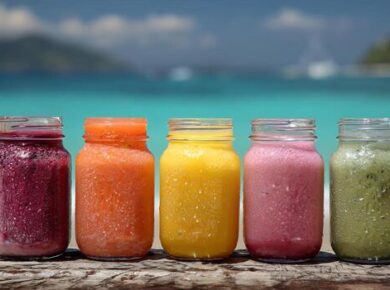
| Cottage cheese, low-fat 2% | 1 cup (226 g) | 23.5 g |
| Firm tofu (calcium sulfate) | ½ cup (126 g) | 21.8 g |
| Greek yogurt, plain nonfat | 1 container (170 g) | 17.3 g |
| Tempeh | 3 oz (85 g) | 17.3 g |
| Smoked salmon (lox) | 3 oz (85 g) | 15.6 g |
| Hemp seeds, hulled | 3 tbsp (30 g) | 9.5 g |
| Peanut butter, smooth | 2 tbsp (32 g) | 7.2 g |
| Black beans, canned | ½ cup (120 g) | 7.2 g |
| Chia seeds | 1 oz (28 g) | 4.7 g |
Calculated from USDA FoodData Central per-100 g values. Sources are listed at the end.
Two things jump out. Cottage cheese and firm tofu are the heavy hitters, and seeds work best as add-ons rather than the main event. Chia seeds, for example, are great for texture but only add a few grams per serving.
10 high-protein breakfasts without eggs
1. Greek yogurt parfait with hemp seeds (~27 g)
A 170 g container of plain nonfat Greek yogurt (17.3 g) plus 3 tablespoons of hemp seeds (9.5 g) gets you to about 27 g before you add any fruit or granola.
Layer it in a jar the night before, but keep the granola in a separate container so it stays crunchy. Hemp seeds taste mildly nutty and disappear into the yogurt better than most seeds.
2. Savory cottage cheese bowl (~24 g)
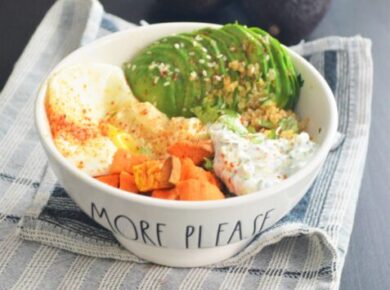
One cup of 2% cottage cheese has 23.5 g of protein on its own. Top it with cherry tomatoes, cucumber, black pepper and a drizzle of olive oil, and it eats more like a light lunch than a sweet breakfast.
If you prefer it sweet, swap the vegetables for berries and a little honey. Just keep in mind that cottage cheese is on the salty side, so the savory version usually tastes more balanced.
3. Tofu scramble (~22 g)
Firm tofu crumbles almost exactly like scrambled eggs. Half a cup (126 g) gives you 21.8 g of protein.
Press out some of the water, crumble it into a hot pan with a little oil, and season with turmeric (for color), garlic powder, salt and pepper. Add spinach or peppers at the end. It reheats well, so you can cook a double batch on Sunday.
4. Black bean and tofu breakfast burrito (~29 g)
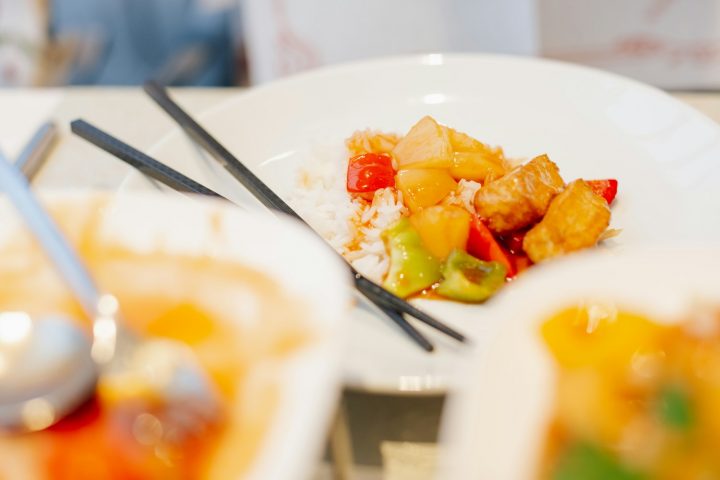
Take the tofu scramble above (21.8 g) and add half a cup of canned black beans (7.2 g). That’s about 29 g of protein before you count the tortilla or any cheese.
Roll them up, wrap each burrito in foil, and freeze. Reheat in the oven or microwave on busy mornings.
5. Crispy tempeh breakfast hash (~17 g)
Tempeh is fermented soybeans pressed into a firm cake, and it has more protein per gram than tofu. Three ounces (85 g) gives you 17.3 g.
Cube it, brown it in a skillet with diced potatoes and onions, and finish with smoked paprika. It’s one of the most filling options on this list if you want something warm and savory.
6. Smoked salmon toast (~16 g + bread)
Three ounces of smoked salmon adds 15.6 g of protein to a slice of whole-grain toast. A thin layer of cream cheese, capers and red onion finishes it.
One caveat: smoked salmon is very high in sodium, so this works better as an occasional breakfast than a daily one.
7. Peanut butter toast with a side of Greek yogurt (~25 g)
Peanut butter alone isn’t a protein powerhouse (7.2 g per 2 tablespoons). Paired with a 170 g Greek yogurt (17.3 g), though, you’re at about 25 g.
It’s the lowest-effort breakfast here. No cooking, no prep, nothing to plan.
8. High-protein smoothie without protein powder (~25 g)
Blend a 170 g Greek yogurt (17.3 g), 2 tablespoons of peanut butter (7.2 g), a frozen banana and a splash of milk. That’s around 25 g of protein, plus whatever the milk adds.
If you like smoothies, our morning smoothies that boost mood and focus are easy to adapt — just swap the base for Greek yogurt.
9. Overnight oats with Greek yogurt and chia (~15 g + oats and milk)
Mix half a cup of oats with 100 g of Greek yogurt (10.2 g), 1 oz of chia seeds (4.7 g) and enough milk to cover. That’s about 15 g from the yogurt and chia alone; the oats and milk push it higher.
This is the best make-ahead option on the list. It keeps in the fridge for a few days, so you can prep four or five jars at once.
10. Chia pudding with hemp seeds and yogurt (~24 g)
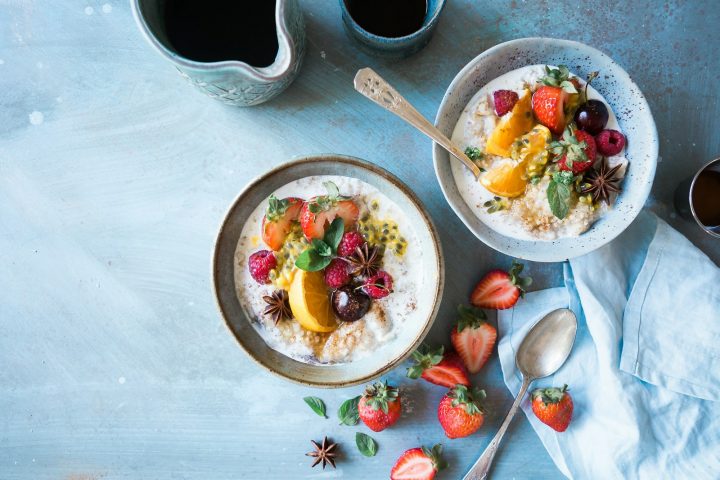
Combine 1 oz of chia seeds (4.7 g), 3 tablespoons of hemp seeds (9.5 g) and 100 g of Greek yogurt (10.2 g) with milk, and let it set overnight. You’ll get roughly 24 g of protein in a breakfast that tastes like dessert.
For more on seeds, see our guide to 8 super seeds and what they add to your diet.
How to build your own egg-free protein breakfast
You don’t need a recipe for every morning. Use this simple formula:
- Pick one main protein: Greek yogurt, cottage cheese, tofu, tempeh or smoked salmon. That’s 15–24 g right away.
- Add one booster: hemp seeds, peanut butter, chia or black beans. That’s another 5–10 g.
- Add something with fiber or carbs: oats, fruit, whole-grain toast or vegetables, so the meal actually keeps you going.
Most combinations land between 20 and 30 g of protein.
Meal prep tips
- Make the slow stuff on Sunday. Tofu scramble, tempeh hash and burritos all reheat well.
- Keep crunchy toppings separate. Granola and toast go soggy overnight.
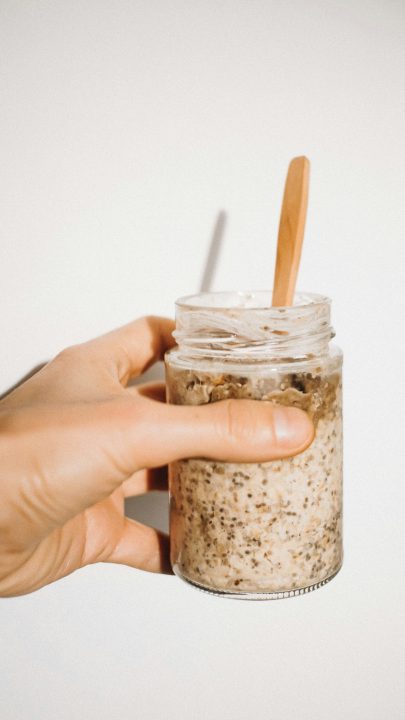
- Use jars for anything wet. Overnight oats, chia pudding and parfaits travel well in mason jars.
- Buy plain yogurt. Flavored versions add sugar and usually have a bit less protein per gram.
Want to prep a full week at once? Our guide to breakfast meal prep ideas covers what to make, how long each dish keeps in the fridge and freezer, and how to plan it all in about an hour.
If you often feel low on energy mid-morning, it’s also worth reading our piece on foods that fight fatigue without caffeine.
FAQ
What is the highest-protein breakfast food that isn’t eggs?
Among everyday foods, low-fat cottage cheese gives you the most per typical serving: about 23.5 g per cup, according to USDA data. Firm tofu is close behind at 21.8 g per half cup.
Can I get a high-protein breakfast without protein powder?
Yes. Every breakfast in this list uses whole foods only. Greek yogurt, cottage cheese and tofu each provide 17–24 g per serving without any supplements.
Is Greek yogurt or cottage cheese better for protein?
Per 100 g they’re very similar (10.2 g vs 10.4 g in the USDA versions we used). The difference comes from serving size: a cup of cottage cheese is heavier than a single yogurt container, so it ends up higher per serving.
Are chia seeds a good protein source?
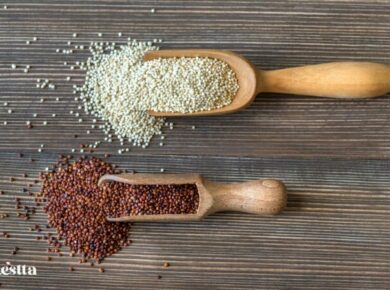
They’re a useful add-on, not a main source. One ounce has about 4.7 g of protein, so chia works best combined with yogurt, milk or hemp seeds.
What’s a good vegan high-protein breakfast without eggs?
Tofu scramble, the black bean and tofu burrito, and the tempeh hash are all plant-based. For the chia pudding, swap the Greek yogurt for a soy-based yogurt.
Sources
Protein values were calculated from per-100 g data in USDA FoodData Central:
- Yogurt, Greek, plain, nonfat — FDC 170894 (10.2 g/100 g)
- Cheese, cottage, lowfat, 2% milkfat — FDC 172182 (10.4 g/100 g)
- Tofu, raw, firm, prepared with calcium sulfate — FDC 172475 (17.3 g/100 g)
- Tempeh — FDC 174272 (20.3 g/100 g)
- Fish, salmon, chinook, smoked (lox) — FDC 171985 (18.3 g/100 g)
- Peanut butter, smooth style, with salt — FDC 324860 (22.5 g/100 g)
- Beans, black turtle, mature seeds, canned — FDC 175188 (6.0 g/100 g)
- Seeds, chia seeds, dried — FDC 170554 (16.5 g/100 g)
- Seeds, hemp seed, hulled — USDA SR Legacy (NDB 12012): 9.5 g per 3 tbsp (30 g) — search FoodData Central
- Egg comparison: Nourish — High-Protein Breakfast Ideas Without Eggs