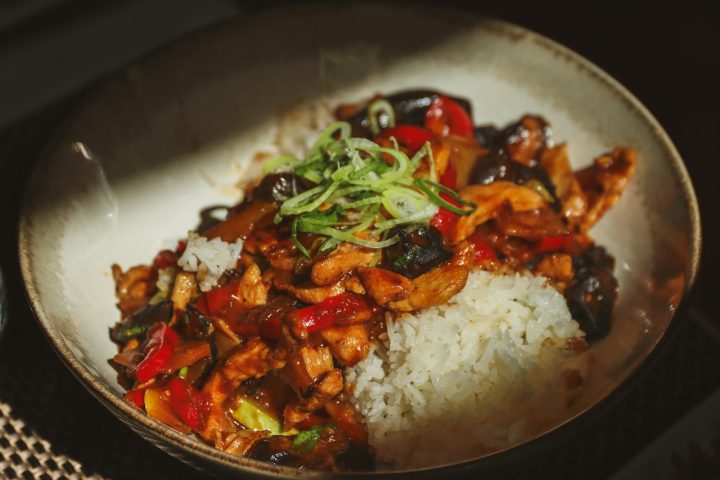
A good chicken stir fry recipe comes down to three things: chicken cut thin and coated in a little cornstarch, a pan hot enough to brown it, and a sauce you mix before the stove goes on. This one is ready in 25 minutes, serves 4 and has about 36 grams of protein and 300 calories per serving before rice.
The sauce below is the part worth memorizing. It is a simple soy, honey, garlic and ginger mix that works with almost any vegetable in your crisper drawer, so once you have made it twice you will not need the recipe. I have added a vegetable swap chart with cook times, because that is where most stir-fries go wrong: soft peppers next to raw carrots.
21 meals, 100 g+ protein a day, plus a grocery list and prep schedule.
Chicken stir fry ingredients
Serves 4. Prep 15 minutes, cook 10 minutes.
For the chicken
- 1 1/4 lb (567 g) boneless, skinless chicken breast
- 1 tbsp (8 g) cornstarch
- 1 tbsp (16 g) low-sodium soy sauce
For the master stir fry sauce
- 3 tbsp (48 g) low-sodium soy sauce
- 1/2 cup (120 ml) water
- 1 tbsp (21 g) honey
- 2 tsp (5 g) cornstarch
- 1 tsp (4.5 g) toasted sesame oil
- 1 tsp chili garlic sauce, optional
For the vegetables
- 1 tbsp (14 g) avocado oil, divided
- 2 cups (180 g) broccoli florets
- 1 large red bell pepper (165 g), sliced
- 1 medium carrot (60 g), thinly sliced on a diagonal
- 1 cup (100 g) snap peas, strings removed
- 3 garlic cloves (9 g), minced
- 1 tbsp (6 g) grated fresh ginger
- 2 green onions (30 g), thinly sliced
- 1 tsp (3 g) sesame seeds, for topping
How to make chicken stir fry
- Cut the chicken into thin, bite-size strips about 1/4 inch (6 mm) thick. Toss with 1 tbsp cornstarch and 1 tbsp soy sauce and let it sit while you prep the vegetables.
- Whisk all the sauce ingredients in a measuring cup until the cornstarch dissolves.
- Heat 2 tsp of the oil in a large skillet or wok over high heat until it shimmers. Add the chicken in a single layer and leave it alone for 1 to 2 minutes to brown. Flip and stir-fry 2 to 3 minutes more, until no pink remains and it reaches 165°F (74°C). Move it to a plate.
- Add the remaining 1 tsp oil, the carrot and the broccoli. Stir-fry 1 minute, add 2 tbsp water and cover for 1 minute to steam.
- Uncover, add the bell pepper and snap peas and stir-fry 1 to 2 minutes, until everything is bright and crisp-tender.
- Push the vegetables to the sides, add the garlic and ginger to the center and stir for 30 seconds, until fragrant.
- Whisk the sauce again and pour it in. Stir until it bubbles and turns glossy, about 1 minute.
- Return the chicken with its juices, toss for 30 seconds to coat and take the pan off the heat. Top with green onions and sesame seeds.
Have everything sliced, measured and next to the stove before step 3. Once the pan is hot the whole thing takes about 8 minutes, and there is no time to mince garlic halfway through.
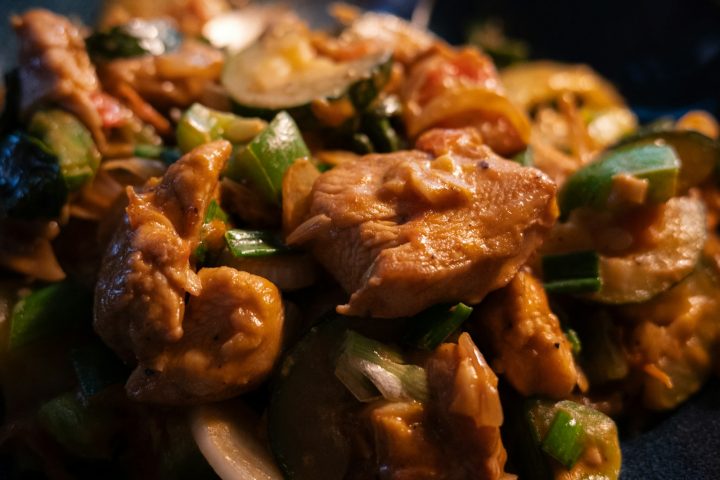
Per serving (1/4 of the recipe, without rice): about 300 calories, 36 g protein, 19 g carbs, 9 g fat, 3.5 g fiber and 670 mg sodium. With 1 cup (158 g) of cooked white rice, it comes to about 510 calories and 41 g protein.
I calculated these numbers from USDA FoodData Central values for each ingredient, using raw weights. The optional chili garlic sauce is not included.
The master stir fry sauce
Takeout stir-fry sauces usually get their body from a lot of sugar and regular soy sauce. This one uses low-sodium soy sauce, a single tablespoon of honey for the whole pan and water for volume. The cornstarch is what makes it cling: it turns the thin liquid into a glossy coating within a minute of boiling.
 You’ll also loveBalsamic Brussels Sprouts: Crispy Edges, Sticky Honey Glaze
Mix a double or triple batch in a jar and keep it in the fridge, and the next stir-fry starts with the sauce already done. Shake it hard before using, since the cornstarch settles to the bottom.
- Spicy: add the chili garlic sauce, or a pinch of red pepper flakes.
- Savory and deeper: add 1 tbsp oyster sauce, the way our beef and broccoli recipe does.
- Brighter: squeeze in fresh lime juice at the end.
- Peanut: whisk in 1 tbsp natural peanut butter and top with chopped peanuts.
- Gluten-free: use tamari instead of soy sauce.
Vegetable swaps for chicken stir fry
Use about 5 to 6 cups of vegetables in total. More than that and the pan cools down, the vegetables steam and the sauce goes watery. Add them in order of how long they take, longest first.
| Vegetable | How to cut it | Cook time in the pan |
|---|---|---|
| Carrots | Thin diagonal slices | 3 to 4 minutes |
| Broccoli or cauliflower | Small florets | 3 to 4 minutes, with a quick cover-and-steam |
| Green beans | 2-inch (5 cm) pieces | 3 to 4 minutes |
| Bell peppers | Strips | 1 to 2 minutes |
| Snap peas or snow peas | Whole, strings removed | 1 to 2 minutes |
| Zucchini | Half-moons | 1 to 2 minutes |
| Mushrooms | Thick slices | 2 to 3 minutes, until browned |
| Cabbage or bok choy | Shredded or quartered | 1 to 2 minutes |
| Baby spinach | Whole leaves | 30 seconds, stirred in at the end |
Frozen stir-fry vegetable blends work too. Cook them straight from frozen over high heat until the water they release has cooked off, then add the sauce. If you add the sauce while there is still liquid in the pan, it will not thicken.
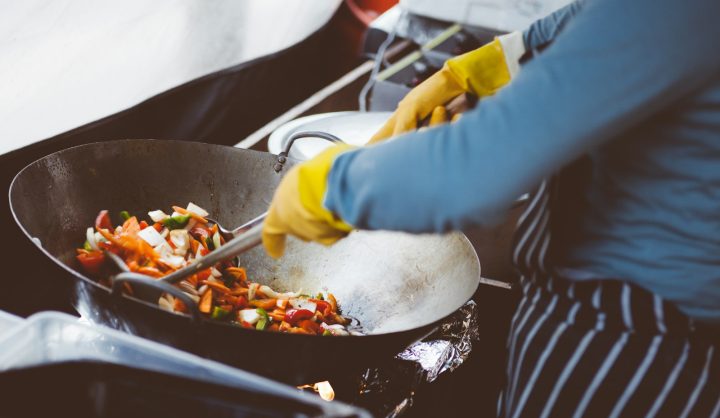
Tips for tender chicken, not dry chicken
- Slice it thin and even. Pieces of the same thickness cook at the same speed. Fifteen minutes in the freezer makes raw chicken much easier to cut.
- Do not skip the cornstarch. The quick cornstarch and soy coating is a simple version of the velveting step used in Chinese cooking. It protects the surface, keeps the inside juicy and helps the sauce stick.
- Give it room. If your skillet is smaller than 12 inches (30 cm), brown the chicken in two batches. Crowded chicken steams and turns gray.
- Cook it once. The chicken comes out of the pan as soon as it is done and only goes back in for the last 30 seconds. That is the difference between tender and rubbery.
Chicken thighs work just as well and are more forgiving if you tend to overcook breast meat. Slice them the same way and cook them to the same 165°F (74°C). Our healthy chicken thigh recipes have more ideas for that cut, and the guide to protein in chicken breast explains how raw and cooked weights compare if you track your portions.
What to serve with chicken stir fry
Steamed jasmine or brown rice is the classic, and it soaks up the extra sauce. Rice noodles, soba or lo mein noodles turn it into a noodle bowl. For something lighter, serve it over cauliflower rice, which keeps the plate close to the 300-calorie mark.
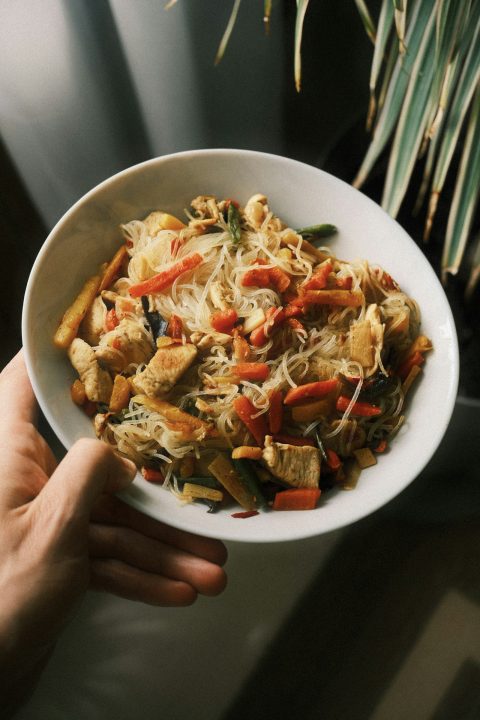
If you like fast takeout-style dinners, our egg roll in a bowl is another 20-minute skillet meal with ground meat and coleslaw mix.
Meal prep and storage
Chicken stir fry is one of the easier weeknight dinners to turn into lunches. Pull the vegetables a minute early, since they keep softening as the containers cool, and pack 1 cup of rice with each portion. It fits right into a rotation with our chicken and rice meal prep and other chicken meal prep ideas.
 You’ll also loveHealthy Stuffed Peppers With Ground Turkey and Quinoa
According to FoodSafety.gov, raw chicken keeps 1 to 2 days in the refrigerator, so slice and cook it soon after you buy it. Cooked leftovers keep 3 to 4 days in the fridge and 2 to 6 months in the freezer, and should be reheated to 165°F (74°C). Broccoli and peppers get softer after freezing, so I eat this one from the fridge within a few days.
Sources
- USDA FoodData Central (SR Legacy) via getfoodfacts.com: chicken breast, skinless, boneless, raw (FDC 171077), broccoli, raw (170379), red bell pepper, raw (170108), carrots, raw (170393), peas, edible-podded, raw (170010)
- USDA FoodData Central records for the sauce and aromatics via getfoodfacts.com: low-sodium soy sauce (172473), honey (169640), cornstarch (169698), avocado oil (173573), sesame oil (171016), garlic (169230), ginger (169231), green onions (170005), sesame seeds (170150), cooked white rice (168878)
- FoodSafety.gov: Safe Minimum Internal Temperatures
- FoodSafety.gov: Cold Food Storage Charts
Chicken Stir Fry
Ingredients
- 1 1/4 lb (567 g) boneless, skinless chicken breast
- 1 tbsp (8 g) cornstarch
- 1 tbsp (16 g) low-sodium soy sauce
- 3 tbsp (48 g) low-sodium soy sauce
- 1/2 cup (120 ml) water
- 1 tbsp (21 g) honey
- 2 tsp (5 g) cornstarch
- 1 tsp (4.5 g) toasted sesame oil
- 1 tsp chili garlic sauce, optional
- 1 tbsp (14 g) avocado oil, divided
- 2 cups (180 g) broccoli florets
- 1 large red bell pepper (165 g), sliced
- 1 medium carrot (60 g), thinly sliced on a diagonal
- 1 cup (100 g) snap peas, strings removed
- 3 garlic cloves (9 g), minced
- 1 tbsp (6 g) grated fresh ginger
- 2 green onions (30 g), thinly sliced
- 1 tsp (3 g) sesame seeds, for topping
Instructions
- Cut the chicken into thin, bite-size strips about 1/4 inch (6 mm) thick. Toss with 1 tbsp cornstarch and 1 tbsp soy sauce and let it sit while you prep the vegetables.
- Whisk all the sauce ingredients in a measuring cup until the cornstarch dissolves.
- Heat 2 tsp of the oil in a large skillet or wok over high heat until it shimmers. Add the chicken in a single layer and leave it alone for 1 to 2 minutes to brown. Flip and stir-fry 2 to 3 minutes more, until no pink remains and it reaches 165°F (74°C). Move it to a plate.
- Add the remaining 1 tsp oil, the carrot and the broccoli. Stir-fry 1 minute, add 2 tbsp water and cover for 1 minute to steam.
- Uncover, add the bell pepper and snap peas and stir-fry 1 to 2 minutes, until everything is bright and crisp-tender.
- Push the vegetables to the sides, add the garlic and ginger to the center and stir for 30 seconds, until fragrant.
- Whisk the sauce again and pour it in. Stir until it bubbles and turns glossy, about 1 minute.
- Return the chicken with its juices, toss for 30 seconds to coat and take the pan off the heat. Top with green onions and sesame seeds.
Nutrition per 1/4 of the recipe
21 meals, 100 g+ protein a day, plus a grocery list and prep schedule.