Learning how to make sauerkraut takes about 30 minutes of hands-on work and exactly two ingredients: cabbage and salt. You slice the cabbage, add salt at 2% of its weight, massage it until it gives up its own brine, pack it into a mason jar under that liquid, and let it sit on the counter for 1 to 4 weeks. No vinegar, no starter, no special crock.
Home fermentation is having a real moment right now. In its November 2026 nutrition report, Rising Trends lists “sauerkraut recipe” among the year’s growing searches, up about 31% year over year, and links it to people making cultured foods at home instead of buying them. I think this one is worth jumping on. A head of cabbage costs a few dollars, the method is forgiving, and fresh homemade kraut tastes brighter and crunchier than most shelf-stable jars. What I won’t do is promise that a forkful fixes your gut. Eat it because it’s good.
Homemade Sauerkraut Recipe (1 Quart Jar)
Prep: 30 minutes · Ferment: 1 to 4 weeks · Makes: 1 packed quart jar (about 25 servings of 1/4 cup)
Ingredients
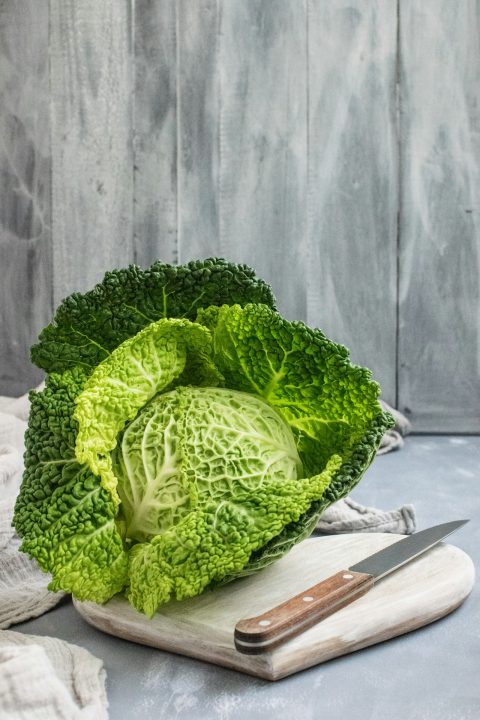
- 1 medium head green cabbage (about 2 lb / 900 g after trimming and coring)
- 18 g fine sea salt or canning salt (about 1 tablespoon; 2% of the cabbage weight)
- 1 teaspoon caraway seeds (optional)
Equipment: a kitchen scale, a large bowl, a clean 1-quart wide-mouth mason jar, and something to hold the cabbage down: a small jelly jar that fits inside the mouth, a zip-top bag filled with brine, or a glass fermentation weight.
Method
- Pull off one or two clean outer leaves and set them aside. Quarter the cabbage, cut out the core, and slice it into thin ribbons, about the thickness of a quarter.
- Put the sliced cabbage in a large bowl on a kitchen scale and note the weight. Weigh out 2% of that weight in salt (18 g for 900 g of cabbage).
- Sprinkle the salt and caraway seeds over the cabbage. Massage and squeeze with clean hands for 5 to 10 minutes, until the cabbage is limp and a pool of brine collects in the bowl.
- Pack the cabbage into the jar a handful at a time, pressing each layer down hard so the brine rises above it. Pour in any brine left in the bowl and leave at least 2 inches of space at the top.
- Fold a reserved leaf over the surface and set your weight on top so every shred stays under the liquid.
- Cover loosely with the lid or a clean cloth, set the jar on a plate, and leave it at 70 to 75°F, out of direct sun. Press the cabbage down once a day and skim off any scum that forms.
- Start tasting after 1 week. When it is as sour as you like (about 3 to 4 weeks at 70 to 75°F for fully fermented kraut), remove the weight and leaf, close the jar tightly, and refrigerate.
Nutrition per 1/4 cup (35 g): about 7 calories, 0.3 g protein, 1.5 g carbs, 1 g fiber and 0 g fat, based on USDA values for sauerkraut. Sodium from the salt in this recipe works out to roughly 275 mg per 1/4 cup.
How Much Salt for Sauerkraut?
Use 2% of the shredded cabbage’s weight. That ratio is salty enough to keep spoilage microbes in check and let the lactic acid bacteria take over, but not so salty that the kraut tastes like a pretzel. The National Center for Home Food Preservation’s tested crock recipe uses 3 tablespoons of canning or pickling salt for every 5 pounds of cabbage, which lands in the same range.
Weigh the salt if you can. A tablespoon of flaky kosher salt weighs far less than a tablespoon of fine sea salt, so spoon measurements are where most batches go wrong. Here is the math for common batch sizes:
| Shredded cabbage | Salt at 2% | Jar size (roughly) |
|---|---|---|
| 1 lb (454 g) | 9 g | 1 pint |
| 2 lb (907 g) | 18 g | 1 quart |
| 3 lb (1,361 g) | 27 g | 1 1/2 quarts |
| 5 lb (2,268 g) | 45 g | 2 to 3 quarts or a small crock |
How Long Does Sauerkraut Take to Ferment?
Temperature decides almost everything. USDA guidance, published through the National Center for Home Food Preservation, recommends fermenting at 70 to 75°F. Here is how timing shifts around that range:
| Room temperature | What to expect |
|---|---|
| 70 to 75°F | Fully fermented in about 3 to 4 weeks |
| 60 to 65°F | Fully fermented in about 5 to 6 weeks |
| Below 60°F | May not ferment at all |
| Above 75°F | Ferments fast but may turn soft |
A quart jar is a small batch, so you’ll taste real sourness well before the full ferment is done. My rule: taste at day 7, again at day 14, and refrigerate whenever you like the flavor. Young kraut is crisp and mildly tangy. Kraut left the full 3 to 4 weeks is deeper, more sour, and softer. Neither is wrong.
 You’ll also loveAir Fryer Chicken Breast: Juicy in About 15 Minutes
What you’ll see along the way: in the first few days the brine turns cloudy and small bubbles rise when you press the cabbage. That’s the fermentation working. When the bubbling slows down, the kraut is close to finished.
Sauerkraut Troubleshooting
There isn’t enough brine to cover the cabbage
Give it time first. Press down hard, put the weight on, and check again in a few hours, because fresh cabbage keeps releasing liquid. If it’s still dry after a day, top it up with brine made from 1 1/2 tablespoons of salt dissolved in a quart of boiled and cooled water, the ratio NCHFP uses. Older cabbage that sat in the fridge for weeks holds less water, which is why the freshest, firmest heads give the easiest batches.
There’s white film on top. Is it mold?
A flat white film on the surface of the brine is scum, and the NCHFP instructions simply say to remove it when it forms. Skim it off, wipe the inside rim of the jar, and push the cabbage back under. Fuzzy, raised growth in blue, green, black or pink, or a rotten smell instead of a clean sour one, is a different story. Throw that batch out and start again. Cabbage is cheap.
My sauerkraut is mushy
Check where the jar is sitting. Above 75°F, kraut may soften, so a spot near the oven, a sunny window or the top of the fridge works against you. Move it somewhere cooler for the next batch and slice the ribbons a little thicker.
Nothing is happening after 3 days
Your kitchen is probably too cold. Below 60°F, kraut may not ferment, so in winter try an interior cupboard instead of a drafty counter.
Easy Sauerkraut Variations
Keep the 2% salt rule and weigh everything that goes in the jar together, cabbage plus extras. Then try:
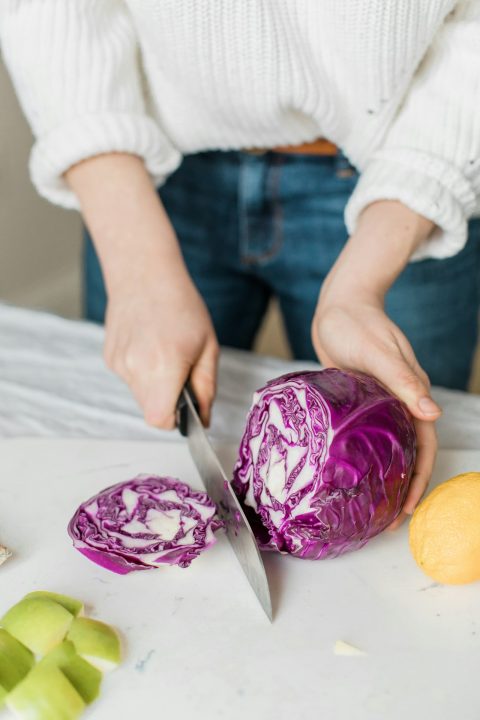
- Red cabbage kraut: swap in red cabbage, or do half and half. The brine turns a vivid magenta.
- Apple and caraway: add one grated tart apple to the bowl before massaging.
- Carrot and ginger: replace about a quarter of the cabbage with shredded carrot and add a thumb of grated ginger.
- Garlic and dill: add 3 sliced garlic cloves and a teaspoon of dill seed for a pickle-like flavor.
How to Store Homemade Sauerkraut
Once it’s fermented, close the jar tightly and keep it in the fridge. According to NCHFP, fully fermented kraut keeps for several months tightly covered in the refrigerator. Cold slows fermentation way down, so the flavor will keep developing, just slowly. Always use a clean fork, and press the kraut back under its brine after you take some out.
If you want shelf-stable jars instead, NCHFP gives tested water-bath canning times, but heat processing kills the live bacteria, so most home cooks keep their kraut raw in the fridge.
Healthy Ways to Eat Sauerkraut
A spoonful of sauerkraut does a lot for very few calories. Its sourness cuts through rich food the way a squeeze of lemon does, which makes it handy on plates that would otherwise taste flat. A few ways I use it:
- On grain bowls with roast chicken, greens and a drizzle of tahini.
- Folded into a leftover turkey salad for a Reuben-style sandwich on rye.
- Next to scrambled eggs and avocado toast.
- With chicken sausage and roasted potatoes on a sheet pan, added after cooking.
- As a quick topping for the ground turkey dinners you already rotate.
One tip if you care about the live cultures: add the kraut at the end, off the heat. Stirring it into a simmering pot will cook it. For soups, like this smoky white bean cabbage soup, spoon a little on top of each bowl instead. And if you’re building a lunch rotation, a jar of kraut in the fridge turns many of these 10-minute healthy lunches into something with more punch.

Keep the sodium in mind, though. At roughly 275 mg per 1/4 cup, kraut is a condiment-sized food, not a side you pile on by the cupful. If you’re watching salt, a couple of forkfuls is plenty. Curious what else belongs in this category? Here are more fermented foods worth adding to your week, and how to tell a live product from a pasteurized one at the store.
Is Making Sauerkraut at Home Worth It?
Yes, with one condition: you need to be okay waiting a week or more for your food. The active work is half an hour, the ingredient cost is a head of cabbage and some salt, and the result is a quart of something you’ll use all month. If you’ve never fermented anything, sauerkraut is the right first project because it’s hard to ruin as long as you weigh the salt, keep the cabbage under the brine and keep the jar in a comfortable room. Make one jar this week, taste it at day 7, and you’ll know whether you want to make a bigger batch next time.
Sources
- National Center for Home Food Preservation: Sauerkraut (salt ratio, fermentation temperatures and times, scum, refrigerator storage)
- Sauerkraut, canned, solids and liquids (USDA Standard Reference data) (per-100 g nutrition values)
- Rising Trends: Top 50 Nutrition Trends (November 2026) (sauerkraut recipe search growth)

21 meals, 100 g+ protein a day, plus a grocery list and prep schedule.
Homemade Sauerkraut
Ingredients
- 1 medium head green cabbage (about 2 lb / 900 g after trimming and coring)
- 18 g fine sea salt or canning salt (about 1 tablespoon; 2% of the cabbage weight)
- 1 teaspoon caraway seeds (optional)
Instructions
- Pull off one or two clean outer leaves and set them aside. Quarter the cabbage, cut out the core, and slice it into thin ribbons, about the thickness of a quarter.
- Put the sliced cabbage in a large bowl on a kitchen scale and note the weight. Weigh out 2% of that weight in salt (18 g for 900 g of cabbage).
- Sprinkle the salt and caraway seeds over the cabbage. Massage and squeeze with clean hands for 5 to 10 minutes, until the cabbage is limp and a pool of brine collects in the bowl.
- Pack the cabbage into the jar a handful at a time, pressing each layer down hard so the brine rises above it. Pour in any brine left in the bowl and leave at least 2 inches of space at the top.
- Fold a reserved leaf over the surface and set your weight on top so every shred stays under the liquid.
- Cover loosely with the lid or a clean cloth, set the jar on a plate, and leave it at 70 to 75°F, out of direct sun. Press the cabbage down once a day and skim off any scum that forms.
- Start tasting after 1 week. When it is as sour as you like (about 3 to 4 weeks at 70 to 75°F for fully fermented kraut), remove the weight and leaf, close the jar tightly, and refrigerate.
Nutrition per 1/4 cup (35 g)
21 meals, 100 g+ protein a day, plus a grocery list and prep schedule.