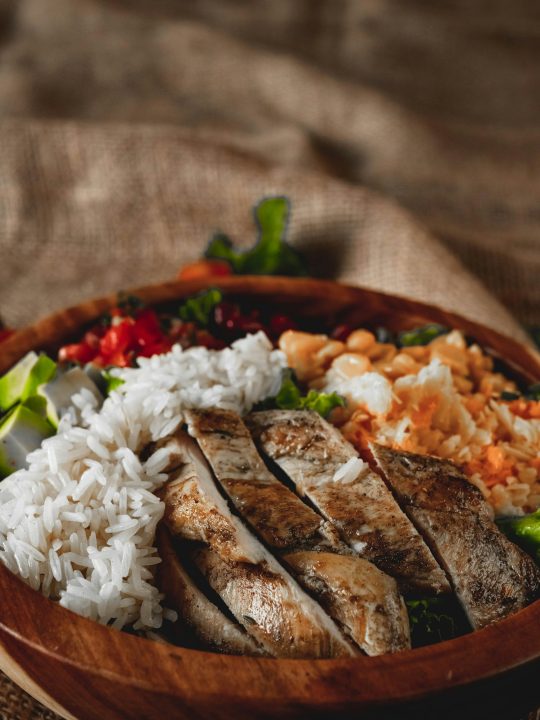
Short answer: Cooked, skinless chicken breast has 31 g of protein per 100 g (3.5 oz), according to USDA data. That works out to about 26 g in a 3 oz portion and 35 g in 4 oz. Raw chicken breast has 22.5 g per 100 g, because it still holds water that cooking drives off.
The protein in chicken breast is one of those numbers everyone quotes and almost nobody pins down, mostly because the answer depends on two things: whether you weigh it raw or cooked, and how big “one breast” is in your kitchen. Below are the USDA numbers for every common portion, plus how skin and thighs compare, so you can log the chicken on your plate instead of guessing.
Chicken breast protein by portion size
All figures are skinless, boneless breast meat. Cooked values use USDA’s roasted breast (FDC 171477); raw values use USDA’s raw skinless, boneless breast (FDC 171077). I multiplied USDA’s per-100 g numbers by each weight and rounded.
| Portion | Cooked protein | Cooked calories | Raw protein | Raw calories |
|---|---|---|---|---|
| 100 g (3.5 oz) | 31.0 g | 165 | 22.5 g | 120 |
| 3 oz (85 g) | 26.4 g | 140 | 19.1 g | 102 |
| 4 oz (113 g) | 35.0 g | 186 | 25.4 g | 136 |
| 6 oz (170 g) | 52.7 g | 280 | 38.2 g | 204 |
| 8 oz (227 g) | 70.4 g | 375 | 51.1 g | 272 |
If you only remember one line, make it this: about 7.5 to 9 g of protein per ounce cooked, closer to 9 when the chicken is plain roasted and weighed after cooking.
How much protein is in one chicken breast?
USDA’s standard portion is “1/2 breast, bone and skin removed,” which weighs 86 g cooked. (A “half breast” is one side of the bird, which is what most of us call one breast.) That portion has 26.7 g of protein and 142 calories.
Here’s the catch: the breasts in your pack may be much bigger or smaller than USDA’s reference piece, so weigh one. If your raw breast is 8 oz (227 g), it carries about 51 g of protein, and that protein stays with the meat after cooking even though the weight drops.
Raw vs cooked chicken breast: why cooked has more protein per gram
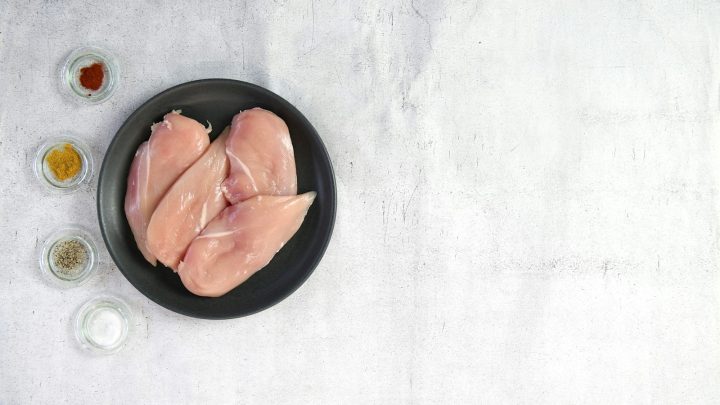
Cooking doesn’t add protein. It removes water. USDA lists raw breast at 73.9 g of water per 100 g and roasted breast at 65.3 g. As moisture cooks out, the same protein is packed into fewer grams, so the per-100 g figure jumps from 22.5 g to 31 g.
Working backward from those two protein figures, 100 g of raw breast ends up at roughly 73 g once roasted. That’s an estimate (juicier or drier cooking shifts it), but it explains the rule of thumb that 4 oz raw becomes about 3 oz cooked.
 You’ll also love13 High-Protein Low-Fat Foods, Ranked by Protein per Calorie
The practical fix is simple: weigh and log the chicken the same way every time. If you weigh it raw, use the raw numbers. If you batch-cook for chicken meal prep and portion it afterward, use the cooked numbers. Mixing the two is where most tracking errors come from.
Does cooking method change the protein?
A little, mostly through how much water each method leaves behind. These are USDA’s per-100 g figures for skinless breast meat:
| Breast meat, skinless (100 g) | Protein | Calories | Fat |
|---|---|---|---|
| Raw | 22.5 g | 120 | 2.6 g |
| Stewed | 29 g | 151 | 3 g |
| Roasted | 31.0 g | 165 | 3.6 g |
| Fried (no coating) | 33.4 g | 187 | 4.7 g |
Stewed chicken keeps more moisture, so it reads a bit lower per gram. Pan-fried breast loses more water and picks up some fat, so protein and calories per gram both climb. Grilled, baked and air-fried breast without breading behave much like the roasted row, which is the one I’d use for everyday cooking.
Skin-on breast and chicken thigh compared
Skin barely changes the protein but adds fat. Thighs have less protein and more fat than breast, though they’re far more forgiving to cook. Per 3 oz (85 g) cooked:
| Cut, roasted (3 oz / 85 g) | Protein | Calories | Fat | Protein per 100 calories |
|---|---|---|---|---|
| Breast, skinless | 26.4 g | 140 | 3.0 g | 18.8 g |
| Breast, with skin | 25.3 g | 167 | 6.6 g | 15.1 g |
| Thigh, skinless | 21.1 g | 152 | 6.9 g | 13.9 g |
My take: skinless breast wins on protein per calorie among these cuts. But if you keep drying out breasts, a skinless thigh with 21 g of protein you’ll actually enjoy beats a chalky breast you push around the plate. Our healthy chicken thigh recipes all stay under 450 calories.
Chicken breast nutrition beyond protein
Roasted skinless breast has 0 g of carbohydrate and 3.6 g of fat per 100 g, so almost all of its 165 calories come from protein. That’s why it shows up in so many lean meal plans and why the sides you pair it with decide most of a meal’s carbs and fat.
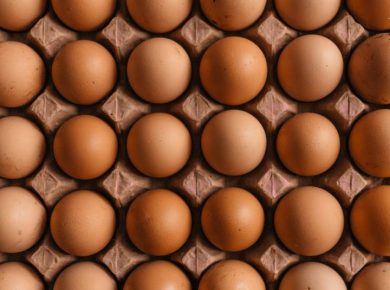
For a sense of scale, 3 oz of cooked breast (26 g protein) has roughly what you’d get from four large eggs. Our guide to protein in eggs breaks that down by egg size.
How to get the most out of chicken breast
- Cook to temperature, not time. Chicken is safe at 165°F (74°C) according to foodsafety.gov. Pull it right there. Every extra minute past that squeezes out more water and makes the meat tougher.
- Pound thick breasts even. A breast that’s 1 inch (2.5 cm) at one end and 1/2 inch at the other will always overcook somewhere. Flatten it to an even thickness first.
- Batch-cook and weigh once. Roast a tray, weigh the cooked total, divide by your number of portions, and you’ll know each container’s protein without weighing every meal. It’s the system behind our chicken and rice meal prep.
- Store raw chicken properly. foodsafety.gov gives raw chicken pieces 1 to 2 days in the fridge at 40°F (4°C) or below and 9 months in the freezer for best quality.
- Watch the extras, not the chicken. Breading, creamy sauces and skin add calories fast while adding little protein. Season boldly instead: a spice rub, lemon and garlic, or a yogurt marinade.
Common mistakes when counting chicken protein
- Logging cooked weight with raw numbers. This undercounts protein by roughly a quarter.
- Assuming “one breast” is 3 or 4 oz. Breast sizes vary a lot from pack to pack. Weigh one from each pack.
- Using breaded or fried-in-batter numbers for plain chicken (or the reverse). Batter-fried breast with skin has 24.8 g of protein and 260 calories per 100 g in USDA’s data, a very different food from plain roasted breast.
Want to put these numbers to work? Our low calorie high protein meals list several chicken dishes with calories and protein per serving already worked out.
Sources
- USDA FoodData Central (SR Legacy), via GetFoodFacts: breast, meat only, cooked, roasted (FDC 171477), breast, skinless, boneless, raw (FDC 171077), breast, meat and skin, roasted (FDC 171075), other chicken breast cooking methods, thigh, meat only, roasted (FDC 172388)
- FoodSafety.gov: Safe Minimum Internal Temperatures and Cold Food Storage Charts