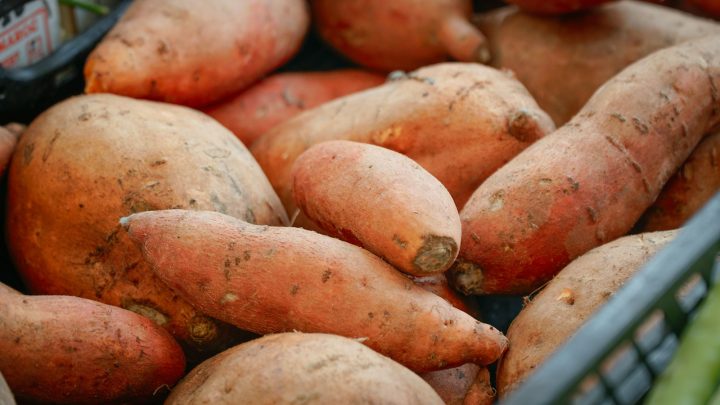
Sweet potato calories are lower than most people guess. A medium sweet potato baked in its skin (USDA’s “medium” is about 2 inches wide and 5 inches long) comes in around 103 calories, with roughly 24 g of carbs, 3.8 g of fiber and 2.3 g of protein. The catch is size: plenty of sweet potatoes at the store are bigger than that, so the number on your plate may be closer to the “large” row below.
Short answer: A medium baked sweet potato (114 g of flesh) has about 103 calories, 23.6 g carbs, 3.8 g fiber, 7.4 g sugar and 2.3 g protein, with almost no fat. A large one (180 g) has about 162 calories. Per 100 g, baked sweet potato has 90 calories; boiled has 76.
Every number in this guide is calculated from USDA FoodData Central per-100 g values, using USDA’s own portion weights. No added butter, oil or brown sugar, so if you top yours, count those separately.
Sweet potato calories by size
These are for sweet potato baked in its skin, without salt, flesh only (the way USDA measures it).
| Size (baked) | Weight | Calories | Protein | Carbs | Fiber | Sugar |
|---|---|---|---|---|---|---|
| Small | 60 g (2.1 oz) | 54 | 1.2 g | 12.4 g | 2.0 g | 3.9 g |
| Medium (2″ x 5″) | 114 g (4 oz) | 103 | 2.3 g | 23.6 g | 3.8 g | 7.4 g |
| Large | 180 g (6.3 oz) | 162 | 3.6 g | 37.3 g | 5.9 g | 11.7 g |
| 1 cup, mashed or cubed | 200 g (7 oz) | 180 | 4.0 g | 41.4 g | 6.6 g | 13.0 g |
My honest advice: if you track calories, weigh your sweet potato once. Sizes in a single grocery bin vary a lot, and a big one can hold two or three USDA “mediums” worth of flesh. Weigh it cooked, multiply by 0.9, and you have the calories (90 per 100 g baked). After one or two weigh-ins, you will eyeball them much more accurately.
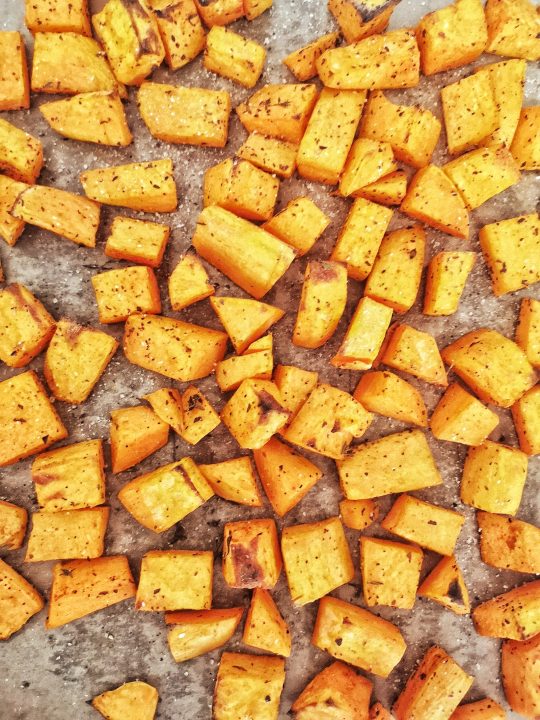
Nutritional value of sweet potatoes
Calories are only part of the story. The nutritional value of sweet potatoes is mostly about vitamin A (from beta-carotene, which is what makes the flesh orange), plus fiber, potassium and some vitamin C. Here is one medium baked sweet potato, with the % Daily Value based on the FDA’s label reference amounts.
| Nutrient | Medium baked sweet potato (114 g) | % Daily Value |
|---|---|---|
| Calories | 103 | – |
| Carbohydrate | 23.6 g | 9% |
| Fiber | 3.8 g | 13% |
| Total sugars | 7.4 g | – |
| Protein | 2.3 g | 5% |
| Fat | 0.2 g | 0% |
| Vitamin A (RAE) | 1,096 mcg | 122% |
| Vitamin C | 22.3 mg | 25% |
| Potassium | 542 mg | 12% |
The FDA treats 20% DV or more per serving as “high,” so a single medium sweet potato is high in vitamin A and vitamin C, and a solid source of fiber. The sugar is naturally occurring; there is no added sugar in a plain baked sweet potato.
How much protein is in a sweet potato?
Not much. Protein in sweet potato runs about 2 g per 100 g baked, which works out to 2.3 g in a medium one and 4 g in a full cup. That is normal for a starchy vegetable, and it is why a sweet potato works best as the carb part of a plate rather than the whole meal.
 You’ll also love10 Everyday Foods That Support Energy and Focus Naturally
Easy fixes: split a baked sweet potato and fill it with black beans and Greek yogurt, serve it next to a chicken breast (see how much protein is in chicken breast), or top a sweet potato hash with a couple of eggs (here is the protein in eggs by size).
Baked vs boiled vs raw sweet potato calories
Cooking method changes the numbers per 100 g, mostly because of water. Baked flesh holds less water than boiled, so each gram is more concentrated. Boiled sweet potato (USDA measures it peeled) has the most water and, in USDA’s data, about half the potassium of baked.
| Per 100 g (3.5 oz) | Baked in skin | Boiled, no skin | Raw |
|---|---|---|---|
| Calories | 90 | 76 | 86 |
| Protein | 2.0 g | 1.4 g | 1.6 g |
| Carbs | 20.7 g | 17.7 g | 20.1 g |
| Fiber | 3.3 g | 2.5 g | 3.0 g |
| Total sugars | 6.5 g | 5.7 g | 4.2 g |
| Potassium | 475 mg | 230 mg | 337 mg |
| Vitamin A (RAE) | 961 mcg | 787 mcg | 709 mcg |
| Water | 75.8 g | 80.1 g | 77.3 g |
One detail I find genuinely interesting: baked sweet potatoes taste sweeter than raw ones, and the USDA data shows why. Raw sweet potato lists 12.6 g of starch and no maltose per 100 g; baked lists 7.05 g of starch and 3.12 g of maltose. Slow, dry heat converts part of the starch into sugar, which is why a long roast gives you that sticky, caramel-like flesh (the roasted Japanese sweet potatoes on this site take that idea all the way).
Practically: the calorie difference between baked and boiled is small per serving. Pick the method you will actually enjoy eating.
Sweet potato vs white potato
Gram for gram, the two are closer than their reputations suggest. Both baked, per 100 g:
| Per 100 g, baked | Sweet potato | White potato (flesh and skin) |
|---|---|---|
| Calories | 90 | 93 |
| Protein | 2.0 g | 2.5 g |
| Carbs | 20.7 g | 21.2 g |
| Fiber | 3.3 g | 2.2 g |
| Total sugars | 6.5 g | 1.2 g |
| Potassium | 475 mg | 535 mg |
| Vitamin A (RAE) | 961 mcg | 1 mcg |
| Vitamin C | 19.6 mg | 9.6 mg |
So calories and carbs are basically a tie. The sweet potato wins clearly on vitamin A, fiber and vitamin C; the white potato has a bit more protein and potassium and much less sugar. Neither is a “bad” carb. What usually changes the calories is what goes on top: butter, sour cream, marshmallows, or a deep fryer.
 You’ll also love15 Supplement Mistakes That Waste Money (and What To Do Instead)
Common mistakes when counting sweet potato calories
- Using “1 medium” for a giant potato. USDA’s medium is 114 g of cooked flesh. A big grocery-store sweet potato can easily be double that.
- Forgetting the toppings. The potato itself has under 0.2 g of fat. Most of the fat in a loaded sweet potato comes from what you add.
- Mixing up raw and cooked weights. If you weigh raw, use the raw numbers (86 calories per 100 g); if you weigh after baking, use the baked numbers (90 per 100 g).
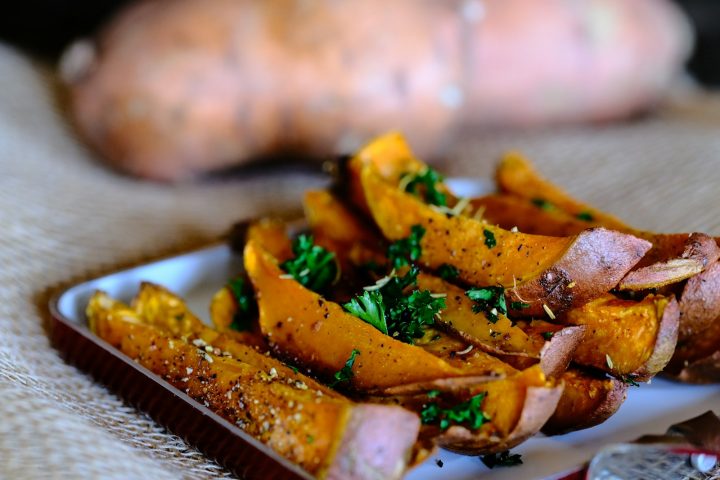
- Assuming fries are the same food. Oven or air fryer sweet potato fries add whatever oil you toss them in, and restaurant fries are usually deep-fried. Count the oil.
Easy ways to eat sweet potatoes
A plain baked sweet potato with a pinch of salt, a squeeze of lime and a spoon of Greek yogurt is hard to beat on a weeknight. For more ideas, try these healthy sweet potato recipes, a lighter sweet potato casserole without marshmallows, or a tray of roasted root vegetables. And if you like comparing produce this way, the avocado nutrition facts guide uses the same USDA approach.
Meal prep tip: bake four or five at once, let them cool, and keep them whole in the fridge. They reheat well and turn into breakfast hash, a quick lunch bowl or a side in minutes.
Sources
- USDA FoodData Central: Sweet potato, cooked, baked in skin, flesh, without salt (FDC ID 168483)
- USDA FoodData Central: Sweet potato, cooked, boiled, without skin (FDC ID 168484)
- USDA FoodData Central: Sweet potato, raw, unprepared (FDC ID 168482)
- USDA FoodData Central: Potatoes, baked, flesh and skin, without salt (FDC ID 170093)
- FDA: Daily Value on the Nutrition and Supplement Facts Labels