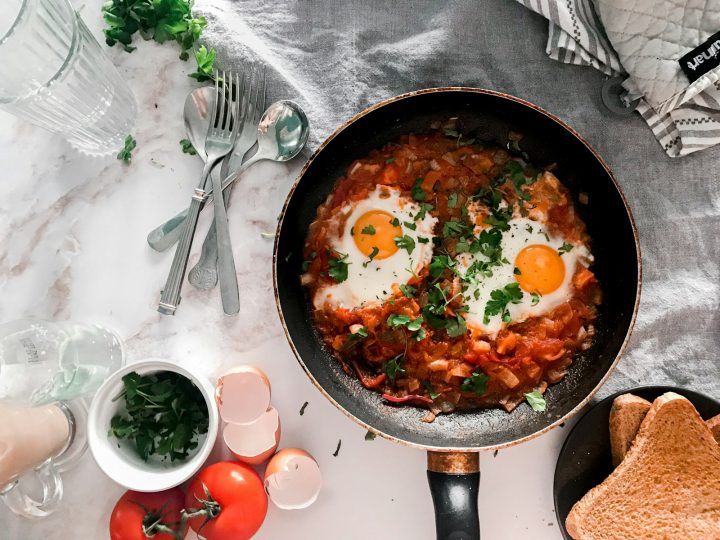
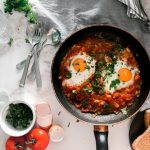
This high protein shakshuka gives you about 37 g of protein per plate, roughly double a classic two-egg serving. The trick is simple: keep the eggs, then add chickpeas to the tomato sauce, fold in a stream of egg whites, and finish with feta and a spoonful of Greek yogurt. It’s one skillet, 35 minutes, and it still tastes like real shakshuka.
Below you’ll find the full recipe with US and metric amounts, a side-by-side look at classic vs. high protein shakshuka built from USDA data, how to tell when the eggs are done, and the swaps that push it even higher.
What is shakshuka?
Shakshuka is eggs gently cooked in a spiced sauce of tomatoes, peppers, onion, garlic and olive oil. It’s a Maghrebi dish, at home across North Africa, and it’s now popular throughout the Middle East too. The name is often explained as “mixture” in Algerian and Tunisian Arabic. Jewish families from the Maghreb brought it to Israel in the 1950s, and from there it became a brunch favorite around the world.
Cumin and paprika are the classic spices, with chili for heat. Cooks add all kinds of extras: harissa, olives, sheep’s milk cheese, sausage. This version leans on chickpeas, egg whites and dairy, which add protein without changing the dish’s character.
Why this shakshuka is higher in protein
- Chickpeas in the sauce. One cup adds about 11 g of protein and 9 g of fiber, and makes the sauce thick enough to hold the eggs.
- Egg white ribbons. Half a cup of liquid egg whites adds 13 g of protein for about 60 calories. They set into soft, silky strands in the sauce, a bit like egg drop soup.
- Feta on top. A quarter cup brings salt, tang and 5 g of protein.
- Greek yogurt to finish. A cool spoonful on each plate adds almost 9 g of protein and balances the spice.
- Whole eggs stay. Four eggs give you the runny yolks that make shakshuka worth eating.
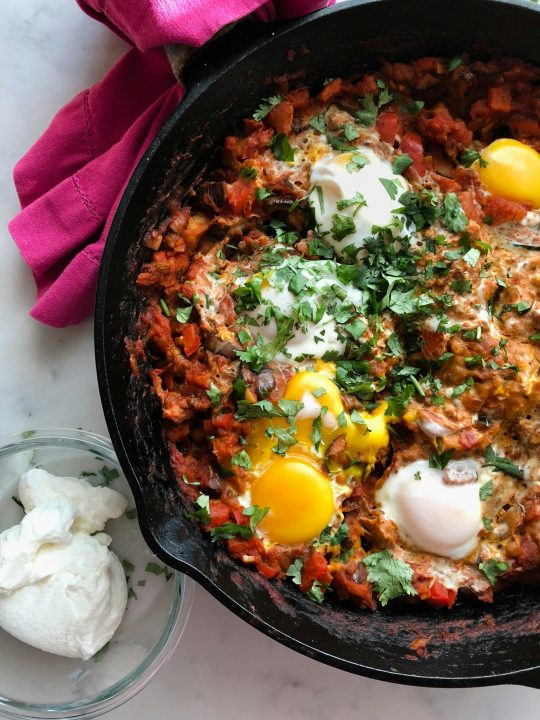
High protein shakshuka recipe
Serves: 2 · Prep: 10 minutes · Cook: 25 minutes · Total: 35 minutes
Ingredients
- 1 tbsp (14 g) extra-virgin olive oil
- 1 medium yellow onion (110 g), diced
- 1 red bell pepper (120 g), diced
- 3 garlic cloves (9 g), minced
- 1 tsp ground cumin
- 1 tsp sweet or smoked paprika
- 1/4 tsp red pepper flakes or a pinch of cayenne (optional)
- 1 can (15 oz / 425 g) crushed tomatoes
- 1 cup (150 g) canned chickpeas, rinsed and drained
- 1/4 cup (60 ml) water, if needed
- 1/2 cup (120 g) liquid egg whites
- 4 large eggs (200 g)
- 1/4 cup (38 g) crumbled feta
- 1/3 cup (85 g) plain nonfat Greek yogurt, for serving
- 2 tbsp (8 g) chopped fresh parsley or cilantro
- Kosher salt and black pepper, to taste
Instructions
- Heat the olive oil in a 10-inch (25 cm) skillet over medium heat. Add the onion and bell pepper with a pinch of salt and cook, stirring now and then, for 6 to 8 minutes, until soft and starting to brown at the edges.
- Add the garlic, cumin, paprika and red pepper flakes. Stir for 30 to 60 seconds, until fragrant.
- Pour in the crushed tomatoes and chickpeas. Season with 1/2 tsp salt and a few grinds of pepper. Simmer for 8 to 10 minutes, stirring occasionally, until the sauce thickens. If it gets too thick to make wells, stir in the water.
- Lower the heat to medium-low. Drizzle the egg whites over the sauce in a thin stream, wait 30 seconds, then gently fold them through so they set into soft ribbons, about 1 to 2 minutes.
- Use the back of a spoon to make 4 wells in the sauce. Crack an egg into each well and sprinkle the yolks with a little salt and pepper.
- Cover the skillet and cook for 5 to 8 minutes, until the whites are fully set but the yolks are still soft. Check at 5 minutes; the yolks keep cooking off the heat.
- Take the pan off the heat. Scatter the feta and herbs over the top and serve with a spoonful of Greek yogurt on each plate.
Feeding 4? Double everything and use a 12-inch (30 cm) skillet with 8 wells. The sauce will need a few extra minutes to thicken.
How to know when shakshuka eggs are done
The eggs are ready when the whites are opaque all the way through and no longer jiggle, but the yolks still move when you nudge the pan. On medium-low heat with the lid on, that usually takes 5 to 8 minutes. If the whites around the yolk stay clear while the edges are done, spoon a little hot sauce over them, cover again and give it another minute.
 You’ll also loveHealthy Sheet Pan Dinners With 15 Minutes of Prep
Like firm yolks? Leave them covered for 10 to 12 minutes, until fully set. Either way, take the pan off the heat a little early, because cast iron keeps cooking.
Shakshuka calories and protein: classic vs. high protein
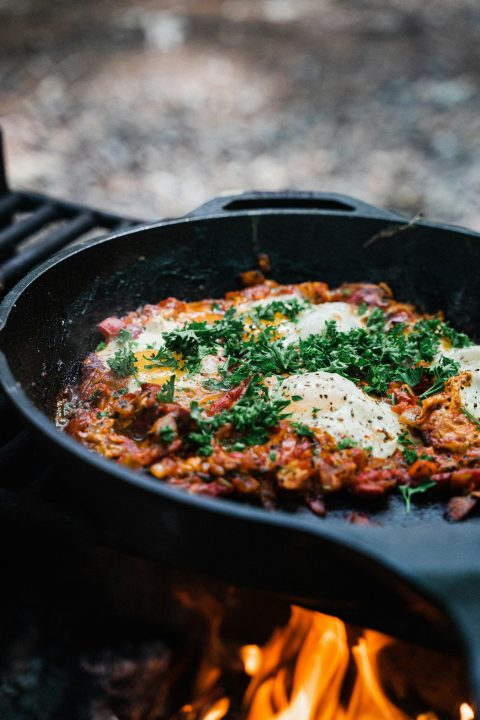
One serving (half the skillet) of this recipe has about 529 calories, 37 g protein, 47 g carbs, 24 g fat and 11 g fiber. I calculated it from USDA FoodData Central per-100 g values for each ingredient. Spices, salt and the optional water aren’t counted.
For comparison, I ran the same sauce without the chickpeas, egg whites, feta and yogurt, so just olive oil, onion, pepper, garlic, crushed tomatoes and two eggs per person:
| Per serving (1/2 skillet) | Classic shakshuka | High protein shakshuka |
|---|---|---|
| Calories | 319 | 529 |
| Protein | 18 g | 37 g |
| Fiber | 6.5 g | 11 g |
| Protein per 100 calories | 5.6 g | 6.9 g |
So the upgrades add about 210 calories but more than double the protein, and you get a lot more fiber from the chickpeas. Here’s where the protein in the high protein version comes from (whole skillet):
| Ingredient (whole skillet) | Amount | Calories | Protein |
|---|---|---|---|
| Whole eggs | 4 large (200 g) | 286 | 25.2 g |
| Liquid egg whites | 1/2 cup (120 g) | 62 | 13.1 g |
| Chickpeas, canned, rinsed | 1 cup (150 g) | 207 | 10.6 g |
| Nonfat Greek yogurt | 1/3 cup (85 g) | 50 | 8.7 g |
| Crushed tomatoes | 15 oz (425 g) | 136 | 7.0 g |
| Feta | 1/4 cup (38 g) | 101 | 5.4 g |
| Onion, red pepper, garlic, parsley | 247 g | 92 | 3.2 g |
| Olive oil | 1 tbsp (14 g) | 124 | 0 g |
| Total (2 servings) | 1,058 | 73.1 g | |
| Per serving | 529 | 36.5 g |
Want more ideas in the same range? Our high protein recipes are ranked by protein per calorie, and the high protein hummus uses the same dairy trick in a dip.
Easy swaps and variations
- Even more protein: brown 6 oz (170 g) lean ground turkey or chicken with the onion, or crumble in firm tofu. Both work with the same spices.
- Lentil shakshuka: swap the chickpeas for 1 cup of cooked brown or green lentils. If you have leftovers from a pot of red lentil soup, a few spoonfuls stirred into the sauce work too.
- Green shakshuka: skip the tomatoes and cook the eggs in a skillet of sautéed spinach, chard, leeks and herbs, thinned with a splash of broth.
- Cottage cheese instead of feta: dollop 1/2 cup of cottage cheese between the eggs before covering the pan. It warms through into creamy pockets and adds even more protein.
- Spicier: stir 1 to 2 tsp of harissa into the sauce with the tomatoes.
- Dairy-free: leave out the feta and yogurt and add more chickpeas or a scoop of hummus on the side.
What to serve with shakshuka
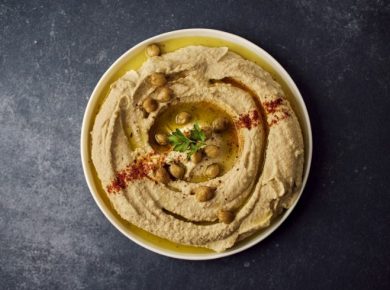
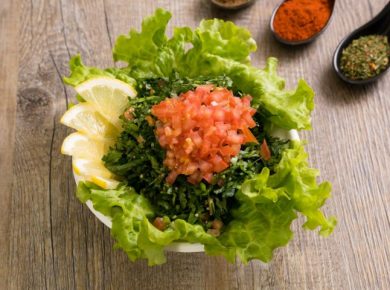
Shakshuka is made for dipping. Warm pita or crusty whole-grain bread is the classic choice. To keep it light, serve it with a crunchy salad instead: a bowl of parsley-heavy tabbouleh or sliced cucumbers and tomatoes with lemon both work. For a bigger brunch spread, add hummus, olives and a few pieces of baked falafel.
Make ahead and storage
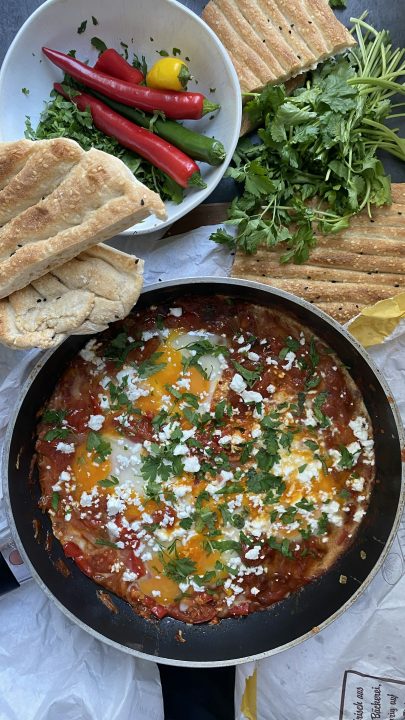
Shakshuka is best right after the eggs set, but the sauce is perfect for meal prep. Make the tomato and chickpea sauce (steps 1 to 3), cool it, and keep it in a covered container in the fridge. When you’re hungry, warm a portion in a small skillet, add the egg whites and eggs, and you’ll have breakfast in about 10 minutes.
For timing, FoodSafety.gov lists soups and stews at 3 to 4 days in the refrigerator and 2 to 3 months in the freezer, and cooked egg casseroles at 3 to 4 days in the fridge. Use the same limits here: the sauce alone keeps 3 to 4 days chilled or a couple of months frozen, and leftovers with the eggs already cooked should be eaten within 3 to 4 days. Reheated eggs will firm up, so cook only what you’ll eat when you can.
High protein shakshuka FAQ
How much protein is in shakshuka?
A classic shakshuka with two eggs per person has about 18 g of protein per serving. This version, with chickpeas, egg whites, feta and Greek yogurt, has about 37 g.
Can I use fresh tomatoes instead of canned?
Yes. Use about 1 1/2 lb (680 g) of ripe tomatoes, chopped, and simmer them a few minutes longer until they break down into a thick sauce. Canned crushed tomatoes give a more consistent result most of the year.
Can I make shakshuka without a lid?
You can. Cook the eggs uncovered on low heat and spoon a little hot sauce over the whites to help them set, or slide the skillet into a 375°F (190°C) oven for 5 to 8 minutes.
Is shakshuka good for meal prep?
The sauce is. Make it ahead and cook fresh eggs into a portion when you’re ready to eat. Fully cooked shakshuka reheats fine, but the yolks won’t stay runny.
Is shakshuka gluten-free?
The skillet itself is: tomatoes, vegetables, chickpeas, eggs and dairy. Just choose a gluten-free bread for dipping, or skip the bread and eat it with a spoon.
Sources
- USDA FoodData Central per-100 g values via getfoodfacts.com: Egg, whole, raw (FDC 171287), Egg white, raw (FDC 172183), Chickpeas, canned, drained, rinsed (FDC 173801), Tomatoes, crushed, canned (FDC 170501), Cheese, feta (FDC 173420), Yogurt, Greek, plain, nonfat (FDC 170894), Onions, raw (FDC 170000), Peppers, sweet, red, raw (FDC 170108), Garlic, raw (FDC 169230), Parsley, fresh (FDC 170416), Olive oil (FDC 171413).
- FoodSafety.gov: Cold Food Storage Chart (soups and stews; casseroles with eggs).
- Wikipedia: Shakshouka (origin and name).
21 meals, 100 g+ protein a day, plus a grocery list and prep schedule.
High Protein Shakshuka
Ingredients
- 1 tbsp (14 g) extra-virgin olive oil
- 1 medium yellow onion (110 g), diced
- 1 red bell pepper (120 g), diced
- 3 garlic cloves (9 g), minced
- 1 tsp ground cumin
- 1 tsp sweet or smoked paprika
- 1/4 tsp red pepper flakes or a pinch of cayenne (optional)
- 1 can (15 oz / 425 g) crushed tomatoes
- 1 cup (150 g) canned chickpeas, rinsed and drained
- 1/4 cup (60 ml) water, if needed
- 1/2 cup (120 g) liquid egg whites
- 4 large eggs (200 g)
- 1/4 cup (38 g) crumbled feta
- 1/3 cup (85 g) plain nonfat Greek yogurt, for serving
- 2 tbsp (8 g) chopped fresh parsley or cilantro
- Kosher salt and black pepper, to taste
Instructions
- Heat the olive oil in a 10-inch (25 cm) skillet over medium heat. Add the onion and bell pepper with a pinch of salt and cook, stirring now and then, for 6 to 8 minutes, until soft and starting to brown at the edges.
- Add the garlic, cumin, paprika and red pepper flakes. Stir for 30 to 60 seconds, until fragrant.
- Pour in the crushed tomatoes and chickpeas. Season with 1/2 tsp salt and a few grinds of pepper. Simmer for 8 to 10 minutes, stirring occasionally, until the sauce thickens. If it gets too thick to make wells, stir in the water.
- Lower the heat to medium-low. Drizzle the egg whites over the sauce in a thin stream, wait 30 seconds, then gently fold them through so they set into soft ribbons, about 1 to 2 minutes.
- Use the back of a spoon to make 4 wells in the sauce. Crack an egg into each well and sprinkle the yolks with a little salt and pepper.
- Cover the skillet and cook for 5 to 8 minutes, until the whites are fully set but the yolks are still soft. Check at 5 minutes; the yolks keep cooking off the heat.
- Take the pan off the heat. Scatter the feta and herbs over the top and serve with a spoonful of Greek yogurt on each plate.
Nutrition per 1/2 of the skillet
21 meals, 100 g+ protein a day, plus a grocery list and prep schedule.