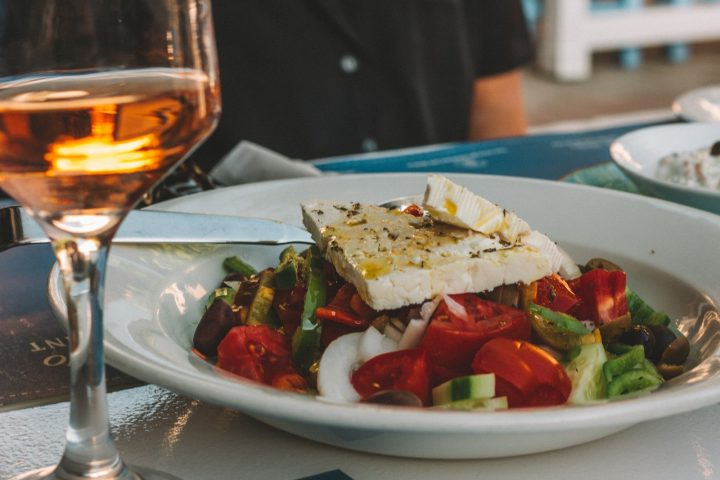
A real Greek salad has no lettuce. It is chunky ripe tomatoes, crisp cucumber, green pepper, red onion and Kalamata olives, dressed with olive oil, a splash of red wine vinegar and dried oregano, then crowned with a whole slab of feta. This Greek salad recipe makes it that way in 15 minutes, with no cooking at all.
It serves four as a side or two as a light lunch, and each side portion has about 290 calories and 9 grams of protein. If you grew up on the American version with romaine and pepperoncini, there is a variation for that further down too.
What goes in a traditional Greek salad?
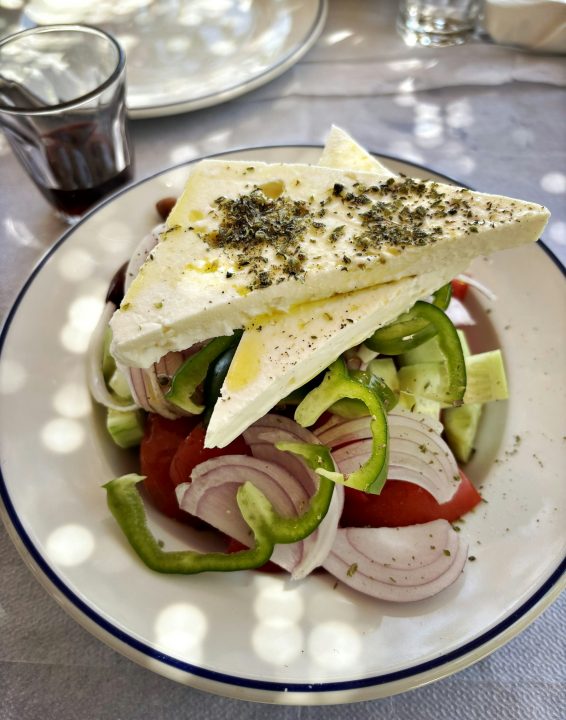
In Greece this salad is called horiatiki, which means “village salad.” The traditional version sticks to a short list: tomatoes, cucumber, onion, green bell pepper, olives and feta, with olive oil, vinegar and oregano as the dressing. The feta usually goes on top as one thick slice instead of being crumbled through the bowl, and everyone breaks off pieces as they eat.
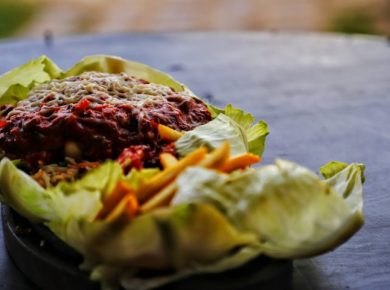
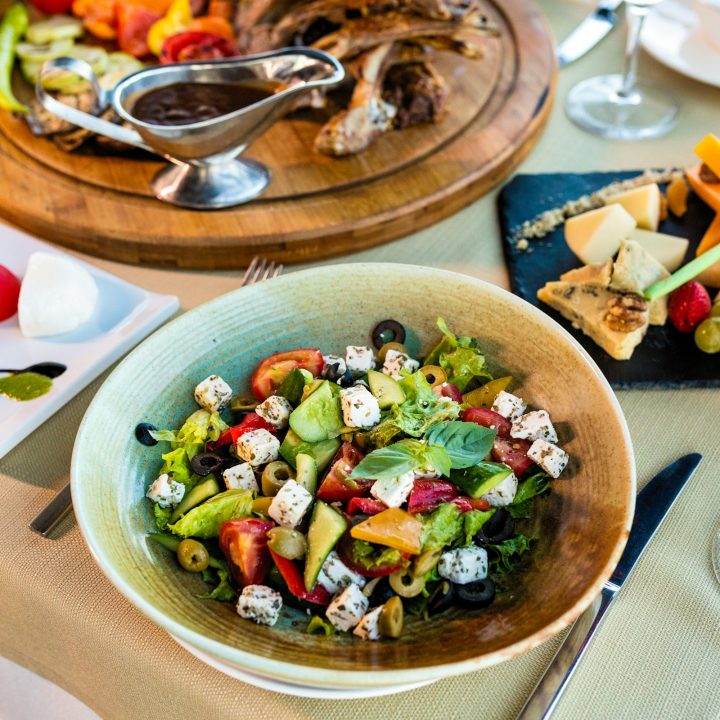
Outside Greece, “Greek salad” often means a lettuce salad with Greek-style toppings. Common US additions are chopped romaine, crumbled feta, pepperoncini, chickpeas and grilled chicken, usually tossed in a more elaborate vinaigrette. Both are good. Only one is horiatiki.
The village version works without greens because every ingredient is big, juicy and seasoned, so nothing needs a leafy base to carry it. When tomatoes are good, it is one of the best salads you can make. When they are pale and mealy, no dressing will save it, so shop for the ripest ones you can find (cherry or grape tomatoes are a fine winter stand-in).


21 meals, 100 g+ protein a day, plus a grocery list and prep schedule.
Greek salad ingredients
- 4 medium ripe tomatoes (about 1 lb / 490 g), cut into wedges
- 1 English cucumber (about 12 oz / 340 g), halved lengthwise and cut into thick half-moons
- 1 medium green bell pepper (about 4 oz / 120 g), sliced into thin rings or strips
- 1/2 small red onion (about 2 oz / 60 g), thinly sliced
- 1/2 cup Kalamata olives (about 2.5 oz / 70 g)
- 1 block feta in brine (7 oz / 200 g)
- 3 tbsp (40 g) extra virgin olive oil, divided
- 1 tbsp (15 ml) red wine vinegar
- 1 tsp dried oregano, plus a pinch for the top
- 1/4 tsp kosher salt and black pepper to taste
Buy feta that is sold as a block in brine. Pre-crumbled feta is drier and saltier, and it cannot give you that creamy slab on top. Olives with pits have a better texture than pitted ones; just warn your guests.
How to make Greek salad
- Cut the tomatoes into wedges over a large shallow bowl so their juices stay in the bowl, then sprinkle them with the salt.
- Add the cucumber, green pepper, red onion and olives.
- Drizzle the vinegar and 2 tablespoons of the olive oil over the vegetables, add the oregano and black pepper, and toss gently with your hands or two spoons.
- Set the feta on top as a whole block or two thick slabs, drizzle it with the remaining tablespoon of oil and sprinkle it with a pinch of oregano.
- Serve right away and break the feta into the salad at the table.
Save some crusty bread for the bottom of the bowl. The tomato juice, oil and feta crumbs that collect there are half the point of the dish.
Greek salad calories and protein per serving
One serving is a quarter of the salad. Numbers are calculated from USDA FoodData Central values for each ingredient and rounded; the vinegar, oregano and salt are left out because they add very little.
 You’ll also loveHealthy Meatloaf Recipe Made Moist With Oats and Veggies
| Per serving (1/4 of the salad) | Amount |
|---|---|
| Calories | about 290 |
| Protein | 9 g |
| Carbohydrates | 14 g |
| Fat | 23 g |
| Fiber | 3 g |
Most of the calories come from two places: the feta (about 130 per serving) and the olive oil (about 90 per serving). That is also where you can lighten it if you want to. Using 2 tablespoons of oil instead of 3 saves about 30 calories per serving. Using half the feta (3.5 oz / 100 g) saves about 65 calories, but it also costs you about 3.5 grams of protein, so add one of the protein ideas below if this is your lunch.
One honest note: USDA does not list Kalamata olives on their own, so the olive numbers use its entry for canned ripe olives as a stand-in.
Tips for the best traditional Greek salad
Cut everything big. This is not a finely diced salad. Wedges of tomato, thick half-moons of cucumber and bite-size chunks keep their crunch and juice instead of turning into a watery chop.
Salt the tomatoes first. A few minutes of salt pulls out their juice, and that juice mixes with the oil and vinegar to become most of the dressing.
Tame the onion if it is sharp. Soak the slices in cold water for 10 minutes and drain them well. They stay crunchy but lose the harsh bite.
Keep the dressing simple. Good olive oil, a little red wine vinegar and oregano are all it needs. There is no need to whisk a separate jar; dress the bowl directly.
Do not toss the feta. Once crumbled and stirred in, it coats everything and the salad turns cloudy. Leave it on top and let people break it themselves.
American-style Greek salad with lettuce
If you prefer the diner or pizzeria version, it is an easy switch. Start with 1 head of chopped romaine on the bottom, add the vegetables and olives from the recipe above, then scatter on 4 to 6 pepperoncini and crumble the feta over everything. Whisk the same oil, vinegar and oregano with 1 tablespoon of lemon juice and a small minced garlic clove, and toss it all together just before serving. The lettuce makes it lighter and bigger, so it stretches to four or five side servings.
How to turn Greek salad into a meal
On its own, a side portion is a little light on protein for a full lunch. These additions fix that without changing the character of the salad:
- Grilled chicken: slice marinated chicken over the top. Our shish tawook in the oven, grill or air fryer works perfectly here.
- Chickpeas: stir in a drained can for a vegetarian bowl, or serve it next to this crunchy chickpea salad.
- Tzatziki and pita: a spoonful of homemade tzatziki and warm pita turn it into a mezze plate.
- Grilled fish or lamb: both are classic partners at Greek tables.
Making Greek salad ahead and storing leftovers
Greek salad is at its best the hour it is made. Once dressed, the cucumbers soften and the tomatoes keep releasing water, so leftovers taste fine the next day but lose their crunch.
 You’ll also loveJuicy Turkey Burgers for the Skillet, Grill or Air Fryer
For meal prep, chop the cucumber, pepper and onion and keep them in one container in the fridge. Cut the tomatoes, add the olives, dress and top with feta only when you are ready to eat. Keep the feta in its brine until then. If you add grilled chicken, cooked poultry keeps 3 to 4 days in a refrigerator at 40°F (4°C) or below, according to FoodSafety.gov, so plan your salad days around that.
More Mediterranean salads to try
If you like this one, the Levant has two salads worth putting in the same rotation: fattoush with baked pita chips and sumac dressing, and a parsley-heavy Lebanese tabbouleh. Both pair well with the same grilled chicken or fish you would serve next to a Greek salad.
Sources
- USDA FoodData Central: Cheese, feta (173420); Tomatoes, red, ripe, raw (170457); Cucumber, with peel, raw (168409); Peppers, sweet, green, raw (170427); Onions, raw (170000); Olives, ripe, canned (169094); Oil, olive (171413)
- FoodSafety.gov: Cold Food Storage Chart
- Wikipedia: Greek salad (horiatiki)
Traditional Greek Salad (Horiatiki)
Ingredients
- 4 medium ripe tomatoes (about 1 lb / 490 g), cut into wedges
- 1 English cucumber (about 12 oz / 340 g), halved lengthwise and cut into thick half-moons
- 1 medium green bell pepper (about 4 oz / 120 g), sliced into thin rings or strips
- 1/2 small red onion (about 2 oz / 60 g), thinly sliced
- 1/2 cup Kalamata olives (about 2.5 oz / 70 g)
- 1 block feta in brine (7 oz / 200 g)
- 3 tbsp (40 g) extra virgin olive oil, divided
- 1 tbsp (15 ml) red wine vinegar
- 1 tsp dried oregano, plus a pinch for the top
- 1/4 tsp kosher salt and black pepper to taste
Instructions
- Cut the tomatoes into wedges over a large shallow bowl so their juices stay in the bowl, then sprinkle them with the salt.
- Add the cucumber, green pepper, red onion and olives.
- Drizzle the vinegar and 2 tablespoons of the olive oil over the vegetables, add the oregano and black pepper, and toss gently with your hands or two spoons.
- Set the feta on top as a whole block or two thick slabs, drizzle it with the remaining tablespoon of oil and sprinkle it with a pinch of oregano.
- Serve right away and break the feta into the salad at the table.
Nutrition per 1/4 of the salad
21 meals, 100 g+ protein a day, plus a grocery list and prep schedule.