Garlic has been used in cooking and folk medicine for thousands of years, and it is one of the most studied foods in nutrition research. Here are the main health benefits of garlic, how strong the evidence really is, and simple ways to eat more of it.
Garlic is a food, not a treatment. Garlic supplements can interact with blood thinners and other medicines, so talk to your doctor before taking them, especially before surgery.
Garlic benefits at a glance
| Possible benefit | Strength of evidence |
|---|---|
| Small drop in blood pressure | Moderate (mostly garlic supplements) |
| Small drop in cholesterol | Mixed |
| Fewer or shorter colds | Limited |
| Flavor without salt | Strong, and very practical |
1. Blood pressure
 Save
Several studies of garlic supplements, especially aged garlic extract, have found modest reductions in blood pressure in people with high blood pressure. Eating garlic as food has not been studied as well. It can be part of a heart-friendly diet, but it does not replace prescribed treatment.
2. Nutrients in a small package
 Save
Garlic is very low in calories and contains some vitamin C, vitamin B6 and manganese, but you eat it in small amounts, so its real value is as part of a varied diet, not as a vitamin source.
3. Cholesterol
 Save
Some trials show small drops in total and LDL cholesterol with garlic supplements; others show little effect. Diet pattern, activity and, when needed, medication matter far more.
4. Heart health overall
 Save
Garlic fits naturally into Mediterranean-style cooking with olive oil, vegetables, beans and fish, an eating pattern linked to better heart health. For meal ideas, see our heart-healthy recipes.
5. Colds
 Save
A few small studies suggest garlic supplements might reduce how often people catch colds, but reviews call the evidence weak. A warm garlicky soup when you are sick is comforting, which is reason enough.
6. Flavor without extra salt
 Save
This is garlic’s most reliable benefit: it adds big flavor, so you need less salt, butter or sauce. Roasted garlic turns sweet and spreadable; raw garlic is sharp and works in dressings.
7. Antioxidant compounds
 Save
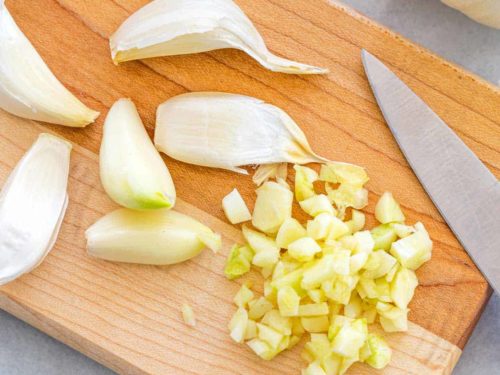
Garlic contains sulfur compounds such as allicin (formed when garlic is crushed or chopped) and S-allyl cysteine. They are widely studied in the lab; how much they matter at normal kitchen amounts is still unclear.
How to get the most from garlic
 Save
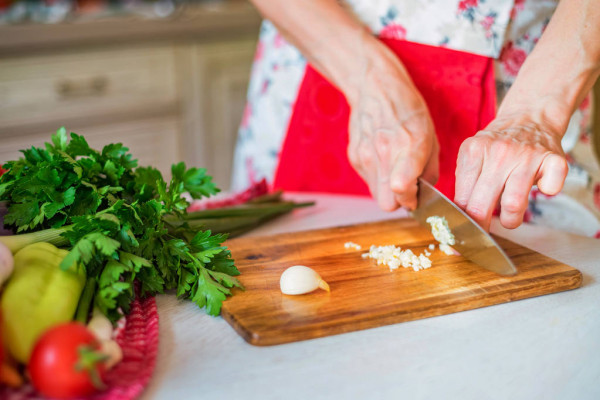
- Crush or chop, then wait. Letting chopped garlic sit for about 10 minutes before cooking allows allicin to form.
- Add it near the end of cooking for more flavor; long, high heat mellows it.
- Store homemade garlic-in-oil in the fridge and use it within a few days; garlic in oil at room temperature carries a botulism risk.
- Do not put raw garlic on your skin. It can cause chemical burns.
Easy ways to eat more garlic
 Save
- Sauté it with spinach or kale in olive oil.
- Add it to lentil soup or chickpea stew.
- Whisk it into lemon-olive oil dressings.
- Use it in marinades, like our lemon garlic chicken.
FAQ
Is raw or cooked garlic healthier?
Raw or lightly cooked garlic keeps more allicin, but cooked garlic is still a healthy, flavorful ingredient. Eat it the way you enjoy it.
Who should be careful with garlic?
People on blood thinners or preparing for surgery should talk to their doctor about garlic supplements. Large amounts can also cause heartburn or stomach upset.
 You’ll also love12 Low Sugar Fruits to Enjoy (With Sugar per Serving)