Short answer: lower cold large eggs into boiling water and cook them 6 minutes for a runny soft-boiled yolk, 7 minutes for jammy, 9 minutes for medium and 11 to 12 minutes for fully hard-boiled eggs. Move them straight into ice water for at least 5 minutes, then peel or refrigerate.
How long to boil eggs comes down to one decision: what you want the yolk to look like. The white sets fast, the yolk takes its time, and every extra minute moves it from liquid gold to fudgy to pale and crumbly. Below is the timing chart I actually use, the method that makes those numbers reliable, how to get shells off in one piece, and how long hard-boiled eggs last in the fridge.
All times assume large eggs straight from the refrigerator, lowered into water that is already at a rolling boil. That “hot start” is the most consistent way to boil eggs, because the clock starts the moment the eggs hit the water instead of depending on how fast your burner heats a pot.
Boiled egg timing chart
| Minutes in boiling water | Yolk | White | Best for |
|---|---|---|---|
| 5 min | Fully runny, warm | Just set, a little soft near the yolk | Dipping toast |
| 6 min | Runny center, slightly thickened edge | Set | Soft-boiled eggs, ramen |
| 7 min | Jammy, sticky, deep orange | Firm | Grain bowls, salads, avocado toast |
| 8 to 9 min | Medium, soft and fudgy in the middle | Firm | Snacking, lunch boxes |
| 10 min | Almost fully set, tiny moist center | Firm | Hard-boiled eggs that are still creamy |
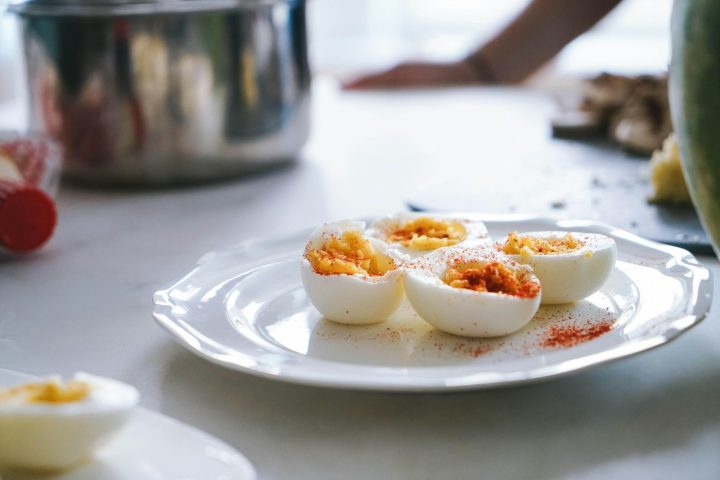
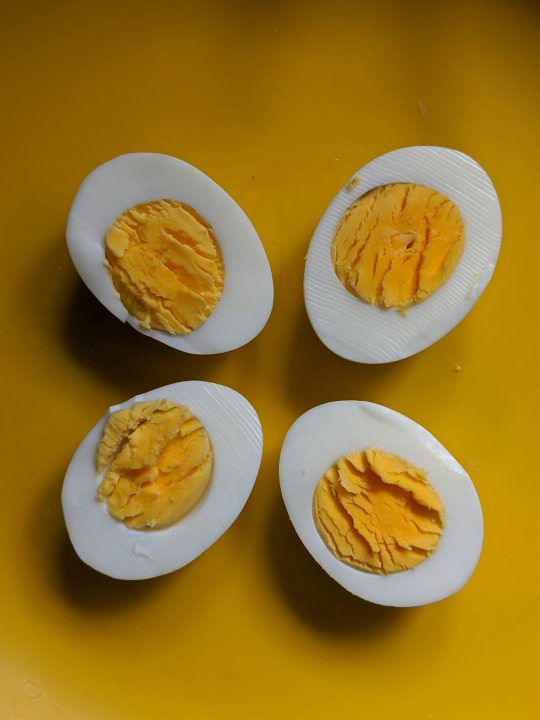
| 11 to 12 min | Fully set, pale yellow, crumbly | Firm | Deviled eggs, egg salad, meal prep |
Adjusting for egg size: take about 1 minute off for medium eggs and add 1 minute for extra-large, or 1 1/2 to 2 minutes for jumbo. Room-temperature eggs cook faster, so shave 30 to 60 seconds. At high altitude water boils at a lower temperature, so expect to add a minute or two and test one egg first.
How to boil eggs, step by step
You need a saucepan big enough to hold the eggs in one layer, a slotted spoon, a timer and a bowl of ice water. That’s it.
- Boil the water first. Fill the pot with enough water to cover the eggs by about 1 inch (2.5 cm) and bring it to a full rolling boil.
- Lower the eggs in gently. Use a slotted spoon so they don’t crack on the bottom. Start the timer the second the last egg goes in.
- Turn the heat down a notch. Keep the water at a steady, lively simmer rather than a violent boil, which bangs eggs into each other.
- Get the ice bath ready. Fill a bowl with cold water and a handful of ice while the eggs cook.
- Shock them. When the timer goes off, move the eggs straight into the ice water. Leave soft and jammy eggs for 2 to 3 minutes and hard-boiled eggs for at least 5 minutes, until cool enough to hold.
- Peel or store. Peel right away for the easiest shells, or dry them and refrigerate in the shell.
The cold-start method (if you prefer it)
Plenty of people put eggs in cold water and heat them together. It works, and it is a little gentler on the shells, but the timing depends on your stove and pot, so treat these as starting points: cover the eggs with 1 inch (2.5 cm) of cold water, bring it to a boil, then cover the pot and pull it off the heat. Leave the eggs in the hot water about 5 minutes for soft, 7 to 8 minutes for medium and 10 to 12 minutes for hard, then ice them. Write down what worked on your stove and you’ll never have to guess again.
Steaming: the easiest-peel option
Set a steamer basket over 1 inch (2.5 cm) of boiling water, add the eggs, cover and steam about 6 minutes for soft, 7 for jammy and 12 for hard. Steam heats eggs the same way boiling water does, but you only have to bring a small amount of water to temperature, and the eggs don’t knock around. If shells fight you every time, try this first.
How long to boil soft boiled eggs and jammy eggs
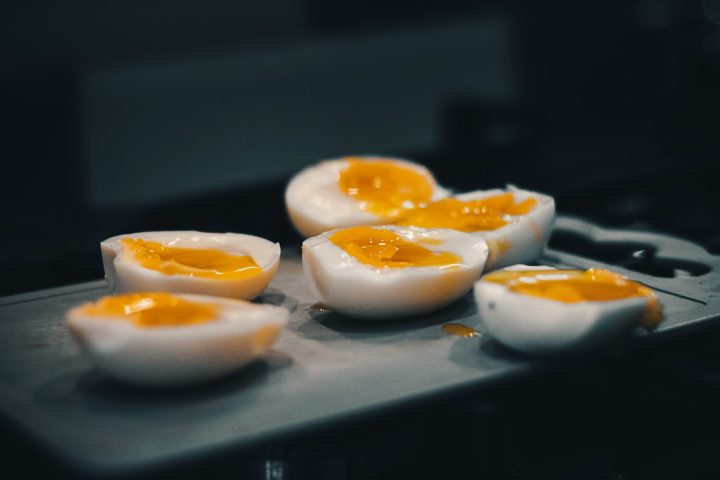
Soft-boiled eggs are where seconds matter. At 6 minutes you get a white that holds its shape and a yolk that runs when you cut it. At 7 minutes the yolk turns thick and jammy, which is the version you see on ramen and in grain bowls. Pull them on time and get them into ice water fast, because carryover heat keeps cooking the yolk for a minute or two after they leave the pot.
 You’ll also love9 Healthy Overnight Oats Recipes Worth Making on Repeat
Soft eggs are fragile, so peel them under a thin stream of cool water, starting from the wide end where the air pocket sits. If you want to serve them in the shell, an egg cup and a spoon do the job. Jammy eggs are my favorite way to add protein to a Mediterranean quinoa salad or a lunch bowl without cooking anything else.
How long to boil hard boiled eggs
For hard-boiled eggs, 11 to 12 minutes gives a fully set, pale yellow yolk that mashes cleanly for deviled eggs or egg salad. At 10 minutes the yolk is set but still slightly creamy in the very center, which I think tastes better for eating plain.
Going much past 12 minutes doesn’t make eggs “safer,” it just makes them worse. The whites get rubbery, the yolk turns chalky, and a gray-green ring forms around the yolk. That ring is a harmless reaction between sulfur in the white and iron in the yolk, but it smells eggier and looks tired. The fix is simple: don’t overcook, and chill the eggs quickly.
How to peel boiled eggs without wrecking them
- Start in boiling water. Dropping eggs into already-boiling water (or steam) sets the outer white quickly, so it pulls away from the membrane more cleanly than a cold start.
- Don’t skip the ice bath. The quick chill makes the egg contract slightly inside the shell.
- Crack all over, then roll. Tap the egg on the counter, then roll it gently under your palm until the shell is covered in fine cracks.
- Start at the wide end. That’s where the air pocket is, so it’s easiest to get under the membrane there.
- Peel under water. A bowl of water or a thin stream from the tap slips between the shell and the white.
- Older eggs peel easier. Very fresh eggs tend to cling to their shells. If you buy eggs specifically for boiling, give them several days in the fridge first.
How long do hard boiled eggs last in the fridge?
Hard-boiled eggs keep for 1 week in the refrigerator, according to the cold food storage chart on FoodSafety.gov. The same chart says not to freeze them: cooked whites turn tough and watery after thawing. The USDA’s Food Safety and Inspection Service adds that hard-cooked eggs should be refrigerated within 2 hours of cooking. Keep your fridge at 40°F (4°C) or below.
| Eggs | Refrigerator, 40°F (4°C) or below | Freezer |
|---|---|---|
| Hard-cooked eggs | 1 week | Do not freeze |
| Raw eggs in the shell | 3 to 5 weeks | Do not freeze in the shell |
| Egg salad | 3 to 4 days | Does not freeze well |
Notice that egg salad has a shorter window than plain hard-boiled eggs, so if you’re prepping for the week, store the eggs whole and mix the salad a day or two before you eat it. My routine for breakfast meal prep is a dozen eggs on Sunday, cooled, dried and kept in a lidded container on a fridge shelf (not the door, which swings warmer every time you open it). Label the container with the day you cooked them so you know when the week is up.
Peeled or unpeeled? FoodSafety.gov gives the same 1 week for hard-cooked eggs without separating the two. In practice, unpeeled eggs stay moister and don’t pick up fridge smells, so I peel as I go. If you do peel ahead, keep them in a sealed container with a damp paper towel so the whites don’t dry out.
Boiled egg nutrition at a glance
One large hard-boiled egg (50 g) has about 78 calories, 6.3 g protein, 5.3 g fat and 0.6 g carbohydrate, based on USDA FoodData Central values for hard-boiled whole egg (155 calories, 12.6 g protein and 10.6 g fat per 100 g). Boiling doesn’t add anything, so it’s one of the leanest ways to cook an egg. Two eggs make an easy 12-gram protein snack, and they’re the backbone of most of our high protein breakfast meal prep ideas.
 You’ll also loveHow to Make Dairy Free Overnight Oats Creamy Without Yogurt
Using medium, extra large or jumbo eggs? Our breakdown of protein in eggs by size has the grams and calories for every carton size, plus egg white versus yolk.
Common mistakes when boiling eggs
- Crowding the pot. Too many cold eggs drop the water temperature, and your timing goes out the window. Cook in one layer, or give the water a minute to recover before starting the timer.
- Guessing instead of timing. One minute is the difference between jammy and medium. Use a timer, every time.
- Letting them sit in the hot water. Eggs keep cooking in the pot. Ice them as soon as the time is up.
- Leaving them on the counter. Cool and refrigerate hard-boiled eggs within 2 hours.
- Panicking over a cracked shell. FSIS notes that eggs that crack during hard cooking are safe. A splash of vinegar in the water helps the white seal up faster if it leaks.
Easy ways to use boiled eggs
- Halve jammy eggs over a grain bowl with a drizzle of chili crisp.
- Chop hard-boiled eggs into a Greek-yogurt dressing for a lighter egg salad, the same base we use in our healthy chicken salad.
- Pack two eggs with fruit and nuts for a no-cook lunch box.
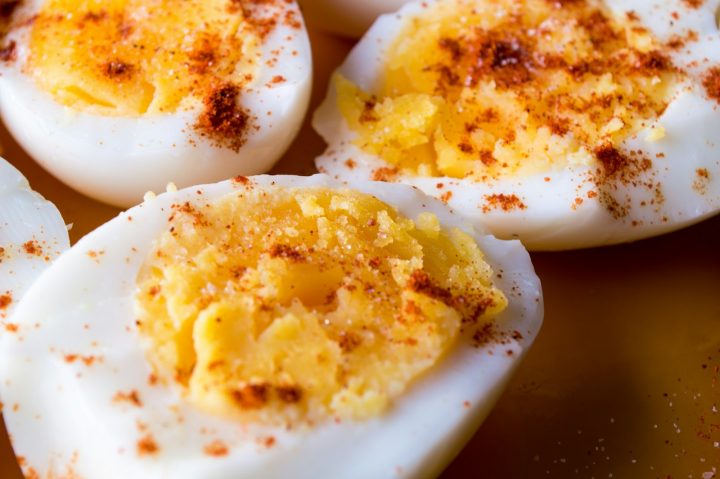
- Slice them onto avocado toast with salt, pepper and a pinch of paprika.
- Want eggs you can grab warm? Bake a batch of egg muffins instead and reheat them all week.
Boiled egg FAQ
Do you start eggs in cold or boiling water?
Either works. Boiling water gives more consistent timing and usually easier peeling, which is why the chart above uses it. Cold start is gentler on shells but varies with your stove.
Can you freeze hard-boiled eggs?
No. FoodSafety.gov lists hard-cooked eggs as “do not freeze.” Cooked whites go rubbery and weep water when thawed. Eat them within a week instead.
How long to boil eggs for deviled eggs?
Go for 11 to 12 minutes. You want a fully set yolk that mashes smooth with no wet center, and the ice bath keeps the outside of the yolk bright yellow.