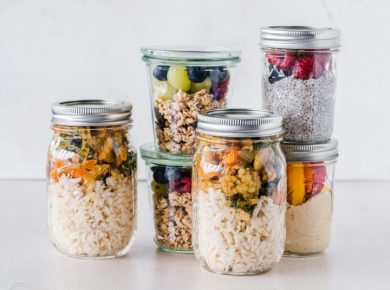
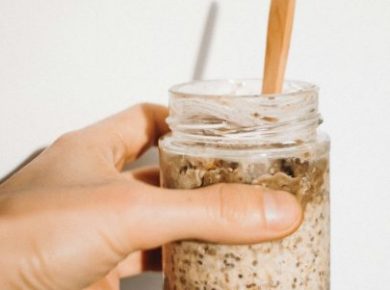
Overnight oats with yogurt are what you make when the milk-only version tastes a little thin and leaves you hungry by 10 a.m. Stir rolled oats, plain Greek yogurt and milk together in equal parts, chill overnight, and you wake up to a thick, tangy, cheesecake-like jar with about 23 grams of protein. No cooking, no chia, five minutes of work.
Here is the exact recipe, the ratio that keeps it from turning to cement, three flavors worth rotating, and what changes when you use regular or dairy-free yogurt.
Overnight Oats with Yogurt: The Recipe
Makes: 1 jar (multiply as needed) · Prep: 5 minutes · Chill: at least 6 hours · Per jar: about 330 calories, 23 g protein, 4 g fiber
Ingredients
- 1/2 cup (40 g) old-fashioned rolled oats
- 1/2 cup (120 g) plain nonfat Greek yogurt
- 1/2 cup (120 g) 2% milk
- 2 teaspoons (14 g) honey or maple syrup
- 1/4 teaspoon vanilla extract
- 1/4 teaspoon cinnamon
- A small pinch of salt
Instructions
- Whisk the wet ingredients first. In a jar or container that holds at least 2 cups, stir the yogurt, milk, honey, vanilla, cinnamon and salt until smooth. Doing this before the oats go in gets rid of yogurt lumps.
- Add the oats. Stir until every flake is coated and nothing dry is hiding at the bottom.
- Cover and chill. Refrigerate for at least 6 hours, or overnight. The oats soak up the milk and soften; the yogurt keeps everything thick.
- Stir and loosen. In the morning, give it a stir. If it is thicker than you like, add a splash of milk.
- Top and eat. Add fruit, nuts or a drizzle of nut butter right before serving so they stay fresh and crunchy.
That is the whole method. The rest of this article is about getting the texture and protein exactly where you want them.
Why the 1:1:1 Ratio Works
Equal volumes of oats, Greek yogurt and milk is the easiest ratio to remember, and it is the one I keep coming back to. Rolled oats absorb a lot of liquid overnight. Greek yogurt is already strained and thick, so it adds creaminess but not much free liquid. The milk is what actually hydrates the oats.
That is why “yogurt only” jars often go wrong. Skip the milk and use all Greek yogurt and the oats have very little to drink, so you get a dense, almost dry jar with chewy flakes. It works if you love that texture, but most people do better with milk in the mix. If you want an even thicker jar, add a tablespoon of chia seeds and an extra splash of milk; our overnight oats with chia seeds guide covers that version in detail.
Use old-fashioned rolled oats. Quick oats turn soft and pasty by morning, and steel-cut oats stay hard after one night in the fridge.
Greek Yogurt vs Regular Yogurt in Overnight Oats
The type of yogurt changes the protein more than anything else in the jar. Plain nonfat Greek yogurt has 10.2 g of protein per 100 g in USDA data, while plain whole-milk yogurt has 3.47 g. Here is what that means for one jar made with 40 g oats and 2 teaspoons of honey:
| Version (per jar) | Liquid | Protein | Calories | Texture |
|---|---|---|---|---|
| Greek yogurt + milk (the recipe) | 1/2 cup nonfat Greek yogurt + 1/2 cup 2% milk | 23 g | 329 | Thick, creamy, tangy |
| All Greek yogurt, no milk | 200 g nonfat Greek yogurt | 27 g | 316 | Very dense, chewy oats |
| Greek yogurt + almond milk | 1/2 cup nonfat Greek yogurt + 1/2 cup unsweetened almond milk | 19.5 g | 287 | Creamy, slightly lighter |
| Regular yogurt + milk | 1/2 cup plain whole-milk yogurt + 1/2 cup 2% milk | 15 g | 331 | Looser, more like porridge |
My pick is the first row. You keep most of the protein, the oats soften properly, and the texture lands somewhere between pudding and cheesecake filling. If you only have regular yogurt, use it, but cut the milk to about 1/3 cup because regular yogurt is runnier.
Flavored Greek yogurt works too. Vanilla yogurt is the most common swap; skip the honey and vanilla extract if you use it, since it is already sweetened.
Need even more protein? Whisk a scoop of whey into the milk first and follow our protein overnight oats recipe, which lands at about 43 g per jar without turning chalky.
3 Yogurt Overnight Oats Flavors
Start with the base recipe above, then add the extras. Protein and calories are per jar and include the base.
1. Blueberry Vanilla (about 24 g protein, 372 calories)
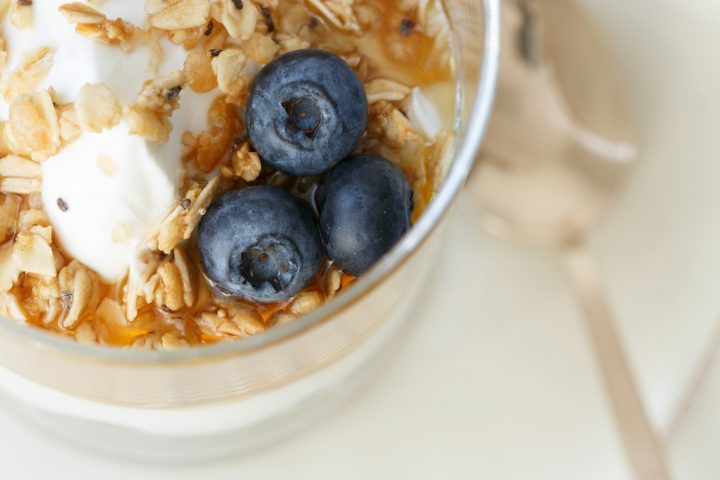
Stir 1/2 cup (75 g) blueberries into the jar before chilling, or keep them on top if you like them firm. Fresh or frozen both work. Frozen berries thaw overnight and turn the yogurt a pretty purple. A little lemon zest makes it taste like blueberry cheesecake.
2. Peanut Butter Banana (about 27 g protein, 478 calories)
Whisk 1 tablespoon (16 g) peanut butter into the yogurt and milk until smooth, then add the oats. In the morning, slice half a small banana (60 g) on top. This is the most filling of the three and the one to make on gym days. Want more ideas in this direction? See our list of high-protein breakfasts without eggs.
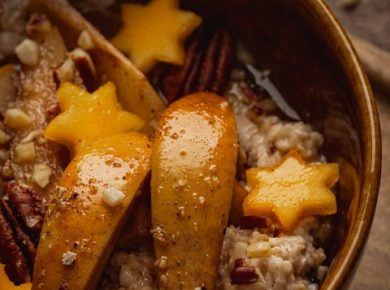
3. Apple Pie (about 23 g protein, 368 calories)
Grate half a small apple (75 g), skin on, straight into the jar and double the cinnamon to 1/2 teaspoon. Add a pinch of nutmeg if you have it. Grated apple softens overnight and spreads its sweetness through the oats, so you can drop the honey to 1 teaspoon. Top with a few chopped walnuts for crunch.
Craving something seasonal? Our pumpkin overnight oats use the same Greek yogurt base with a third of a cup of pumpkin and pumpkin pie spice.
Dairy-Free Overnight Oats with Yogurt
Swap in a plant-based yogurt and an unsweetened plant milk using the same 1:1:1 ratio. Two things to watch:
- Protein varies a lot. Some plant yogurts are made with added pea or soy protein; others have very little. Read the label if protein is the reason you are making this.
- Many are thinner. Coconut and almond yogurts are often looser than Greek yogurt, so start with a little less milk and add more in the morning if needed.
Unsweetened almond milk is very low in protein (0.4 g per 100 g in USDA data), so if you use it with a plant yogurt, the jar will land well under the dairy version. Soy milk is the easy upgrade.
How Long Do Overnight Oats with Yogurt Last?
Plan on eating them within 3 to 4 days. FoodSafety.gov does not list overnight oats on its cold storage chart, but it gives 3 to 4 days in the fridge for prepared leftovers, and that is the window I use for any mixed, made-ahead breakfast. Keep the fridge at 40°F (4°C) or below, which is the temperature the chart is built on, and never use yogurt past its date.
Texture is the other limit. By day three the oats are softer and the jar is thicker, so stir in a splash of milk before eating. Add bananas, nuts and granola the morning you eat them. For a full Sunday routine with shopping list and jar counts, use our overnight oats meal prep plan.
Mistakes That Make Yogurt Overnight Oats Worse
- Skipping the milk. The oats need free liquid to soften. All-yogurt jars come out dense and chewy.
- Adding the oats before whisking. Greek yogurt clumps. Smooth it with the milk first.
- Using a jar that is too small. Leave some room so you can stir and add toppings.
- Forgetting the salt. A tiny pinch makes the yogurt taste less sour and the honey taste sweeter.
- Topping too early. Granola and nuts go soggy overnight. Add them in the morning.
FAQ
Can I use yogurt instead of milk in overnight oats?
You can replace part of the milk with yogurt, and that is what this recipe does. Replacing all of it gives a very thick, chewy jar because the oats have little liquid to absorb. If you go yogurt-only, use regular yogurt, which is runnier, or let the jar sit 10 minutes at room temperature and stir well before eating.
Can you eat overnight oats with yogurt warm?
Yes. Microwave the jar (without the lid) in 30-second bursts and stir between each one. Warm gently: yogurt can turn grainy if it gets very hot. Most people eat them cold, straight from the fridge.
Are overnight oats with Greek yogurt healthy?
For most people they make a solid breakfast: whole-grain oats for fiber, Greek yogurt for protein, and you control the sugar. Keep the sweetener to a couple of teaspoons and let fruit do the rest. If oats are already a daily habit, here is what happens when you eat oatmeal every day. For more make-ahead options, see our breakfast meal prep ideas.
Sources
- USDA FoodData Central, Oats, FDC ID 169705, via getfoodfacts.com
- USDA FoodData Central, Yogurt, Greek, plain, nonfat, FDC ID 170894, via getfoodfacts.com
- USDA FoodData Central, Yogurt, plain, whole milk, FDC ID 171284, via getfoodfacts.com
- USDA FoodData Central, Milk, reduced fat, 2% milkfat, FDC ID 171267, via getfoodfacts.com
- USDA FoodData Central, Almond milk, unsweetened, FDC ID 174832, via getfoodfacts.com
- USDA FoodData Central, Honey (FDC 169640), Blueberries (171711), Peanut butter, smooth (172470), Bananas (173944), Apples with skin (171688), via getfoodfacts.com
- FoodSafety.gov, Cold Food Storage Charts