Most protein overnight oats go wrong in the same place: the protein powder. Dump a scoop on top of oats and milk, stir, and you wake up to a jar that’s thick as cement and chalky at the bottom. This protein overnight oats recipe fixes that with one small change in order, and it lands at about 43 grams of protein per jar with no eggs, no cooking and five minutes of work the night before.
Below you’ll find the recipe, the exact protein math, which powders behave best in the fridge, three flavor versions, and how far ahead you can make them.
Protein Overnight Oats Recipe (1 Jar)
Prep: 5 minutes. Chill: at least 6 hours. Makes: 1 jar (about 1 1/2 cups).
Ingredients
- 3/4 cup (180 g) 2% milk
- 1 scoop (30 g) vanilla whey protein powder
- 1/4 cup (60 g) plain nonfat Greek yogurt
- 1/2 cup (40 g) old-fashioned rolled oats
- 1 tablespoon (12 g) chia seeds
- Pinch of salt and 1/4 teaspoon cinnamon
- 1 to 2 teaspoons maple syrup, only if your powder is unsweetened
Instructions
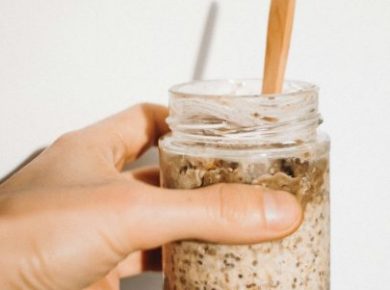
- Mix the powder into the liquid first. Pour the milk into a jar, add the protein powder, put the lid on and shake hard for 15 seconds. You can also whisk it in a bowl. No dry pockets should remain.
- Add the yogurt and flavorings. Stir in the Greek yogurt, salt, cinnamon and sweetener until smooth.
- Stir in the oats and chia. Add them last and stir well, scraping the bottom of the jar.
- Chill. Cover and refrigerate for at least 6 hours, or overnight.
- Loosen and top. In the morning, stir. If it’s too thick, add a splash of milk. Add fruit, nuts or nut butter right before eating.
Per jar (without toppings or sweetener): about 442 calories, 43 g protein, 45 g carbs, 9 g fiber and 10.5 g fat. I calculated this from USDA FoodData Central values (sources at the end).
Where the 43 Grams of Protein Come From
The powder does most of the work, but it isn’t the whole story. The other four ingredients add almost 20 grams between them, which is why this jar beats a protein shake with a bowl of plain oats on the side.
| Ingredient | Amount | Protein | Calories |
|---|---|---|---|
| Whey protein powder | 30 g (1 scoop) | 23.4 g | 106 |
| Nonfat Greek yogurt | 60 g (1/4 cup) | 6.2 g | 37 |
| 2% milk | 180 g (3/4 cup) | 5.9 g | 90 |
| Rolled oats | 40 g (1/2 cup) | 5.3 g | 152 |
| Chia seeds | 12 g (1 tbsp) | 2.0 g | 58 |
| Total | 42.8 g | 442 |
One honest caveat: the powder line uses USDA’s generic whey-based protein powder entry (78.1 g protein per 100 g). Brands vary, so check your tub’s label and swap in its protein per scoop. If your scoop gives 20 g instead of 23 g, the jar still lands right around 40 g.
How to Add Protein Powder to Overnight Oats Without the Chalky Texture
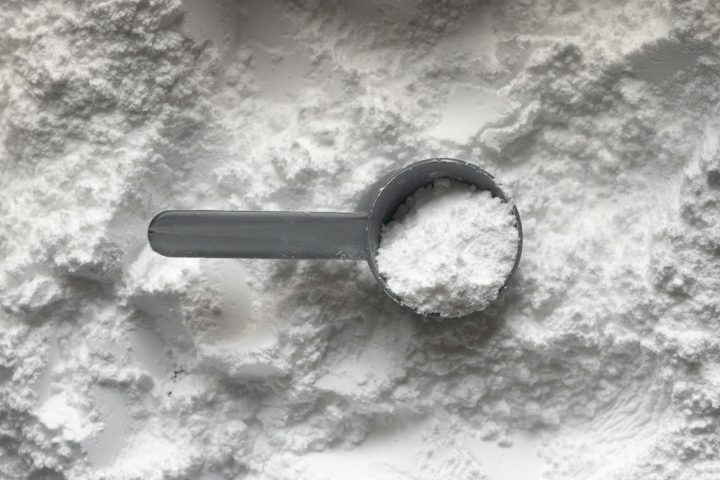
Protein powder is thirsty. It soaks up liquid alongside the oats and chia, and if it goes in dry it clumps before it can dissolve. These are the habits that make the difference:
- Liquid first, powder second, oats last. Shaking the powder into the milk before anything else is the single biggest fix. It’s the step most recipes skip.
- Add more liquid than a regular jar. A plain jar of oats needs roughly equal parts oats and milk by volume. With a scoop of powder, you need about 1/4 cup extra. That’s why this recipe uses 3/4 cup of milk plus yogurt for 1/2 cup of oats.
- Use the yogurt. Greek yogurt smooths out any leftover graininess and adds a little tang that keeps sweet powders from tasting flat.
- Don’t skip the salt. A pinch makes vanilla and chocolate powders taste less artificial.
- Stir again in the morning. Some settling is normal. A quick stir and a splash of milk bring it back.
Best Protein Powder for Overnight Oats
Any powder works, but they don’t behave the same after a night in the fridge. Here’s what to expect and how to adjust:
| Powder type | Texture after chilling | Adjustment |
|---|---|---|
| Whey (or whey isolate) | Smooth and fairly thin; mixes easily | Use the recipe as written |
| Casein or whey-casein blend | Much thicker, almost pudding-like | Add 2 to 4 extra tablespoons of milk |
| Plant protein (pea, soy, rice blends) | Thicker, can taste earthy or gritty | Add extra milk, shake longer, use a stronger flavor such as chocolate |
| Collagen peptides | Dissolves almost invisibly | No change, but check the label for protein per scoop and adjust |
My pick for a first batch is a vanilla whey you already like drinking. If a powder tastes bad in a shaker, it won’t taste better in oats. Flavor matters more than brand here, and a lightly sweetened vanilla is the most flexible base for toppings.
3 High-Protein Overnight Oats Flavors
Each one starts from the base recipe above. Numbers are per jar and exclude any extra sweetener.
1. Chocolate Peanut Butter (about 47 g protein, 549 calories)
Use chocolate or vanilla protein powder and whisk 1 tablespoon (5 g) unsweetened cocoa powder into the milk with the scoop. Swirl 1 tablespoon (16 g) peanut butter through the top before chilling. This one tastes like dessert and is the version I make most.
2. Blueberry Vanilla (about 43 g protein, 485 calories)
Keep the vanilla base and fold in 1/2 cup (75 g) blueberries. Frozen berries work too: they thaw overnight and turn the oats a pale purple. Add a little lemon zest if you have it.
3. Banana Peanut Butter (about 47 g protein, 591 calories)
Mash about half a medium banana (60 g) into the milk before adding the powder, then stir in 1 tablespoon peanut butter. The banana sweetens the jar enough that you can usually skip the maple syrup. It’s the most filling of the three, good before a long morning or after an early workout.
Protein Overnight Oats Without Protein Powder
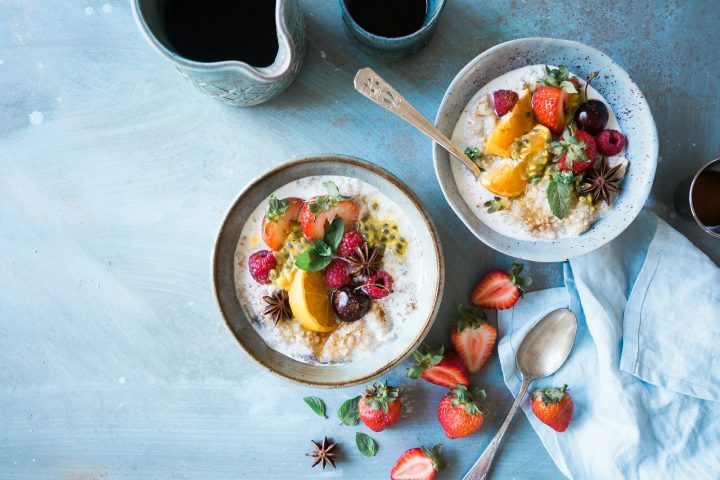
No powder in the house, or you just don’t like it? Swap the scoop for more Greek yogurt. Our overnight oats with yogurt use equal parts oats, Greek yogurt and milk and come in at about 23 g of protein per jar. That’s less than the powder version, but it’s creamier and needs zero tweaking. For a lighter, fiber-heavy jar, the overnight oats with chia seeds base ratio is the one to learn first.
Can You Meal Prep Protein Overnight Oats?
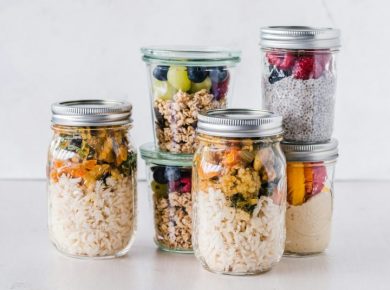
Yes. Make up to 3 or 4 jars at once and keep them at 40°F (4°C) or below. FoodSafety.gov doesn’t list overnight oats by name, so I follow its 3 to 4 day fridge window for prepared foods such as soups and stews. Add fresh fruit and nut butter the morning you eat them so they don’t go soggy.
Texture changes a little by day three: the oats get softer and the jar thickens. Stir in a splash of milk and it’s fine. If you want a full Sunday plan with a shopping list, see our overnight oats meal prep guide.
FAQ
How much protein powder should I put in overnight oats?
One scoop (about 30 g) per 1/2 cup of oats is the sweet spot. More than that and the jar gets pasty no matter how much milk you add. If you want more protein, raise the Greek yogurt instead of adding a second scoop.
Can you heat protein overnight oats?
You can. Microwave them in short 30-second bursts, stirring between each, and add a splash of milk. Blasting them at full power for two minutes can make whey-based oats rubbery and the yogurt can separate.
Can I use quick oats or steel-cut oats?
Quick oats work but turn softer and mushier overnight. Steel-cut oats stay too firm without cooking. Old-fashioned rolled oats give the best texture for this recipe. If oats are a daily habit for you, here’s what happens when you eat oatmeal every day.
Want more ideas in the same range? Our high-protein breakfast recipes cover eggs, smoothies and savory options too.
Sources
- USDA FoodData Central: Beverages, protein powder whey based (FDC 173180)
- USDA FoodData Central: Oats, regular and quick, dry (FDC 173904)
- USDA FoodData Central: Yogurt, Greek, plain, nonfat (FDC 330137)
- USDA FoodData Central: Milk, reduced fat, 2% (FDC 171267)
- USDA FoodData Central: Chia seeds, dried (FDC 170554)
- USDA FoodData Central: Peanut butter, smooth (FDC 324860)
- USDA FoodData Central: Cocoa, dry powder, unsweetened (FDC 169593)
- USDA FoodData Central: Blueberries, raw (FDC 171711)
- USDA FoodData Central: Bananas, raw (FDC 173944)
- FoodSafety.gov: Cold Food Storage Charts